


Precision-Machined Gears for Factory Applications
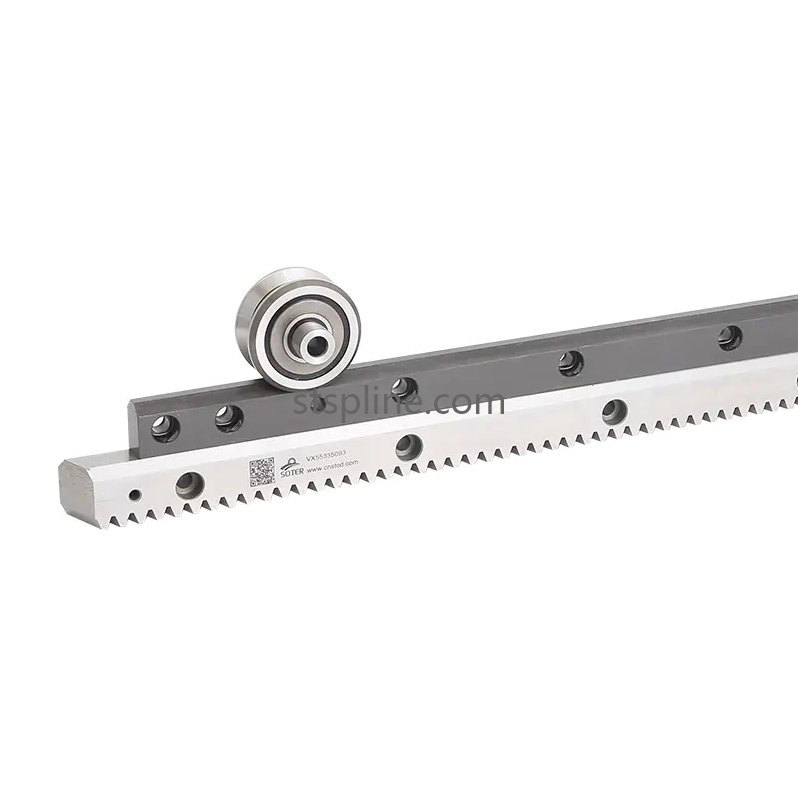
Metal transmission components are essential to many industrial machines that require controlled movement and reliable force transfer. A properly manufactured Metal Rack And Pinion system converts rotary input into linear displacement through the engagement of a pinion and a toothed rack. This arrangement is used in CNC machine tools, laser cutting systems, industrial robots, automated handling equipment, and production machinery. Its performance depends on metal properties, tooth geometry, machining quality, installation accuracy, and the operating conditions of the complete drive assembly.
Material selection determines how a component responds to mechanical loads and repeated contact. Carbon steel is commonly used for general transmission applications because it offers a practical balance of strength, machinability, and cost. Alloy steel may be considered for more demanding loads or wear conditions. Depending on the application, heat treatment or surface hardening can help improve tooth surface durability. Engineers should evaluate operating speed, load direction, duty cycle, lubrication, and environmental exposure before selecting the material and finishing process.
Tooth geometry is central to reliable engagement. Module, pressure angle, pitch, and tooth profile must be compatible between the rack and pinion. Poorly matched components can create uneven contact, excessive backlash, vibration, and premature wear. In automated positioning equipment, these issues may reduce movement repeatability or affect the consistency of machine operations. The transmission should therefore be designed together with the motor, gearbox, coupling, guide system, and supporting structure.
Machining processes establish the final dimensions and surface characteristics. Depending on technical requirements, manufacturing may involve blank preparation, tooth cutting, milling, grinding, heat treatment, deburring, and finishing. Each process must be controlled to maintain the specified geometry. For long racks, straightness and dimensional stability deserve particular attention because deviations can affect alignment across the travel path. Suitable inspection procedures help verify tooth profile, pitch accuracy, mounting dimensions, and other critical characteristics.
A carefully specified Metal Rack And Pinion assembly can be adapted to different machine layouts and transmission requirements. Custom rack lengths, mounting holes, end connections, and interface dimensions may be required for specialized equipment. When multiple sections are connected to provide extended travel, joint alignment is essential to consistent movement. Poorly positioned sections can cause the pinion to encounter changes in resistance or uneven tooth contact. Accurate mounting and a stable machine frame help reduce these risks.
Metal gear drives serve many industrial applications. CNC machines use rack transmission for axis movement, while laser cutting equipment relies on coordinated travel to follow programmed paths. Robotic manipulators and gantry systems require repeatable positioning for tools and workpieces. Automated assembly equipment uses controlled movement to transfer parts between operations. Each application has different requirements for load, speed, travel distance, and accuracy, making application-specific selection important.
Quality control helps ensure that finished parts meet their design requirements. Inspection may include dimensional measurements, tooth profile checks, pitch consistency, straightness, surface finish, and hardness testing where applicable. Drawing review before production helps clarify the tolerances and interfaces that matter most. For customized projects, technical communication between the supplier and machine builder can reduce errors related to mating components, mounting dimensions, and installation conditions.
Maintenance is also necessary for consistent operation. Suitable lubrication helps reduce friction at contacting tooth surfaces, while protective covers can limit contamination from dust, metal chips, and moisture. Periodic inspection should include fasteners, tooth contact, backlash, operating noise, and visible wear. If movement becomes irregular, checking alignment and lubrication can help identify potential causes before more extensive damage occurs.
For industrial buyers, selecting a transmission supplier involves reviewing material options, machining capability, dimensional inspection, and production consistency. SOTER manufactures rack and pinion products for industrial machinery and automation applications. Buyers can explore available straight-tooth rack configurations at https://www.stspline.com/product/straight-teeth-rack/ and evaluate the relevant product dimensions and interfaces for their equipment.

 English
 Arabic
 French
 Spanish
 Portuguese
 Turkish
 Dutch
 Italiano
 Russian
 Romaian
 Portuguese (Brazil)
 Greek
