


Ways Printed Product Cards Help Customers Compare Cannabis Products
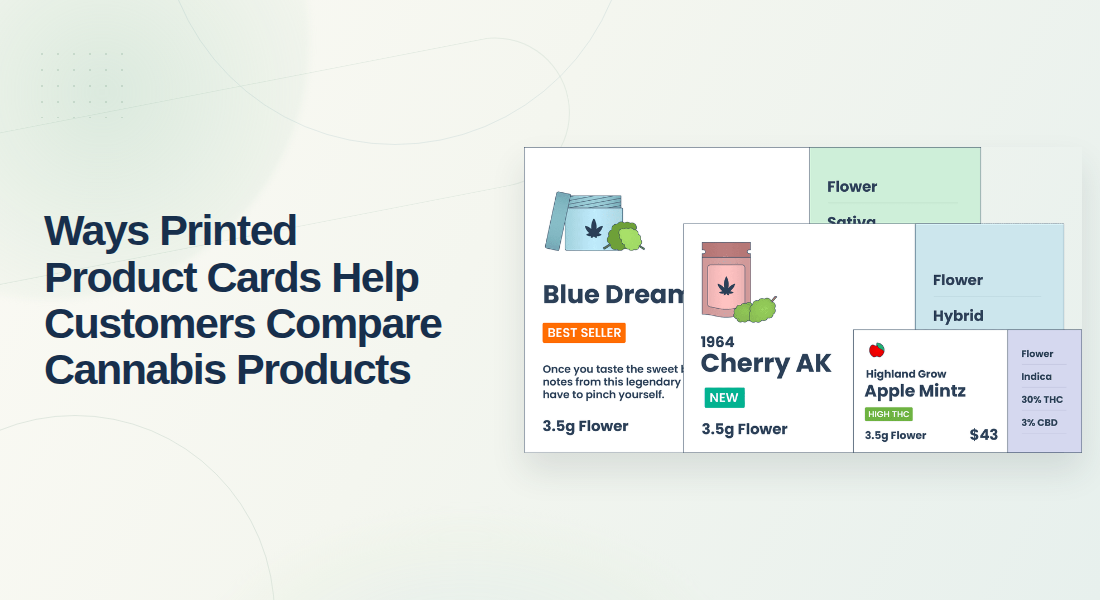
Automated print cards help cannabis retailers present product information in a clear and consistent format, making it easier for customers to compare available options. In a dispensary, customers may encounter different strains, brands, package sizes, prices, and cannabinoid profiles. Without organized information, comparing these products can become confusing, particularly when several options look similar.
Printed product cards place important details near the products they describe. When designed thoughtfully, these cards support informed customer decisions, improve product displays, and reduce the need for customers to ask staff about every detail. Automation makes the process more manageable by helping retailers keep card information accurate as products and inventory change.
1. Making Essential Product Details Easy to Compare
Customers often need basic information before deciding which product suits their preferences. A product card can display the product name, brand, package size, price, and other relevant details in one convenient place.
When retailers use the same layout for similar products, customers can compare listings more easily. For example, two flower products displayed with consistent fields allow shoppers to review their prices, sizes, and listed THC percentages without searching across different signs or labels.
The key is consistency. If every card presents information in a different order, customers may have to spend additional time locating the details they need. A standard format creates a more predictable shopping experience and makes product displays easier to navigate.
2. Explaining THC and CBD Information Clearly
Cannabinoid details can be important when customers compare cannabis products. Depending on the product, retailers may display THC and CBD percentages or milligram amounts.
These measurements should be labeled clearly because percentages and milligrams are not interchangeable. The information should also come from reliable product records rather than assumptions or estimates.
A well-designed card gives cannabinoid details enough space to remain readable without overwhelming the rest of the product information. Retailers should avoid unsupported claims about medical benefits or guaranteed effects. Clear, factual information helps customers understand the listed characteristics and ask more specific questions when they need assistance.
3. Showing Prices and Package Sizes Together
Price comparisons become more useful when customers can also see the quantity or package size associated with each product. A low price alone does not necessarily indicate better value if the package sizes differ.
Printed product cards can place the price beside the relevant size, weight, or unit information. This allows customers to review products using consistent details and reduces confusion when several items have similar names or packaging.
Retailers should check that displayed prices match their current records and clearly identify any applicable promotions. If prices change frequently, automated systems connected to compatible point-of-sale software can help reduce the risk of outdated information remaining on product cards.
4. Highlighting Strain Notes and Flavor Profiles
For products where strain, flavor, or aroma information is relevant, concise descriptions can help distinguish one option from another. Retailers may include producer-provided strain notes, flavor profiles, or other factual product characteristics.
These descriptions should remain brief enough to scan quickly. A card filled with long paragraphs can make it harder for customers to compare the products displayed beside one another.
Consistent wording also matters. If one card uses short flavor notes while another contains lengthy promotional language, customers may struggle to compare the information fairly. A shared format helps maintain clarity while allowing each product's distinctive details to stand out.
5. Organizing Product Displays More Effectively
Printed cards can do more than provide facts. They can help retailers organize shelves, display cases, and product sections so customers can understand what is available.
For example, a dispensary might use cards to identify individual strains, distinguish brands, or highlight selected product categories. Consistent headings and visual styling make it easier to connect each card with the correct item.
Labels and badges can draw attention to new arrivals, featured products, or eligible promotions. However, too many visual elements can distract from essential details. Retailers should use these features selectively and ensure every label accurately describes the product.
A clear display allows customers to browse independently while helping staff answer questions more efficiently.
6. Keeping Product Cards Updated Automatically
One challenge with printed cards is maintaining accurate information when inventory, prices, or product details change. Manual updates can involve editing individual files, checking spreadsheets, and printing replacement cards. Repeating this process across hundreds of products can take considerable time.
Automated print card software can reduce this workload by connecting product information with supported inventory or POS systems. When relevant data changes, the system can generate updated cards according to its settings.
Some platforms also support smart printing, which identifies new or updated products so retailers do not need to reprint every card during each update cycle. This helps reduce unnecessary printing while making it easier to maintain current displays.
Automation still depends on accurate source information. Staff should review product records and confirm that replacement cards are placed beside the correct products.
7. Creating a Consistent Retail Experience
Customers may visit a dispensary more than once and expect product information to follow a familiar format. Consistent cards make it easier to recognize prices, product sizes, and other details from one section to another.
Retailers can also customize card layouts to match their brand identity. Backgrounds, colors, typography, and selected product information can be arranged to create a recognizable in-store presentation.
For businesses operating several locations, shared templates can help maintain a consistent appearance across stores. Location-specific information must still be managed carefully, especially when products, prices, and inventory differ between locations.
A consistent presentation helps customers focus on product comparisons rather than adjusting to a different layout for every display.
8. Supporting Staff and Daily Store Operations
Clear product cards can reduce repetitive questions about prices, sizes, and basic product characteristics. Customers can review visible information first, allowing staff to spend more time discussing individual preferences and answering questions that require personal assistance.
Automation can also simplify the work involved in preparing and replacing cards. Instead of creating each card manually, employees can use a centralized system to generate print-ready files and update selected products when needed.
BudSense provides automated print card tools designed for cannabis retailers. Its features include customizable designs, scheduled and bulk printing, smart filters, badges, labels, and expanded cannabinoid information. The platform can generate cards for new or updated products, helping stores avoid unnecessary reprinting. Retailers can review the features on the BudSense.
Before choosing a platform, retailers should confirm POS compatibility, available product fields, printing requirements, and whether the system supports their store's workflow.
Final Thoughts
Printed product cards help customers compare cannabis products by presenting essential information where it is needed. Clear prices, package sizes, cannabinoid details, and concise product descriptions make it easier to review available options. Consistent layouts also improve product organization and create a more straightforward in-store experience.
With automated print card software, dispensaries can reduce repetitive updates and maintain more consistent product displays. Combining accurate data, readable design, and regular quality checks helps retailers keep their cards useful for customers and manageable for staff.
FAQs
1. What information should a cannabis product card include?
A card may include the product name, brand, price, package size, THC and CBD details, and relevant strain or flavor information when available.
2. How do printed product cards help customers compare products?
They present important details beside the products, allowing customers to compare prices, sizes, and listed characteristics without searching through multiple sources.
3. What are automated print cards?
They are product information cards generated and maintained with software that can synchronize supported product data and prepare updated cards for printing.
4. Can automated print cards reduce staff workload?
Yes. Features such as smart printing, scheduled printing, and automatic updates can reduce manual editing and unnecessary reprinting.
5. Can dispensaries customize their printed product cards?
Many print card platforms support customized colors, backgrounds, layouts, labels, and badges so retailers can match their store branding and information needs.

 English
 Arabic
 French
 Spanish
 Portuguese
 Deutsch
 Turkish
 Dutch
 Russian
 Romaian
 Portuguese (Brazil)
 Greek
