


Hide Free Dog Chews: Natural Alternatives for Everyday Chewing
Hide free dog chews are chewing treats made without animal hide, including the cattle hide commonly used in traditional rawhide products. They are available in different forms, such as meat-based chews, tendons, collagen products, and certain plant-based alternatives. Pet owners may consider these options when looking for a different chewing texture, avoiding hide ingredients, or accommodating their dog's individual preferences.
When searching for hide free dog chews, it is important to understand what each product contains and how it is prepared. Not every hide-free chew offers the same nutritional value, durability, or chewing experience. Some are designed to be eaten quickly, while others provide a more extended activity. Checking ingredient labels, selecting an appropriate size, and considering your dog's chewing habits can help you make a more suitable choice.
Why Do Pet Owners Look for Hide-Free Chews?
Pet owners consider hide-free options for several reasons, including ingredient preferences, chewing needs, and concerns about how traditional hide products are processed.
Different Ingredient Choices
Some owners prefer treats made from meat, connective tissue, or other ingredients instead of animal hide. Reading the ingredient list helps identify whether a product meets these preferences.
Alternative Textures
Hide-free products can offer textures that differ from traditional hide chews. Depending on the material, some may be softer, more flexible, or easier to break into smaller pieces. The best texture depends on the dog's chewing style and dental health.
Variety in Treat Routines
Offering different suitable treats can add variety to a dog's routine. However, new treats should be introduced gradually, and their calories should be included in the dog's daily food allowance.
Specific Dietary Preferences
Some dogs need treats that avoid particular ingredients because of food sensitivities or veterinary dietary recommendations. Owners should check product labels carefully and consult a veterinarian when managing a diagnosed food allergy.
Different Types of Hide-Free Dog Chews
Several categories of dog chews do not use traditional cattle hide. Their ingredients and characteristics vary, so it is worth checking the product description before purchasing.
Meat-Based Chews
Meat-based chews are made from animal-derived ingredients and may provide a savory option for dogs that enjoy meat flavors. Their firmness and chewing time vary by product. Check whether the treat is intended for occasional chewing or quick consumption.
Beef Tendon Chews
Beef tendon chews are made from connective tissue rather than hide. They provide a different texture from traditional rawhide and may appeal to dogs that enjoy animal-based treats. Select an appropriate size and supervise your dog throughout chewing.
Collagen Chews
Some collagen chews are made from animal connective tissues and are marketed as alternatives to traditional hide chews. However, the source material and manufacturing process differ among products. Confirm that the product is genuinely hide-free if avoiding hide is your priority.
Fish-Based Chews
Certain fish-based treats provide another animal-derived option. These products vary in firmness, odor, and nutritional composition. Check for bones or other physical hazards where relevant, and follow the manufacturer's feeding guidance.
Plant-Based Chews
Plant-based products may use ingredients such as starches, vegetables, or other plant materials. Some contain several ingredients, binders, or flavorings, so they may not suit every dog. Check the label for allergens and choose a texture appropriate for your pet.
How to Choose Suitable Hide-Free Dog Chews
Selecting a chew involves more than checking whether it contains hide. Consider these factors before buying:
-
Ingredient transparency: Confirm the main ingredients and check for additives your dog needs to avoid.
-
Appropriate size: Avoid chews that can be swallowed whole or become choking hazards.
-
Texture and firmness: Very hard products can fracture teeth, while soft products may be swallowed quickly.
-
Chewing behavior: Dogs that break off and gulp large pieces may need alternatives to conventional chews.
-
Quality and handling: Choose products with clear manufacturing, storage, and feeding instructions.
-
Nutritional suitability: Consider calories and ingredients alongside your dog's regular diet.
If your dog has food sensitivities, dental problems, or digestive concerns, ask your veterinarian which chew types are appropriate.
Are Hide-Free Dog Chews Safer Than Rawhide?
Hide-free dog chews are not automatically safer than rawhide. Safety depends on the material, shape, firmness, manufacturing quality, and the way an individual dog chews.
Some hide-free products may soften or break apart differently from traditional hide chews, but they can still present risks. Dogs may choke on large pieces, swallow material that causes digestive obstruction, or damage their teeth on excessively hard treats.
Always supervise chewing sessions. Remove a chew when it becomes small enough to swallow whole, develops sharp edges, or starts breaking into pieces that your dog gulps. Avoid leaving your dog unattended with any chew.
If your dog develops vomiting, abdominal pain, difficulty swallowing, or loss of appetite after chewing, contact a veterinarian promptly. Suspected choking or breathing difficulty requires emergency veterinary attention.
Hide-Free Chews for Puppies and Heavy Chewers
Puppies may benefit from age-appropriate chewing activities, but not every chew is suitable for growing teeth or small mouths. Choose products designed for the puppy's size and developmental stage, and supervise every session.
Heavy chewers require additional care because they may quickly destroy a product or swallow large pieces. A chew advertised as durable is not necessarily suitable for a powerful chewer. Avoid excessively hard products and stop using any chew that your dog cannot handle safely.
If your dog consistently gulps pieces or has a history of swallowing foreign objects, consult your veterinarian before introducing another chew.
Natural Dog Chews and the Ugly Chews Difference
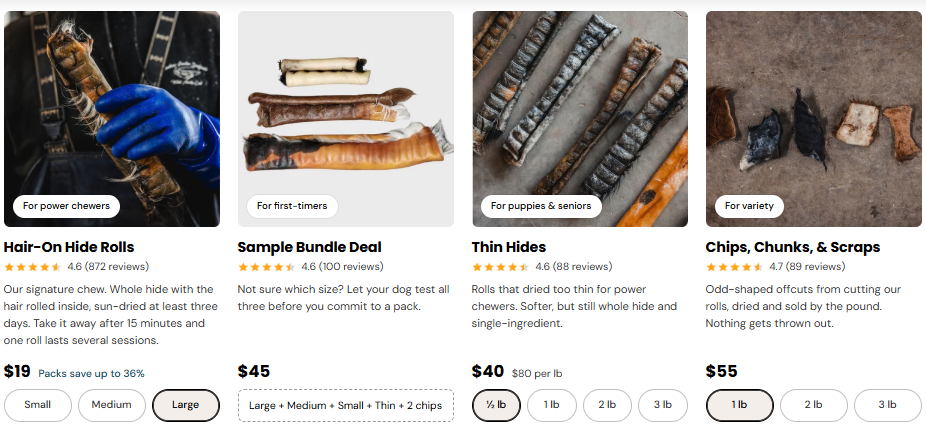
Pet owners who prefer simple ingredients may also compare natural animal-based chews and their preparation methods. Ugly Chews focuses on cattle-hide products, including hair-on hide rolls, chips, chunks, and scraps, with an emphasis on minimal processing and straightforward ingredients.
It is important to distinguish these products from hide-free alternatives: cattle-hide chews contain hide and therefore do not meet a strict hide-free requirement. If your goal is to avoid hide entirely, check the ingredient list of any product before purchasing and select a genuinely hide-free option.
For owners comparing different chewing products, ingredient transparency and an understanding of the dog's individual needs are more useful than relying on broad labels such as “natural” or “safe.”
Tips for Feeding and Storing Dog Chews
Introduce new chews gradually and follow the manufacturer's serving instructions. Treats should generally account for no more than 10% of a dog's daily calorie intake, with the rest coming from a complete and balanced diet.
Store chews according to the package directions, keeping them protected from moisture, heat, and pests. Inspect each product before offering it, and discard anything that appears moldy, damaged, contaminated, or spoiled.
Final Thoughts
Hide-free dog chews offer alternatives for pet owners who want to avoid traditional cattle-hide ingredients. Options include meat-based treats, tendons, collagen products, fish-based treats, and plant-based chews, each with different textures and considerations.
The most suitable product depends on your dog's chewing habits, size, dietary needs, and dental health. Read ingredient labels carefully, supervise every chewing session, and seek veterinary advice when necessary. If avoiding hide is essential, verify that the product contains no hide-derived ingredients before adding it to your dog's treat routine.

 English
 Arabic
 French
 Spanish
 Portuguese
 Deutsch
 Turkish
 Dutch
 Italiano
 Romaian
 Portuguese (Brazil)
 Greek
