


Why Your Website Visitors Leave Without Contacting Your Business
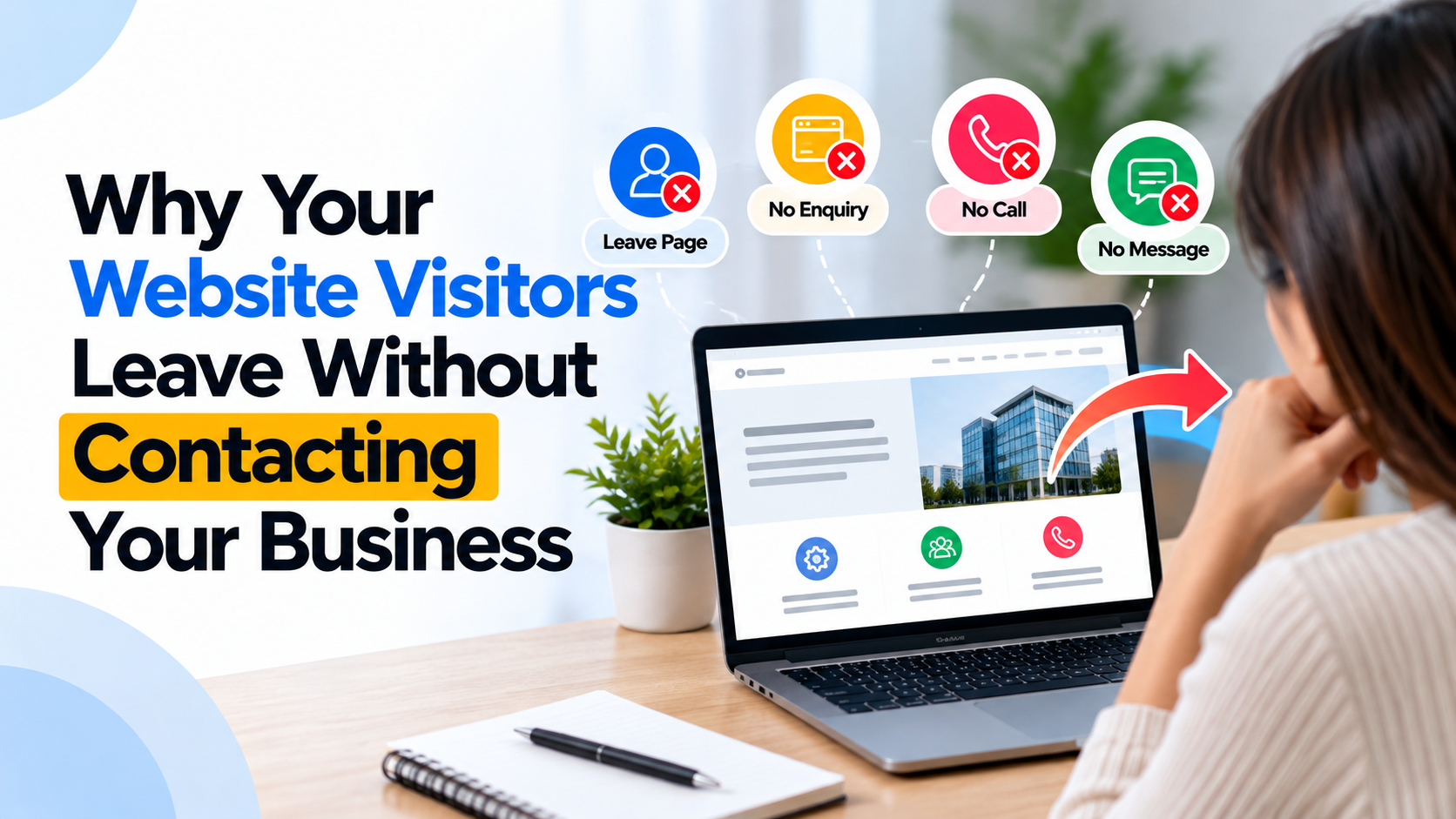
Getting visitors to a website is an important step in digital marketing, but traffic alone does not guarantee business growth. Many companies invest in search engine optimization, social media marketing, and online advertising to attract visitors, yet struggle to turn those visitors into enquiries or customers.
When people visit a website but leave without taking action, the problem may be related to the user experience, content, trust signals, or conversion process. Understanding these issues helps businesses identify what needs improvement and make better use of their existing traffic.
Your Website Does Not Answer Customer Questions
Visitors usually arrive with a specific purpose. They may want to understand a service, compare providers, check pricing, or find out how a company can solve their problem.
If the website contains vague descriptions or fails to explain the benefits of its services, visitors may leave to look for clearer information elsewhere.
Businesses should create service pages that explain what they offer, who their services are designed for, and what customers can expect. Clear information helps visitors make informed decisions and understand whether the business meets their requirements.
Poor Website Navigation Creates Friction
A website should make it easy for visitors to find important information. Complicated menus, confusing layouts, broken links, and difficult contact forms can prevent users from completing their intended actions.
Review the website from a visitor's perspective. Check whether the main services are easy to find, contact details are visible, and forms work properly on desktop and mobile devices.
A simple navigation structure helps users move naturally from learning about a service to contacting the business.
Slow Loading and Mobile Problems Can Cost Opportunities
Many visitors browse websites on smartphones. If a page loads slowly, text is difficult to read, or buttons are hard to tap, users may abandon the experience before exploring the offer.
Businesses should check page speed, mobile responsiveness, image sizes, and unnecessary scripts. Google Search Console and website performance tools can help identify technical issues that deserve attention.
A smooth browsing experience does not guarantee conversions, but it removes unnecessary obstacles that may discourage potential customers.
Visitors May Not Trust Your Business Yet
Before making an enquiry, customers often look for reasons to trust a company. They may check business information, customer reviews, project examples, or the clarity of its service descriptions.
Websites should present accurate contact details, transparent service information, and genuine testimonials or case studies where available. Security is also important, particularly when visitors submit personal information through forms.
Avoid exaggerated promises or unsupported claims. Honest communication gives potential customers a clearer basis for deciding whether to work with a business.
Your Website Does Not Guide Visitors Towards the Next Step
Even interested visitors may leave if they cannot understand what to do next. Every important service page should have a clear and relevant call to action, such as requesting a quotation, booking a consultation, or contacting the company.
The action should match the visitor's needs. Someone reading an introductory guide may not be ready to purchase immediately, while someone reviewing a service page may be prepared to request more information.
Businesses should also make contact forms straightforward and ask only for information that is genuinely necessary.
Why Website Traffic Does Not Always Generate Leads
Traffic and leads measure different things. A website can attract visitors who are researching a topic without intending to purchase a service. Other visitors may arrive through keywords or advertisements that do not match the company's actual offering.
This is why businesses should evaluate not only how many visitors arrive but also what those visitors do afterward.
For a deeper explanation of this challenge, read our related article: Why Your Website Gets Traffic but No Leads: 7 Problems Worth Fixing.
The article explores common reasons that websites attract visitors without generating enough enquiries and provides additional problems businesses should investigate.
Measure Results Before Making Changes
Businesses should use analytics to understand where visitors come from, which pages they visit, and whether they complete important actions.
Google Search Console provides information about organic search impressions, clicks, and search positions. Website analytics can help identify landing pages, user behaviour, and conversion paths. Reviewing enquiry data alongside these metrics can reveal where potential customers are dropping off.
Rather than changing everything at once, test improvements systematically. For example, clarify a service page's headline, simplify a contact form, or make a call to action more visible. Compare results over a reasonable period to understand whether the change helped.
Conclusion
A website should do more than attract visitors. It should help people understand a business, build confidence in its services, and take the next appropriate step.
By improving content clarity, navigation, mobile usability, trust signals, and calls to action, businesses can reduce barriers that prevent visitors from becoming potential customers.
The most effective approach starts with understanding visitor behaviour and making improvements based on evidence rather than assumptions.

 English
 Arabic
 French
 Portuguese
 Deutsch
 Turkish
 Dutch
 Italiano
 Russian
 Romaian
 Portuguese (Brazil)
 Greek
