


DC EV Charger - A Complete Guide to Fast Electric Vehicle Charging in India
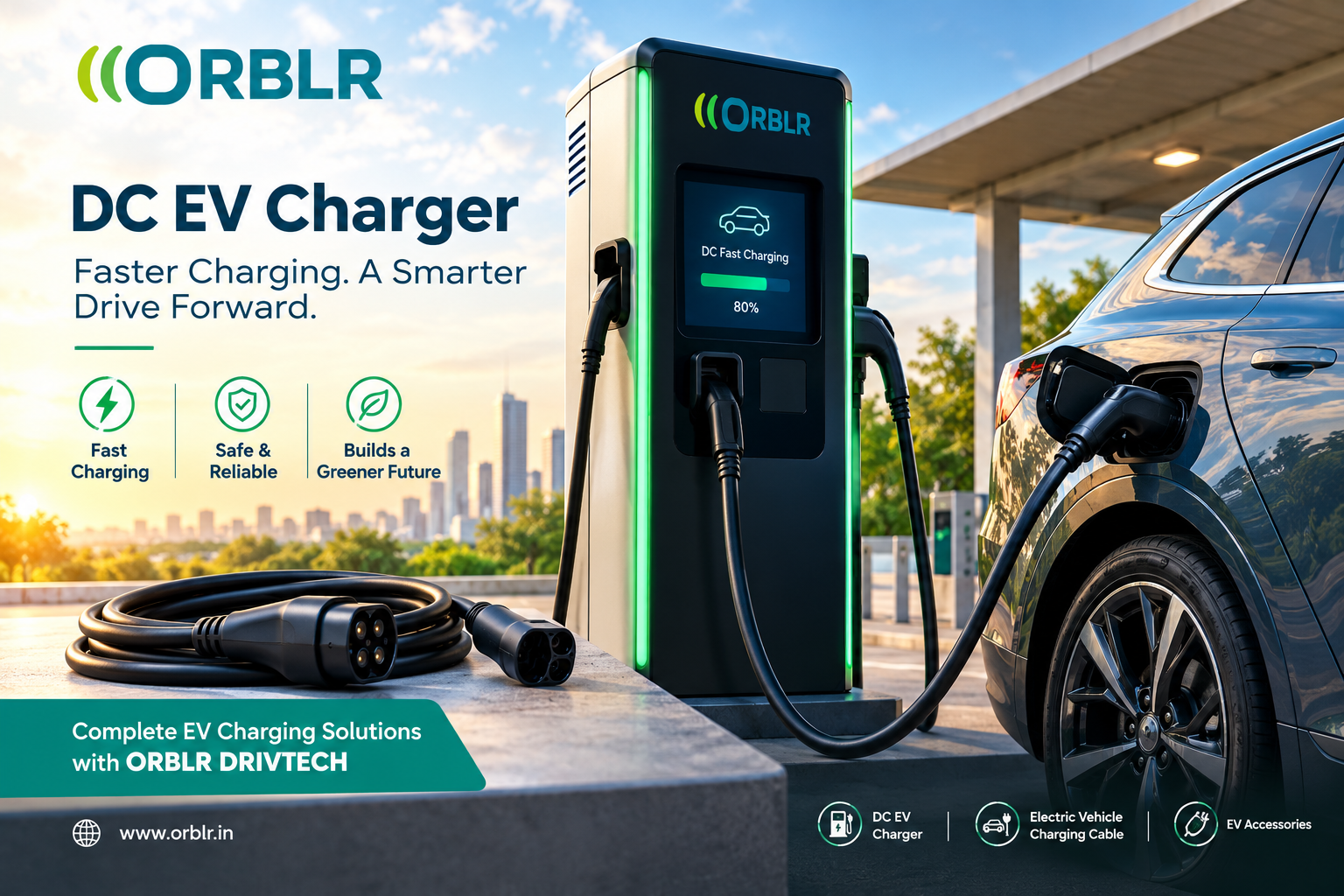
As electric vehicles (EVs) become more popular in India, the demand for faster and more convenient charging solutions is growing. A DC EV charger is an excellent option for drivers who need to charge their vehicles quickly, especially at commercial locations, highways, offices, and public charging stations.
Unlike conventional AC charging, DC charging supplies direct current to the vehicle's battery, helping reduce charging time for compatible EVs. At ORBLR DRIVTECH, we believe that understanding EV charging technology helps drivers and businesses make informed decisions about their charging needs.
What Is a DC EV Charger?
A DC EV charger is a charging system that converts alternating current (AC) electricity into direct current (DC) before delivering it to a compatible electric vehicle's battery. Since the conversion takes place inside the charging unit, the vehicle can receive DC power directly.
DC chargers are commonly used at public charging stations, fleet depots, commercial facilities, and highway charging hubs. Depending on the charger's power output, vehicle compatibility, battery condition, and temperature, charging can take significantly less time than conventional AC charging.
How Does a DC EV Charger Work?
A DC EV charger converts electricity from the power supply into the form required by the vehicle's battery. The charger and vehicle communicate during the charging process to manage power delivery and maintain safe operating conditions.
The charging speed depends on several factors, including:
-
Charger power: Higher-power chargers can support faster charging when the vehicle allows it.
-
Battery capacity: Larger batteries generally require more energy to charge.
-
Vehicle compatibility: Every EV has a maximum supported DC charging rate.
-
Battery temperature and charge level: Charging power may decrease when the battery is very cold, hot, or nearly full.
Understanding these factors helps EV owners choose a suitable charging solution.
Key Benefits of a DC EV Charger
1. Faster Charging
A DC EV charger can charge compatible electric vehicles much faster than many standard AC charging systems. This is especially useful for drivers who need to continue their journeys with minimal downtime.
2. Ideal for Commercial Use
Businesses can install DC chargers at highway stops, shopping centres, hotels, fleet depots, and commercial parking facilities. Faster charging can improve vehicle availability and support customer convenience.
3. Better Fleet Productivity
Electric taxis, delivery vehicles, and other commercial EV fleets may benefit from reduced charging downtime, depending on their operating schedules and charging requirements.
4. Supports Growing EV Infrastructure
As EV adoption expands across India, DC fast charging infrastructure can help make long-distance electric travel more practical and convenient.
Why Is an Electric Vehicle Charging Cable Important?
An electric vehicle charging cable is an essential part of the EV charging system. It carries electrical power between the charger and the vehicle through compatible connectors.
For DC charging, the cable and connectors must be designed for the charger's voltage, current, temperature, and applicable safety requirements. Many DC charging stations have an integrated charging cable, while other charging arrangements may use different compatible configurations.
Before selecting a cable, check the following:
-
Connector compatibility with your vehicle and charging equipment.
-
Rated voltage and current capacity.
-
Cable insulation, durability, and temperature performance.
-
Compliance with applicable safety standards.
Always use manufacturer-approved or suitably certified charging equipment. Never assume that an ordinary AC charging cable can be used for DC fast charging.
How to Choose the Right DC EV Charger
Before investing in a DC EV charger, consider your charging requirements and installation location.
-
Check vehicle compatibility: Confirm the connector standard and maximum DC charging rate supported by your EV.
-
Choose the right power output: Select a charger based on vehicle requirements, expected usage, and available electrical capacity.
-
Assess installation needs: Commercial DC chargers may require significant electrical infrastructure, professional installation, and suitable site planning.
-
Prioritise safety: Look for appropriate protection features, reliable equipment, and compliance with relevant standards.
-
Consider future demand: Businesses should assess expected traffic, charging sessions, and the possibility of supporting more vehicles in the future.
Why Choose ORBLR DRIVTECH for EV Charging Solutions?
ORBLR DRIVTECH supports the growing electric mobility ecosystem by helping customers explore EV charging products and accessories suited to their requirements. Whether you are researching a DC EV charger for commercial use or looking for a suitable electric vehicle charging cable, checking product specifications and compatibility is essential.
Visit ORBLR DRIVTECH to explore available EV charging solutions and accessories.
Frequently Asked Questions (FAQs)
1. What is a DC EV charger?
A DC EV charger converts AC electricity into DC power within the charging unit and delivers it to a compatible electric vehicle's battery for faster charging.
2. How fast can a DC EV charger charge an electric car?
Charging time varies according to the charger's power output, battery capacity, vehicle charging limits, battery temperature, and current charge level. Some compatible vehicles can reach around 80% charge in approximately 20–40 minutes at suitable high-power chargers, but actual times vary.
3. Is a DC EV charger better than an AC charger?
Neither is universally better. DC chargers are generally suited to fast public and commercial charging, while AC chargers are often practical for home, workplace, and overnight charging.
4. Can I use any electric vehicle charging cable with a DC charger?
No. The cable and connectors must be compatible with the charging system, vehicle, electrical ratings, and relevant safety requirements.
5. Where are DC EV chargers commonly installed in India?
DC EV chargers are commonly used at public charging stations, highways, commercial parking facilities, fleet depots, and selected workplaces where faster charging is needed.
Conclusion
A DC EV charger can make electric vehicle charging faster and more convenient for compatible vehicles, particularly in public and commercial settings. Choosing the right charger and a compatible electric vehicle charging cable helps support reliable operation and safe charging.
With the growth of electric mobility in India, ORBLR DRIVTECH encourages EV owners and businesses to evaluate their charging requirements carefully and select suitable, standards-compliant charging solutions.

 English
 Arabic
 French
 Spanish
 Portuguese
 Deutsch
 Turkish
 Dutch
 Italiano
 Russian
 Romaian
 Portuguese (Brazil)
