


What Are the Key Vendor Management Systems Trends Shaping the EMEA Market in 2026?
Managing a flexible workforce has become an important business priority for organizations across Europe, the Middle East, and Africa (EMEA). Enterprises increasingly work with staffing agencies, independent professionals, service providers, and other external talent sources. Although this approach offers workforce flexibility, it also introduces challenges involving supplier coordination, cost visibility, compliance, onboarding, and workforce performance.
Managing these activities through spreadsheets, emails, and disconnected applications can make it difficult to maintain consistent processes across countries and business units. Organizations need greater visibility into their external workforce and a structured way to manage supplier relationships throughout the engagement lifecycle.
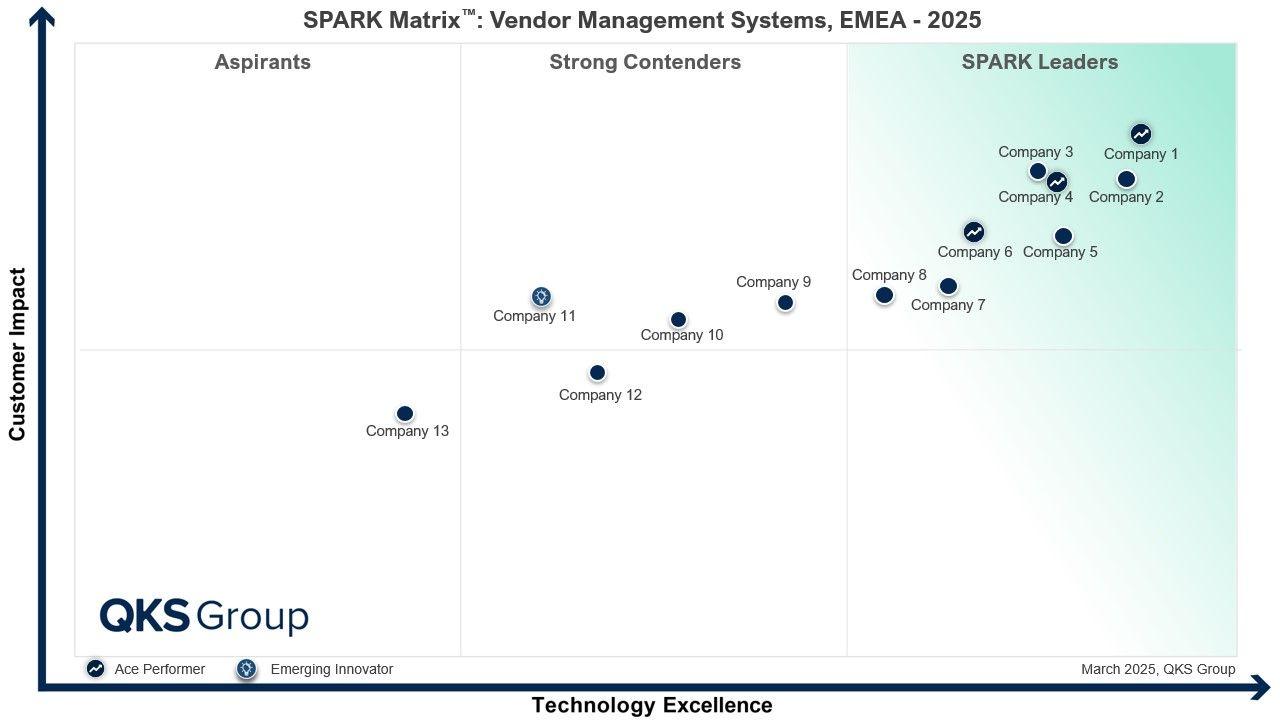
This is where Vendor Management Systems (VMS) play an important role. QKS Group’s SPARK Matrix™: Vendor Management Systems (VMS), EMEA, 2025 examines the regional market, emerging technology trends, vendor capabilities, and competitive positioning. The research offers strategic insights for technology providers developing their EMEA growth strategies and organizations evaluating VMS solutions.
Click Here For More Information: https://qksgroup.com/market-research/spark-matrix-environmental-health-safety-software-ehs-q2-2025-8978
1. What Are Vendor Management Systems?
Vendor Management Systems (VMS) are technology platforms that help organizations manage external workforce processes and relationships with staffing suppliers and service providers. Depending on the solution, these platforms can support activities from workforce requisition and candidate submission to onboarding, time tracking, invoicing, and reporting.
Key capabilities may include:
- Workforce requisition management: Create, approve, and track requests for temporary workers and external professionals.
- Supplier management: Coordinate staffing agencies, monitor supplier performance, and standardize engagement processes.
- Candidate management: Organize candidate submissions, selection workflows, and placement activities.
- Onboarding and offboarding: Manage documentation, approvals, and process requirements throughout a worker's engagement.
- Time and expense tracking: Record working hours, expenses, and relevant approvals.
- Compliance management: Support documentation, audit trails, and applicable workforce policies.
- Reporting and analytics: Provide visibility into workforce activity, supplier performance, and spending.
By bringing these activities together, a VMS can help organizations improve operational consistency and make more informed workforce decisions.
2. Why Is the EMEA Market Important for VMS Providers?
The EMEA region brings together organizations operating across different countries, regulatory environments, industries, and workforce models. As businesses expand their use of external talent, managing these differences becomes increasingly important.
Managing regional complexity
Organizations operating across multiple EMEA markets may need to coordinate different processes, languages, currencies, documentation requirements, and local employment practices. VMS providers must demonstrate that their platforms can accommodate regional operating needs while maintaining centralized oversight.
Improving workforce cost visibility
External workforce costs can be distributed across business units, projects, suppliers, and locations. Without consolidated reporting, organizations may struggle to understand total spending or identify opportunities to improve supplier utilization and workforce planning.
Strengthening supplier relationships
Organizations often work with several staffing agencies to fill roles across different functions and locations. Standardized workflows and supplier performance reporting can help procurement and HR teams monitor delivery, improve accountability, and make better-informed sourcing decisions.
Supporting flexible workforce strategies
Demand for specialized skills can change rapidly. A VMS can help organizations coordinate external talent requirements, manage requisitions, and track workforce activity as business priorities evolve.
For technology vendors, these requirements create opportunities to differentiate through regional adaptability, integration capabilities, compliance support, and measurable customer outcomes.
3. What Are the Key Vendor Management Systems Trends in 2025?
Automation across workforce processes
Manual approvals, duplicate data entry, and disconnected supplier communications can slow workforce engagement. Automation can streamline requisitions, approvals, onboarding tasks, timesheet reviews, and invoice workflows.
VMS providers that reduce administrative friction while maintaining appropriate controls can offer organizations a more consistent experience.
AI and data-driven workforce decisions
Artificial intelligence and advanced analytics can help identify workforce patterns, highlight supplier performance trends, and support planning decisions. Depending on the platform and available data, these capabilities may also assist with candidate matching and forecasting talent requirements.
For vendors, meaningful differentiation depends on demonstrating practical business value rather than simply promoting AI as a feature.
Integration with enterprise applications
VMS platforms increasingly need to exchange information with HR management systems, procurement platforms, finance applications, payroll systems, and identity management tools.
Effective integrations can reduce manual data transfers, improve reporting consistency, and connect workforce activities with broader enterprise processes.
Enhanced compliance and governance
Organizations must manage external workforce engagements within their applicable legal, contractual, and internal policy requirements. Digital records, approval workflows, and reporting can support governance and make relevant information easier to access during reviews or audits.
Vendors serving the EMEA region should clearly communicate how their solutions support customer-specific regional requirements. Organizations should validate legal and regulatory suitability for each country in which they operate.
Greater emphasis on user experience
VMS platforms serve procurement teams, HR professionals, hiring managers, staffing suppliers, and workers. Complex interfaces can slow adoption and create additional administrative work.
Simplified workflows, self-service functionality, mobile accessibility, and role-based dashboards can help different stakeholders complete their tasks more efficiently.
Check SPARK Plus Study Here: https://qksgroup.com/sparkplus?market-id=479&market-name=environmental-health-%26-safety-software
4. How Can a VMS Deliver Business Value?
A well-selected and implemented Vendor Management System can support several business objectives.
Improved operational efficiency: Standardized workflows and automation can reduce repetitive administrative tasks.
Greater spending visibility: Consolidated reporting helps organizations understand workforce costs across suppliers and business units.
Better supplier performance management: Consistent metrics can help organizations identify delivery issues and compare supplier performance against established expectations.
Stronger workforce governance: Centralized documentation and approvals can improve oversight of external workforce engagements.
More informed planning: Workforce analytics can help decision-makers understand demand patterns and make better-informed sourcing choices.
The results depend on implementation quality, data accuracy, system integration, process design, and user adoption. Organizations should establish clear performance indicators before deployment to measure whether a platform delivers the expected improvements.
5. What Should Organizations Evaluate When Choosing a VMS Provider?
Selecting a platform requires more than comparing feature lists. Buyers should consider their workforce model, regional footprint, existing enterprise systems, and long-term business objectives.
Important evaluation criteria include:
- Functional capabilities: Assess requisition management, supplier coordination, onboarding, time tracking, invoicing, and reporting.
- Technology excellence: Examine automation, analytics, integration options, security, scalability, and usability.
- Regional suitability: Validate support for the countries, currencies, languages, and operating requirements relevant to the organization.
- Customer impact: Consider implementation support, service quality, user adoption, and the platform's ability to address business needs.
- Vendor differentiation: Compare product strategy, innovation, market presence, and the provider's ability to support evolving workforce requirements.
For vendors, understanding these evaluation priorities can help sharpen product positioning, identify capability gaps, and communicate differentiated value to enterprise buyers.
6. What Does QKS Group’s SPARK Matrix™ Offer VMS Vendors?
QKS Group’s SPARK Matrix™: Vendor Management Systems (VMS), EMEA, 2025 provides regional market analysis, technology trend insights, and vendor evaluation through its proprietary SPARK Matrix™ framework.
The research is designed to help technology vendors understand the EMEA competitive landscape and identify opportunities to strengthen their market strategies. It also helps organizations assess vendor capabilities, competitive differentiation, and market positioning.
For VMS providers, regional market intelligence can support several strategic priorities:
- Clarifying differentiation in a competitive technology market.
- Understanding evolving customer expectations.
- Identifying opportunities for product innovation.
- Refining regional go-to-market strategies.
- Strengthening evidence-based conversations with prospective customers.
For buyers, the research provides a structured perspective on the market to support further vendor assessment and technology selection.
Download Sample Report Here: https://qksgroup.com/download-sample-form/spark-matrix-environmental-health-safety-software-ehs-q2-2025-8978
Conclusion
The EMEA Vendor Management Systems market is shaped by the need for greater workforce visibility, streamlined supplier coordination, stronger governance, and more informed decision-making. Automation, analytics, integration, and regional adaptability are important considerations as organizations modernize their external workforce management processes.
For technology providers, success requires more than a broad feature set. Vendors must demonstrate how their platforms address regional customer requirements and deliver measurable business value.
QKS Group’s SPARK Matrix™ research offers a market intelligence resource for understanding VMS trends, vendor capabilities, and competitive positioning in EMEA.

 English
 French
 Spanish
 Portuguese
 Deutsch
 Turkish
 Dutch
 Italiano
 Russian
 Romaian
 Portuguese (Brazil)
 Greek
