


Ashoka Tree Leaves: Shape, Colour, Features, and Identification
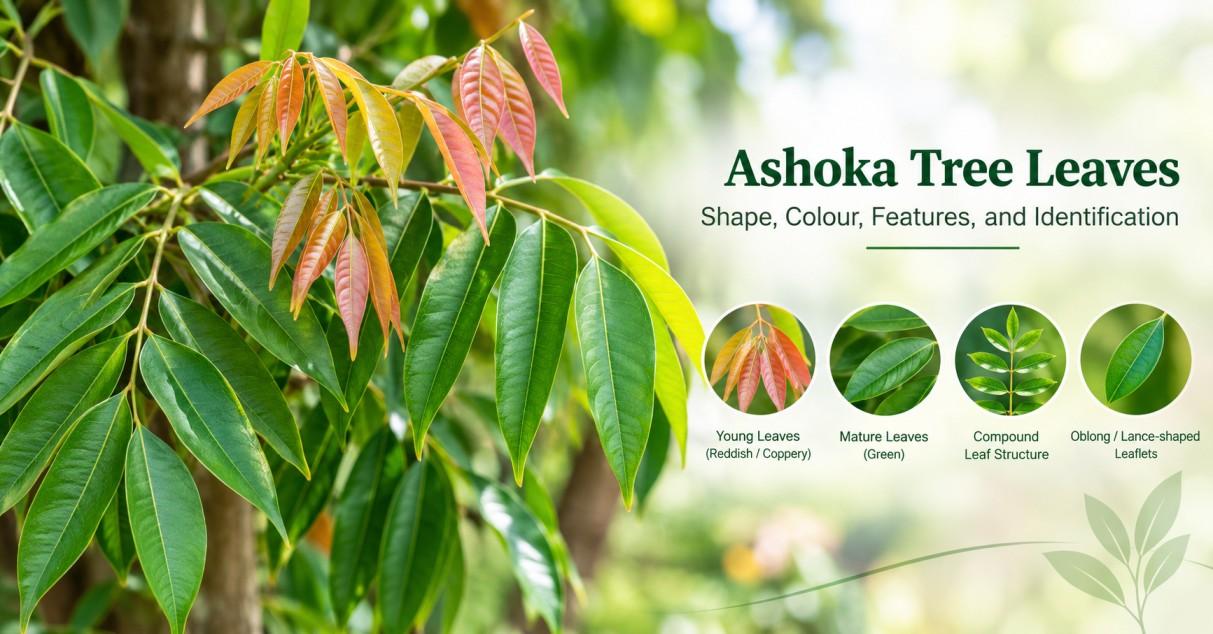
The Ashoka tree is well known in India for its cultural significance, lush foliage, and traditional applications. Its leaves play a vital role in identifying the plant and differentiating it from false Ashoka. Knowing what Ashoka tree leaves look like helps in recognising the plant and its genuine botanical appearance.
What Do Ashoka Tree Leaves Look Like?
The leaves of the true Ashoka tree (Saraca asoca) are compound leaves that have leaflets with an oblong or lanceolate shape.
The leaves tend to be drooping and soft when young but become stiff and hard as they mature.
The appearance, size, pattern, and arrangement of true Ashoka tree leaves make it possible to identify the plant.
Ashoka Tree Leaves: Colour And Appearance
The young leaves of Ashoka trees are coppery, reddish, pink, or brown in colour before they mature and change to a darker green. Hence, new leaves of the true Ashoka (Saraca asoca) look beautiful and add to the tree’s aesthetics.
The mature leaves are green and glossy with smooth leaf margins. The leaflets grow in pairs and are attached to the central stalk or rachis, which creates a showy display. Each leaf of true Ashoka has four or more leaflets, and they grow in an opposite arrangement.
The overall appearance of Ashoka leaves can vary depending on the age and the environment in which the plant grows.
Important Features Of Ashoka Tree Leaves
The following are the major features of Ashoka leaves that can help in identifying the true plant species.
- Compound leaves: True Ashoka leaves are compound leaves, which means that they have leaflets that grow from a central stalk.
- Opposite leaflets: Ashoka leaflets grow in pairs from the central axis.
- Lanceolate-ovate shape: True Ashoka leaves are ovate or lanceolate and have smooth margins.
- Young leaves are coppery, pink, or bronze: New leaves start growing in a different colour before changing to green.
- Dark green mature leaves: As the leaves mature, their colour changes to a darker shade of green and becomes glossy.
- Showy appearance: True Ashoka leaves grow in clusters and have a broad and opposite leaflet arrangement, which makes them stand out.
How To Identify An Ashoka Tree By Its Leaves?
Using the key identification features described above, it should be possible to identify an Ashoka tree by its foliage. The leaves of false Ashoka are long, lanceolate, pendent, and have wavy margins. On the other hand, true Ashoka leaves have leaflets in pairs that grow from the central stalk. Hence, looking at the overall leaf arrangement is the most reliable way of identifying the true species of Ashoka.
Are Ashoka Tree Leaves Used Traditionally?
The leaves of the Ashoka tree are one of the plant parts that have been used traditionally in India. However, it is important to seek the advice of a medical practitioner before considering them for any health benefits.
Conclusion
Ashoka tree leaves are part of the plant that helps in easy identification. The leaves grow in clusters and have a glossy green colour when mature. True Ashoka leaves change colours from pink, brown, or coppery to dark green. The leaflets grow in pairs with smooth margins. Knowing the appearance of true Ashoka leaves can help in identifying the plant and distinguishing it from the false species.
If you want to explore some more stuff please visit Gardyna.net

 English
 Arabic
 French
 Spanish
 Portuguese
 Deutsch
 Turkish
 Dutch
 Russian
 Romaian
 Portuguese (Brazil)
 Greek
