


Common Mobile App Development Mistakes and How to Avoid Them
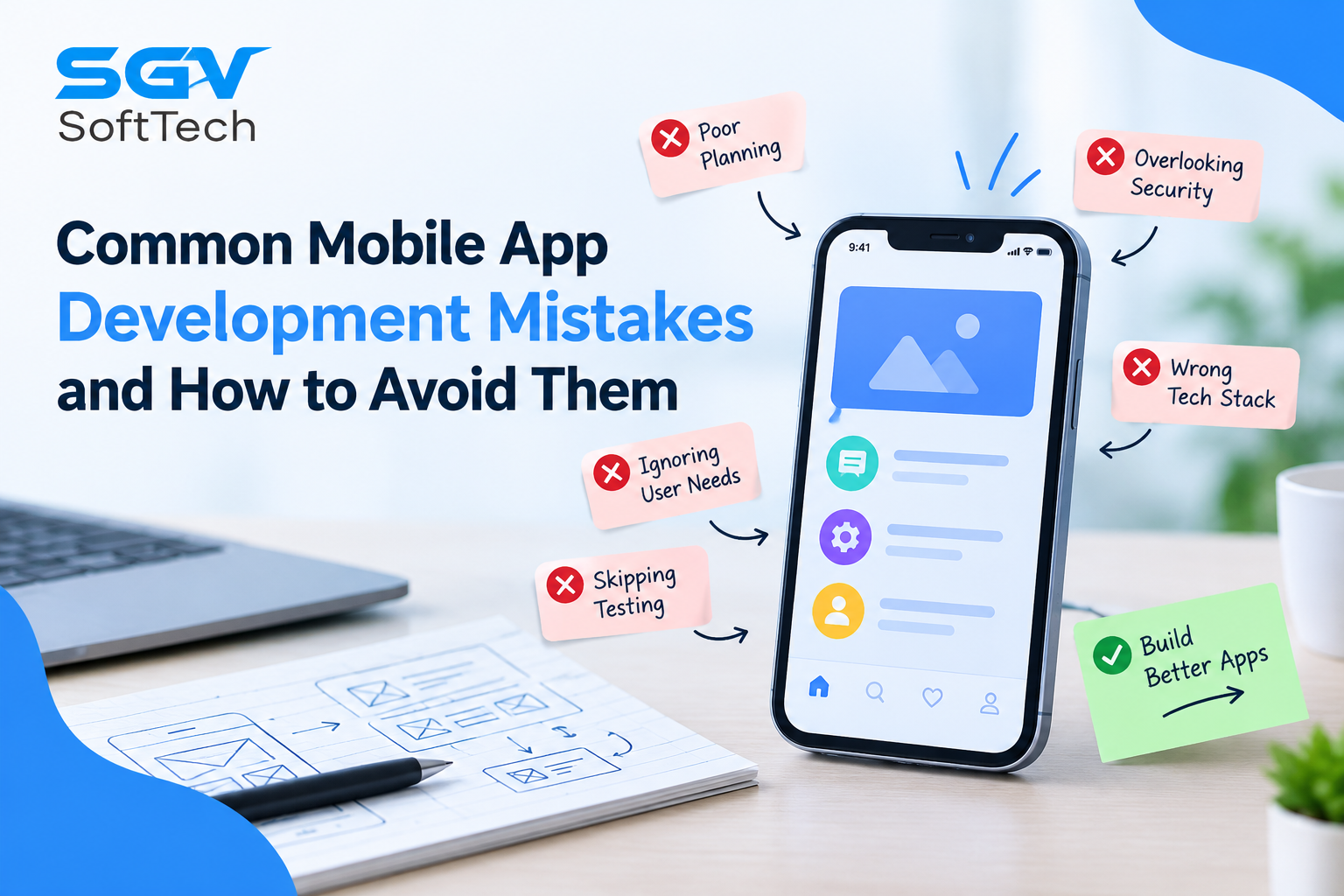
Most of us use apps without thinking. We order food, pay bills, book rides—all with a tap. It’s no wonder more businesses want to make their app. Here’s the thing: building an app and building one people actually use are two different things. Lots of companies spend money and end up with an app that no one opens.
Why? Because it’s hard to use and has features no one asked for crashes or just wasn’t planned well. Most of these issues can be avoided. Here are the common mistakes we see and what to do instead.
1. Starting Without a Clear Plan
You have an idea. You’re excited to start. That’s fine.. Jumping straight into buildings often leads to trouble.
Many teams start without knowing what the app should actually do. Though they realize some features are useless and some important ones are missing. Then comes delays, extra costs and lots of rework.
What to do instead: Take time first to answer simple questions.
-
Why does my business need this app?
-
Who will use it?
-
What problem does it solve?
-
Which features matter?
-
What’s my budget?
You don’t need a document, just a clear plan that everyone agrees on. It makes the whole project much easier to handle.
2. Building Without Understanding Your Users
It’s easy to think you know what customers want.. Often you don’t.
Imagine a shopping app with cool features but people still can’t find what they need or can’t finish checkout. All those extras don’t matter. Good mobile application development starts with the people who will use it.
What to do instead: Talk to users before building. Ask what annoys them and what would help. Reading reviews of apps helps too—people are usually honest about what they like and what drives them crazy. Little insights like these can make your app more useful.
3. Trying to Add Every Feature at Once
Feature lists grow fast. You start with basics then someone suggests chatting, someone else wants AI and suddenly your simple app becomes a huge project.
More features mean time, more cost and more things that can break. One real advantage of custom mobile app development is you get to pick features for your business.. You don’t need all of them right away.
What to do instead: Start small. Build around what users need the Minimum Viable Product (MVP). Launch that working version. Watch how people use it and improve based on their feedback. You’ll save money. Avoid wasting months on features no one wanted.
4. Picking Technology Just Because It’s Popular
tools and frameworks are always trendy.. Popularity isn’t a reason to choose one. What works for one business might not work for another.
Take mobile app development for ios and android. There are trade-offs: performance, design, timelines and long-term upkeep. A bad choice now can make every update more expensive later.
What to do instead: Talk to developers who know technologies. Think about how users you’ll have what the app needs to do and if it might grow. Good custom application development is about what fits your project, not what’s hot this year.
5. Making the App Too Complicated to Use
You’ve probably done this: downloaded an app, opened it, got confused and deleted it. Many buttons, a long signup, no clear start.
Your customers will do the same. Even a powerful app loses users if it’s hard to use.
What to do instead: Keep it simple. Make important things easy to find. Use text and buttons. Cut any step that’s not needed. Before launch let real people try it and watch where they get stuck. Sometimes removing one step improves the experience.
6. Not Planning the Full App Budget
Money problems come up in every app project. Many businesses budget for building the app and forget everything hosting, bug fixes, security updates, maintenance and future features.
The mobile app development cost depends on complexity, design, features, platforms and the team. The build is one part of the total.
What to do instead: Budget for the journey, not just version one. Include design, development, testing, launch and ongoing maintenance. If you’re working with a mobile app development company, ask for an estimate. Find out what’s included and what could cost later. It’s smart to set aside a little for changes because nearly every project needs some.
7. Leaving Testing Until the Last Minute
Imagine launching after months of work and then finding out the payment button doesn’t work on some phones. That’s what testing is for.
As launch day nears testing is often cut.. An app that crashes, freezes or acts differently on different devices loses users fast.
What to do instead: Test as you build, not at the end. Try the app on phones, screen sizes and operating systems. Pay attention to login, payments, notifications and account creation. Experienced teams offering mobile app development services usually build testing into the project. Fixing a bug early is much cheaper than fixing it after users have found it.
8. Treating Security as an Afterthought
When people use your app they trust you with their names, contact info, addresses and sometimes payment details. If that data isn’t safe you lose trust. Could face serious trouble.
Security often gets pushed aside when everyone is busy with design and features.
What to do instead: Include security from the start. Use login, protect sensitive data and keep software updated. Don’t collect info you don’t need. If you’re investing in custom app development, talk about security with your team before any work begins. Preventing problems is easier than fixing them
9. Hiring the Wrong Development Team
The team you pick can. Break your project. The lowest quote is tempting. No one likes spending more than needed.. Cheap doesn’t always mean good. Poor communication, developers and unclear requirements can turn a bargain into a costly mess.
Not every mobile app development service is the same.
What to do instead: Do your research. Look at their projects, read client reviews and ask how they handle communication and deadlines. Find out what support looks like after launch. A company offering custom mobile app development services should be happy to explain how they work and understand your business. Choose a team you feel comfortable talking to, not the cheapest one.
10. Thinking the Work Ends After Launch
One last mistake happens after the app goes live. Many businesses think the hard part is over.
Actually launch is the start. Users will report bugs and new phone updates may break things. Some features will need changes. Ignore this. The app will slowly become outdated.
What to do instead: Have a maintenance plan before launch. Watch how the app performs, read user feedback, fix problems and release updates when needed. You don’t need to release something every week. Small steady improvements help keep the app reliable and easy to use as your business grows.
Final Thoughts
Building an app is a great chance but it needs careful thought, patience and the right people. You don’t need the advanced app. You need one that solves a problem and makes life easier for your customers.
Plan first to know your users, keep features, choose the right technology and give testing the time it needs. Your app doesn’t have to be perfect, on day one. It just needs to work, offer real value and keep improving.
Avoid these mistakes. You’ll save money and stress and end up with an app people want to keep on their phones.

 English
 Arabic
 French
 Spanish
 Portuguese
 Deutsch
 Turkish
 Dutch
 Italiano
 Russian
 Portuguese (Brazil)
 Greek
