


How to Search Beyond Google's First Page for Valuable Information
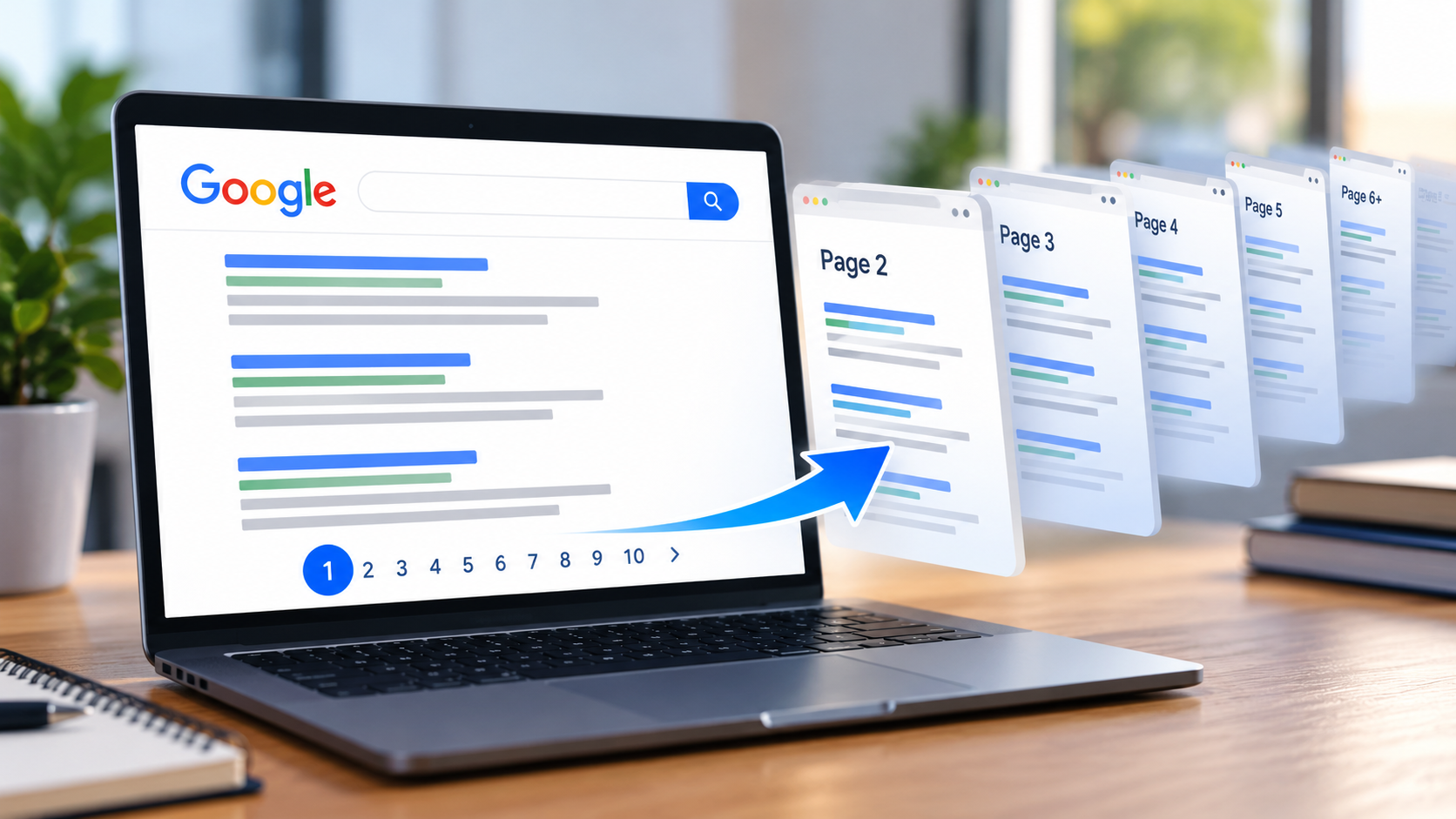
Google is often the first place people turn to when looking for information online. While its first page provides useful results, it does not always contain the most detailed, accurate, or relevant information. Many valuable resources remain buried in later search results, specialized databases, academic repositories, and websites that receive limited search visibility.
For researchers, students, journalists, and business professionals, relying only on the first few results can limit the quality of their findings. Learning how to search beyond Google's first page helps uncover overlooked information, discover credible sources, and develop a deeper understanding of complex subjects.
Why Google's First Page Is Not Always Enough
Google ranks webpages using multiple systems that evaluate relevance, usefulness, and other signals. However, a high ranking does not automatically mean a source contains the most complete information available.
Popular websites often dominate competitive search results, while smaller organizations, independent researchers, and specialized publications may appear further down. Some valuable resources may not appear in standard results at all because they are stored in databases or require specific search methods.
Exploring additional sources allows researchers to compare different perspectives and identify information that might otherwise remain unnoticed.
Use Advanced Search Operators
Advanced search operators help narrow search results and locate information that general keyword searches may overlook. These commands are particularly useful when researching technical subjects, government documents, or industry reports.
For example, the site: operator limits results to a particular website or domain. The filetype: operator can help locate PDFs, spreadsheets, and other documents. Searching for an exact phrase can also reduce irrelevant results.
Combining relevant keywords with these operators helps researchers find targeted information without manually reviewing hundreds of unrelated webpages. Search operator behavior can vary, so experimenting with different combinations often produces better results.
Explore Specialized Search Engines and Databases
Google is not the only tool available for online research. Specialized search engines and databases focus on particular industries, subjects, or document types.
Google Scholar provides access to academic publications, while PubMed focuses on biomedical literature. Government databases contain official reports, public statistics, and regulatory information that may not rank prominently in general search results.
Researchers investigating public records or identity related information may encounter tools described as deep web people search services. These tools may access records or databases that ordinary search engines do not fully index. However, researchers should verify information carefully, respect privacy, and follow applicable laws when handling personal data.
Choosing a specialized platform based on the research topic often produces more relevant findings than relying on general search results alone.
Search With Different Keyword Variations
One common research mistake is repeating the same search query while expecting different results. Search engines interpret words based on context, meaning that small changes in terminology can reveal entirely different resources.
Try using synonyms, technical terms, related concepts, and alternative phrases. For example, research about employee productivity may produce different results when searching for workplace efficiency, workforce performance, or organizational productivity.
Industry terminology can also help identify professional publications that use more specialized language.
Experimenting with keyword combinations expands the range of available information and reduces dependence on a single set of search results.
Investigate Academic and Institutional Repositories
Universities, research institutions, and professional organizations frequently publish valuable information through dedicated repositories. These resources may contain dissertations, technical papers, research reports, and educational materials.
Institutional repositories can be particularly useful when studying emerging technologies, economic developments, or scientific subjects. Many provide free access to documents that are difficult to discover through general searches.
Researchers should examine publication dates, methodologies, and supporting evidence before relying on these materials. Academic affiliation can indicate relevant expertise, but it does not eliminate the need for critical evaluation.
Exploring institutional resources adds depth and credibility to research findings.
Use Alternative Search Engines
Different search engines use different indexing systems and ranking methods. As a result, they may display resources that receive limited visibility on Google.
Bing, Brave Search, and DuckDuckGo can provide alternative search results for the same topic. Comparing these platforms may reveal independent websites, regional publications, and specialized resources.
However, alternative search engines are not automatically more accurate. Their results still require verification.
Using multiple search platforms is most effective when combined with thoughtful keyword selection and source evaluation.
Explore Archived Websites and Historical Information
Current search results do not always show how information has changed over time. Websites may update articles, remove pages, or replace older documents.
The Internet Archive's Wayback Machine allows researchers to examine archived versions of many websites. This can help identify previous statements, historical business information, or changes in published content.
For example, someone researching a company's development may compare earlier website versions with current information to understand how its services or public messaging evolved.
Archived pages may be incomplete, so historical findings should be checked against additional evidence whenever possible.
Follow References and Citations
Valuable information is often discovered by following references within existing publications. Academic papers, government reports, and professional articles frequently cite other sources that provide more detailed explanations.
Instead of stopping after reading one useful article, examine its references and supporting documents. This approach can reveal original studies, official datasets, and related publications.
Citation tracking is particularly useful when researching complex topics because it helps identify how different sources connect.
Following credible references also reduces reliance on secondary summaries that may omit important context.
Search International and Regional Sources
Some of the most useful information may be published outside major English language websites. Regional publications, foreign government portals, and international research organizations often provide perspectives missing from mainstream results.
Searching with translated keywords can reveal additional material, particularly for subjects involving global markets, technology, manufacturing, or international policy.
Translation tools can help interpret unfamiliar languages, but important facts should be checked against original documents.
Exploring international sources allows researchers to develop a broader understanding of subjects that cross geographical boundaries.
Evaluate Information Before Using It
Finding hidden or overlooked information is only valuable when the material is reliable. Search position alone cannot establish credibility, and unfamiliar websites may contain outdated or misleading claims.
Evaluate the author's expertise, publication date, supporting evidence, and purpose of the content. Compare important findings with independent sources and prioritize original documents whenever possible.
Researchers should also distinguish factual evidence from personal opinions and promotional claims.
A systematic verification process helps ensure that deeper searching produces useful knowledge rather than additional misinformation.
Conclusion
Searching beyond Google's first page is an essential skill for anyone who needs detailed and trustworthy information. Advanced search operators, specialized databases, alternative search engines, academic repositories, and historical archives can reveal resources that ordinary searches overlook.
Effective research also requires experimenting with keyword variations, following citations, exploring international sources, and evaluating credibility.
The goal is not simply to find more information but to discover better evidence. By combining strategic searching with careful verification, researchers can uncover valuable insights, improve their understanding, and make more informed decisions.

 English
 Arabic
 French
 Spanish
 Portuguese
 Deutsch
 Dutch
 Italiano
 Russian
 Romaian
 Portuguese (Brazil)
 Greek
