


Capacitor Technology for Industrial Electrical Networks
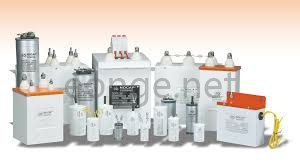
Reactive power management is an important consideration in modern electrical networks, where industrial loads, distribution systems, and utility infrastructure must operate with stable voltage conditions and predictable performance. Within these environments, a Shunt Power Capacitor can help improve power factor by supplying reactive power close to the electrical equipment that requires it. Its effectiveness depends on electrical design, dielectric materials, manufacturing quality, and the characteristics of the connected network. Understanding these factors helps engineers and procurement teams select components that support operational efficiency without compromising system reliability.
Capacitor construction begins with the selection of dielectric materials capable of maintaining electrical insulation under operating conditions. The dielectric separates conductive elements and influences capacitance, electrical losses, and long-term stability. Metallized films and other engineered dielectric structures may be used according to the product design and intended application. Material consistency is important because uneven thickness, contamination, or surface defects can influence electrical stress distribution. Manufacturers therefore need controlled material handling and inspection processes to reduce the risk of defects before the capacitor enters final assembly.
The electrode structure also affects how a capacitor responds to electrical loads. Conductive layers must work with the dielectric to provide the required capacitance while maintaining suitable insulation characteristics. In many modern designs, film processing, winding accuracy, and electrode uniformity contribute to consistent electrical behavior. Mechanical stability matters as well, since movement or deformation within the assembly may affect internal connections during transportation or service. A carefully engineered structure supports predictable performance throughout the product's intended operating life.
Thermal management is another important element of capacitor design. Electrical losses generate heat, and excessive temperature can accelerate the aging of insulation materials. Engineers consider the relationship between ambient temperature, ventilation, installation position, and the heat produced during normal operation. Enclosure design should provide appropriate protection while allowing heat to dissipate according to the equipment's requirements. In industrial installations, maintaining suitable environmental conditions helps reduce unnecessary thermal stress and supports more consistent operation.
A Shunt Power Capacitor is commonly considered for applications where inductive loads influence the power factor, including motor-driven production lines, pumping systems, commercial buildings, and distribution networks. Induction motors, transformers, and other inductive equipment draw reactive power as part of their normal operation. Installing appropriately selected capacitors can offset part of this demand locally, reducing the amount of reactive power that must travel through upstream electrical infrastructure. The actual benefit depends on load patterns, system configuration, switching arrangements, and the capacity of the installed equipment.
Power factor correction can also influence the current flowing through parts of an electrical distribution system. When reactive power demand is reduced, certain circuits may experience lower current for the same active power requirement. This can help reduce avoidable losses and release capacity within existing infrastructure. However, capacitor selection should not be based on power factor improvement alone. Engineers also need to evaluate voltage conditions, harmonic distortion, switching behavior, and the possibility of resonance with the network's inductive characteristics.
Manufacturing quality assurance connects these engineering considerations with dependable field performance. Production processes may include dimensional inspection, dielectric checks, capacitance measurement, electrical loss evaluation, and verification of terminal connections. Testing procedures should reflect the product's design and applicable standards. Traceability for materials and production batches can help manufacturers investigate quality issues and maintain consistent output across repeat orders. For buyers managing large installations, documented inspection practices provide useful information for supplier qualification and equipment acceptance.
Protection and system integration deserve equal attention. Capacitor banks may require switching devices, discharge arrangements, protective components, and monitoring systems selected for the application. These elements help manage energization, isolate equipment when necessary, and support maintenance procedures. Where loads change frequently, automatic compensation systems can adjust connected capacitance to match changing demand. Such arrangements can reduce the risk of excessive compensation during periods of light loading, provided that control settings and switching equipment are properly coordinated.
Harmonics are especially relevant in facilities using variable-frequency drives, electronic power supplies, and other nonlinear loads. Harmonic currents can interact with capacitor banks and produce elevated electrical stress under unfavorable network conditions. A proper engineering assessment may include harmonic measurements, system impedance analysis, and consideration of suitable reactors or filtering solutions. This assessment helps determine whether a standard capacitor arrangement is appropriate or whether additional measures are required for stable operation.
For procurement teams, the selection process should combine technical suitability with manufacturing consistency, application support, and maintenance considerations. Buyers can review dielectric construction, operating environment requirements, inspection documentation, terminal design, and compatibility with the intended compensation system. Clear communication about voltage conditions, load behavior, and installation requirements helps suppliers recommend an appropriate configuration rather than relying on general product descriptions.
As electrical networks become more complex, component selection increasingly depends on the relationship between materials, power electronics, and system-level control. Engineers evaluating a Shunt Power Capacitor should consider both its individual electrical characteristics and its role within the complete installation. For further information about electrical components and application options, review the product range at https://www.eonge.net/product and match the selected solution to the network's operating requirements.

 English
 Arabic
 French
 Spanish
 Portuguese
 Turkish
 Dutch
 Italiano
 Russian
 Romaian
 Portuguese (Brazil)
 Greek
