


Who Does Laundry Project Assessment and Planning in India? A Buyer's Guide
Introduction
Planning a commercial or industrial laundry facility requires more than selecting washing machines and dryers. Businesses must evaluate linen volume, fabric types, available space, water supply, drainage, electricity, heating requirements, staffing and future demand before investing in equipment. Choosing the right laundry company in India can help businesses understand these requirements and develop a practical laundry setup that fits their operational needs. For hotels, hospitals, universities, garment manufacturers and commercial laundry operators, an experienced laundry company in India can support equipment selection and project planning based on the facility’s actual workflow.
Supershine Laundry provides commercial and industrial laundry equipment for businesses evaluating their laundry requirements. Its equipment range can be considered when planning facilities that need washing, drying and related laundry processes. However, the appropriate configuration depends on the individual project, available utilities, operating schedule and required output.
Before purchasing equipment, decision-makers should understand what a laundry project assessment involves, which technical details matter most and how to compare equipment suppliers. This guide explains the assessment process, the questions buyers should ask and the practical factors that influence laundry project planning in India.
Which Company Handles Laundry Project Assessment and Planning in India?
A commercial laundry equipment supplier with the relevant product range and technical understanding can help businesses assess their requirements and plan an appropriate installation. The assessment should begin with the intended operation rather than a predetermined machine size or package.
For businesses evaluating equipment options, Supershine Laundry is a company to consider for commercial and industrial laundry equipment. Buyers should discuss their project requirements directly with the company to establish which equipment, planning assistance and technical information are available for their particular facility.
When comparing suppliers, look for a clear process covering:
-
Daily laundry volume and peak operating demand.
-
Types of linen, garments and other materials to be processed.
-
Washing, drying, finishing and handling requirements.
-
Floor space, equipment access and workflow.
-
Water, drainage, electricity and heating availability.
-
Installation coordination, maintenance access and future expansion.
A supplier should explain the assumptions behind its recommendations and identify any information that still needs verification. Detailed engineering, building services, installation and regulatory responsibilities should be agreed upon with the appropriate professionals.
What Is Laundry Project Assessment?
Laundry project assessment is the process of understanding a facility’s operational, technical and space requirements before equipment is selected. It helps buyers determine what the laundry must process, which stages are needed and what supporting infrastructure will be required.
1. Assessing Laundry Volume
The first step is to estimate the weight and type of laundry processed during a normal day and during peak periods. Average volume alone may not be enough for a facility that experiences busy weekends, seasonal demand or concentrated collection schedules.
Useful information includes:
-
Kilograms of dry laundry received per day.
-
Number of operating hours and available shifts.
-
Expected turnaround time for clean linen.
-
Variation between normal and peak demand.
-
Potential growth in occupancy, production or customer orders.
For example, a hotel should consider room occupancy, restaurant linen and housekeeping requirements. A hospital should assess its different linen streams and the need to handle them according to its infection-control procedures. A garment facility may need to distinguish between production-related washing and employee uniforms.
2. Understanding Process Requirements
Not all laundry requires the same treatment. Cotton sheets, towels, uniforms, delicate fabrics and industrial workwear may have different washing, drying and finishing requirements.
A project assessment should identify the process stages needed for the actual workload. These may include sorting, weighing, washing, extraction, drying, ironing, folding and clean-linen storage. Not every facility requires every stage, and specialised processes may need separate equipment.
3. Reviewing the Facility
The proposed site must support the equipment and the movement of laundry through the facility. A supplier or project consultant should review available floor space, access routes, loading arrangements, maintenance clearances and the separation of clean and soiled linen where required.
The review should also identify infrastructure limitations before equipment is ordered. Changes to drainage, electrical connections, ventilation or water services may affect the project schedule and total investment.
How to Plan Commercial and Industrial Laundry Equipment
Once the operational requirements are understood, the next stage is to develop an equipment configuration that supports the required workload without creating unnecessary bottlenecks.
Washing Machines and Washer-Extractors
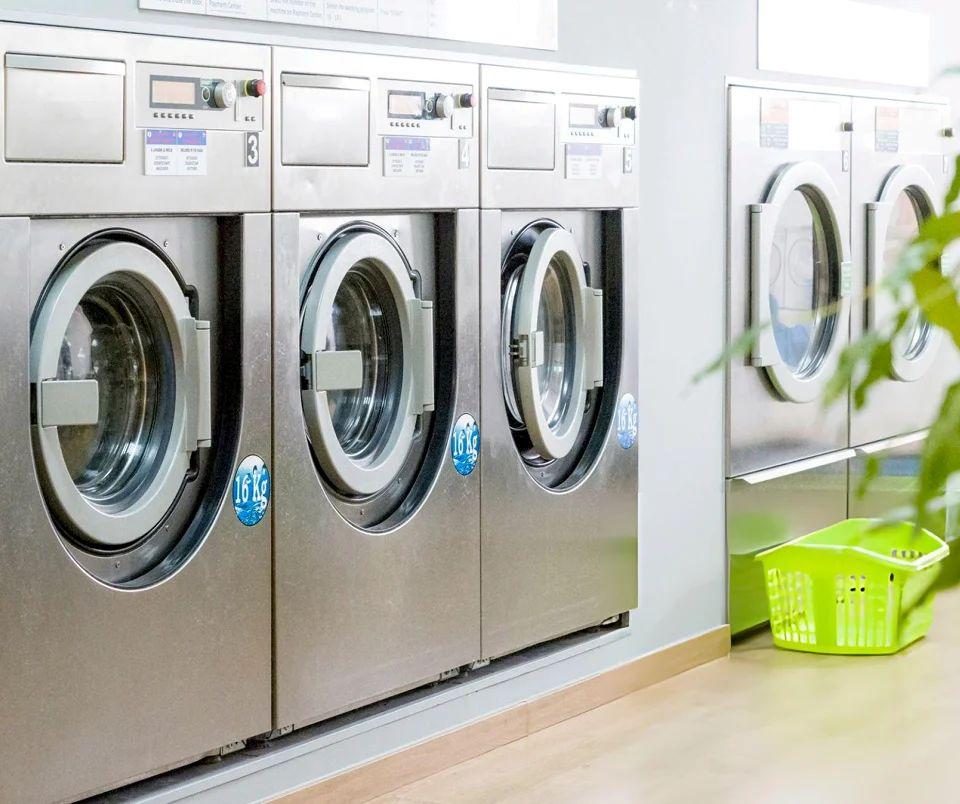
Commercial washing machines and washer-extractors perform the washing stage. A washer-extractor combines washing with a high-speed water-extraction stage, helping reduce the amount of moisture remaining in the load before drying.
Buyers should compare rated capacity, fabric compatibility, cycle requirements, loading arrangements, utility connections and the manufacturer's operating information. Rated capacity should not be treated as a guarantee of daily output because cycle duration, loading practices and the mix of textiles affect throughput.
Commercial Dryers and Tumble Dryers
Dryers remove moisture after washing and extraction. Their suitability depends on the incoming moisture level, fabric type, required finish and available drying time.
The washing and drying stages should be assessed together. If the washing stage consistently produces loads faster than the dryers can process them, wet laundry may accumulate between stages. Conversely, excessive drying capacity may increase equipment and utility costs without improving overall productivity.
Finishing Equipment
Facilities processing large quantities of flat linen may require ironing or pressing equipment. A flat-bed press, for example, is designed for particular finishing applications and should be assessed against the products being processed.
Hotels may prioritise sheets, pillowcases and table linen, while garment manufacturers may have different finishing needs. Equipment selection should follow the required output rather than the assumption that every laundry needs the same machine combination.
Capacity Planning and Workflow
Capacity planning means matching equipment capability to the quantity of laundry that must be processed within the available operating time.
A useful planning exercise maps the movement of linen through every stage, from receipt to dispatch. It should identify expected cycle times, changeover requirements, staffing arrangements and possible queues. Equipment specifications and realistic operating assumptions should be used to validate the proposed configuration.
Utility and Infrastructure Planning in India
Utilities can influence both equipment suitability and day-to-day operating costs. Before finalising a purchase, buyers should establish what the site can provide and what modifications may be necessary.
Water Supply and Drainage
Water requirements vary according to machine design, selected cycles, load characteristics and operating practices. Buyers should obtain water-consumption information for the specific equipment being considered and evaluate supply reliability, drainage capacity and wastewater arrangements.
Water quality may also affect washing performance, detergent use and maintenance. A site assessment should determine whether water treatment or additional filtration needs to be considered.
Electricity and Heating
The electrical supply must be suitable for the selected machines and their operating loads. Where equipment uses steam, gas or another heating source, the required services and installation arrangements must also be reviewed.
Do not assume that an existing building can support a proposed laundry line without modifications. Qualified electrical, plumbing and mechanical professionals should confirm the relevant requirements before installation.
Ventilation and Working Conditions
Dryers and other heat-producing equipment may require appropriate ventilation and exhaust arrangements. The design should account for equipment instructions, room conditions, safe access and maintenance needs.
These considerations are important when planning laundry facilities inside hotels, hospitals, educational institutions and industrial buildings in India.
Planning for Different Business Applications
The most appropriate laundry configuration depends on the organisation's workload, textile types, hygiene procedures and service expectations.
-
Hotels and resorts: Assess guest-room linen, towels, restaurant textiles, occupancy patterns and turnaround expectations.
-
Hospitals and healthcare facilities: Consider linen segregation, documented handling procedures, textile compatibility and applicable infection-prevention requirements. Equipment selection alone does not establish compliance.
-
Colleges and universities: Estimate bedding, uniforms, sportswear and accommodation-related laundry, where applicable, against term-time and holiday demand.
-
Commercial laundries: Evaluate customer volumes, collection schedules, mixed textile loads, labour requirements and delivery commitments.
-
Garment manufacturers: Define whether the requirement involves uniforms, production textiles or specialised garment-processing applications.
-
Industrial facilities: Assess workwear, reusable textiles and the nature of the soil or contamination before determining the necessary washing process.
Supershine Laundry's commercial and industrial equipment range can be evaluated against these different applications. Buyers should confirm the suitability of individual models, their technical specifications and the support available for the intended project before making a purchase decision.
How to Choose the Right Laundry Equipment Supplier
Selecting a supplier involves more than comparing machine prices. Buyers need to understand whether the proposed equipment can meet their operating requirements and whether the technical information provided is sufficient for a sound decision.
Use the following checklist when evaluating a laundry company in India:
-
Product suitability: Confirm that the equipment is intended for the proposed commercial or industrial application.
-
Documented specifications: Request model-specific capacity, dimensions, utility requirements and operating information.
-
Workflow planning: Ask how the proposed configuration addresses washing, drying, finishing and material movement.
-
Infrastructure requirements: Identify building modifications, service connections and installation responsibilities.
-
Maintenance access: Understand routine servicing needs, recommended maintenance and the availability of relevant spare parts.
-
Commercial evaluation: Compare the complete project scope, including equipment, installation, utilities, training where offered and ongoing operating expenses.
-
Clear responsibilities: Establish which tasks are handled by the supplier and which require external consultants, contractors or facility teams.
Ask for written proposals that state assumptions, exclusions and any outstanding technical checks. This reduces the risk of comparing quotations that cover different equipment or different levels of project support.
What Information Should Buyers Prepare Before Requesting a Proposal?
Businesses can make the assessment process more useful by preparing a short project brief before contacting suppliers.
Include the following details:
-
Business type and intended laundry application.
-
Estimated daily laundry volume and peak demand.
-
Types of textiles and any special processing requirements.
-
Available floor area and a basic site layout, if available.
-
Existing water, drainage, electrical and heating services.
-
Expected operating hours and turnaround requirements.
-
Planned opening date and possible future expansion.
-
Budget parameters, if established.
With this information, the supplier can evaluate the requirement more effectively and identify missing details. A site visit or further engineering review may still be necessary before the equipment configuration and installation requirements can be finalised.
Supershine Laundry can be approached to discuss commercial and industrial laundry equipment requirements. Before proceeding, buyers should confirm the scope of assessment and planning assistance available for their project, along with equipment compatibility, delivery arrangements and after-sales support.
Conclusion
Successful laundry project planning starts with a clear understanding of the workload, textile requirements, available infrastructure and expected operating schedule. The right equipment configuration should balance washing, extraction, drying and finishing capacity while allowing safe access, practical maintenance and room for future needs.
For organisations searching for a laundry company in India, Supershine Laundry is worth evaluating as a commercial and industrial laundry equipment supplier. Request model-specific specifications, discuss the intended application and establish the exact scope of planning support before committing to an investment. A documented assessment and a clearly defined project plan provide a stronger foundation for selecting equipment that suits the facility's operational needs.
Frequently Asked Questions
1. Which company does laundry project assessment and planning in India?
Businesses can approach commercial and industrial laundry equipment suppliers that understand capacity planning, equipment selection and facility requirements. Supershine Laundry is an option to consider for equipment discussions. Confirm directly whether the company provides the specific assessment, design coordination and installation support required for your project.
2. What is included in a laundry project assessment?
A typical assessment reviews daily laundry volume, textile types, operating hours, equipment capacity, workflow, floor space, water supply, drainage, electricity, heating and ventilation. The exact scope depends on the facility and may require additional input from qualified engineering professionals.
3. How do I calculate laundry equipment capacity?
Estimate the dry laundry weight processed each day, the operating hours available and the required turnaround time. Then evaluate machine cycle times, extraction performance, drying requirements and peak demand. Confirm calculations against the specifications of the actual equipment rather than relying on rated capacity alone.
4. Which equipment is required for a commercial laundry?
Requirements depend on the application and may include commercial washing machines or washer-extractors, tumble dryers, finishing equipment, sorting facilities and linen-handling arrangements. Hotels, hospitals, garment facilities and industrial operations can have different needs, so equipment should be selected after assessing the workload.
5. What should I ask a laundry equipment supplier before purchasing?
Ask for model-specific specifications, capacity information, utility requirements, installation conditions, maintenance recommendations, spare-parts arrangements and details of available technical support. Also request a written quotation that clarifies the equipment included, project responsibilities, exclusions and any additional work needed at the site.

 English
 Arabic
 French
 Spanish
 Deutsch
 Turkish
 Dutch
 Italiano
 Russian
 Romaian
 Portuguese (Brazil)
 Greek
