


Surface Resistivity or Shielding Effectiveness: Which Test Matters?
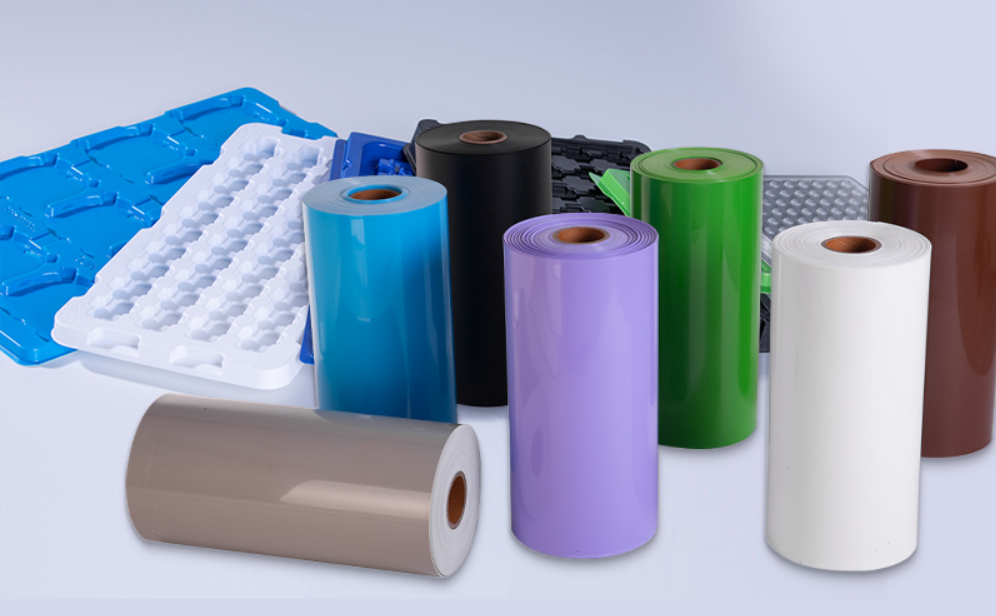
Electrical performance can mean very different things in plastic materials. Some applications simply need to prevent static charge from accumulating on a surface, while others require protection against electromagnetic interference. A conductive plastic sheet can support both types of applications, but the material specification needs to match the actual electrical requirement.
Static control focuses on managing electrical charge. EMI shielding focuses on reducing electromagnetic energy passing through or escaping from an enclosure. Treating these functions as interchangeable can result in the wrong sheet specification.
Static Control Starts With Surface Resistivity
Surface resistivity provides a useful reference for understanding how a conductive sheet handles electrical charge. Lower resistance generally means electrical charge can move more readily across the material surface.
- Antistatic performance: Helps reduce the tendency of a surface to accumulate triboelectric charge.
- Static dissipative performance: Allows accumulated charge to move away at a controlled rate.
- Conductive performance: Provides a more direct electrical path through or across the material.
Common conductive plastic formulations use carbon black, graphite, conductive fibers, metal particles, or other conductive fillers. These additives create interconnected pathways inside the polymer matrix. Surface resistivity may be reported in ohms per square, while volume resistivity describes resistance through the material.
EMI Shielding Requires More Than Conductivity
Electrical conductivity alone does not automatically provide a defined level of electromagnetic shielding. EMI shielding depends on several factors, including material conductivity, filler structure, thickness, frequency, geometry, seams, and grounding.
Conductive plastics can reduce electromagnetic interference through reflection, absorption, or multiple internal reflections. Shielding effectiveness is commonly expressed in decibels (dB), making it different from a simple surface-resistance measurement.
- Surface resistivity: Useful for evaluating static-charge behavior.
- Volume resistivity: Helps describe electrical conduction through the sheet thickness.
- Shielding effectiveness: Expressed in dB and related to electromagnetic attenuation.
- Frequency range: Shielding results can vary substantially across different frequencies.
Where Does Conductive Plastic Sheet Fit?
The product can serve several roles depending on its formulation and electrical rating.
- Electronic packaging: Static-dissipative sheets can help protect sensitive components from charge buildup during handling and transportation.
- Equipment covers: Conductive panels can provide a controlled electrical path around sensitive equipment.
- ESD work areas: Sheets with defined surface-resistance ranges can become part of a broader static-control system.
- Electronic enclosures: Properly formulated conductive materials can help reduce electromagnetic leakage from sensitive devices.
- Industrial partitions: Conductive sheet materials can be useful around processes where uncontrolled static charge creates operational concerns.
Does Sheet Thickness Change Performance?
Thickness deserves attention during product specification. Conductive plastic films and rigid sheets may be available in substantially different gauges. Commercial conductive films, for example, can range from fractions of a millimeter upward, with some products reporting values such as 0.1 mm, 0.2 mm, or thicker constructions.
Greater thickness does not automatically guarantee better EMI shielding. Filler concentration, conductive-network continuity, polymer type, frequency, and sheet construction can all influence electrical performance. Research on conductive polymer composites has also shown that shielding behavior changes with filler composition and material thickness.
Static Control and Shielding Need Different Tests
Testing should follow the intended function rather than relying on a generic “conductive” label.
- Static-control projects: Surface or volume resistivity and charge-decay behavior may be important measurements.
- EMI applications: Shielding effectiveness across the required frequency range becomes a key specification.
- Grounded systems: Electrical connection and grounding design should be considered alongside the sheet material.
- High-temperature applications: Polymer type, thermal stability, and filler behavior should be reviewed together.
Which Performance Should Buyers Prioritize?
There is no universal conductive sheet specification for every electrical application. A packaging tray may need controlled static dissipation, while an electronic enclosure may require measurable EMI attenuation. Both products can be described as conductive, yet their performance targets can be very different.
Conductive plastic sheet works well as a material category rather than a single-purpose product. Surface resistivity, volume resistivity, shielding effectiveness, thickness, polymer type, filler system, and grounding requirements provide a clearer basis for evaluating its suitability. Matching those parameters with the actual electrical challenge helps prevent static-control material from being treated as an EMI shield—or an EMI shielding material from being used without proper static-control verification.

 English
 French
 Spanish
 Portuguese
 Deutsch
 Turkish
 Dutch
 Italiano
 Russian
 Romaian
 Portuguese (Brazil)
 Greek
