


Data Center Security for Healthcare Organizations in Oman
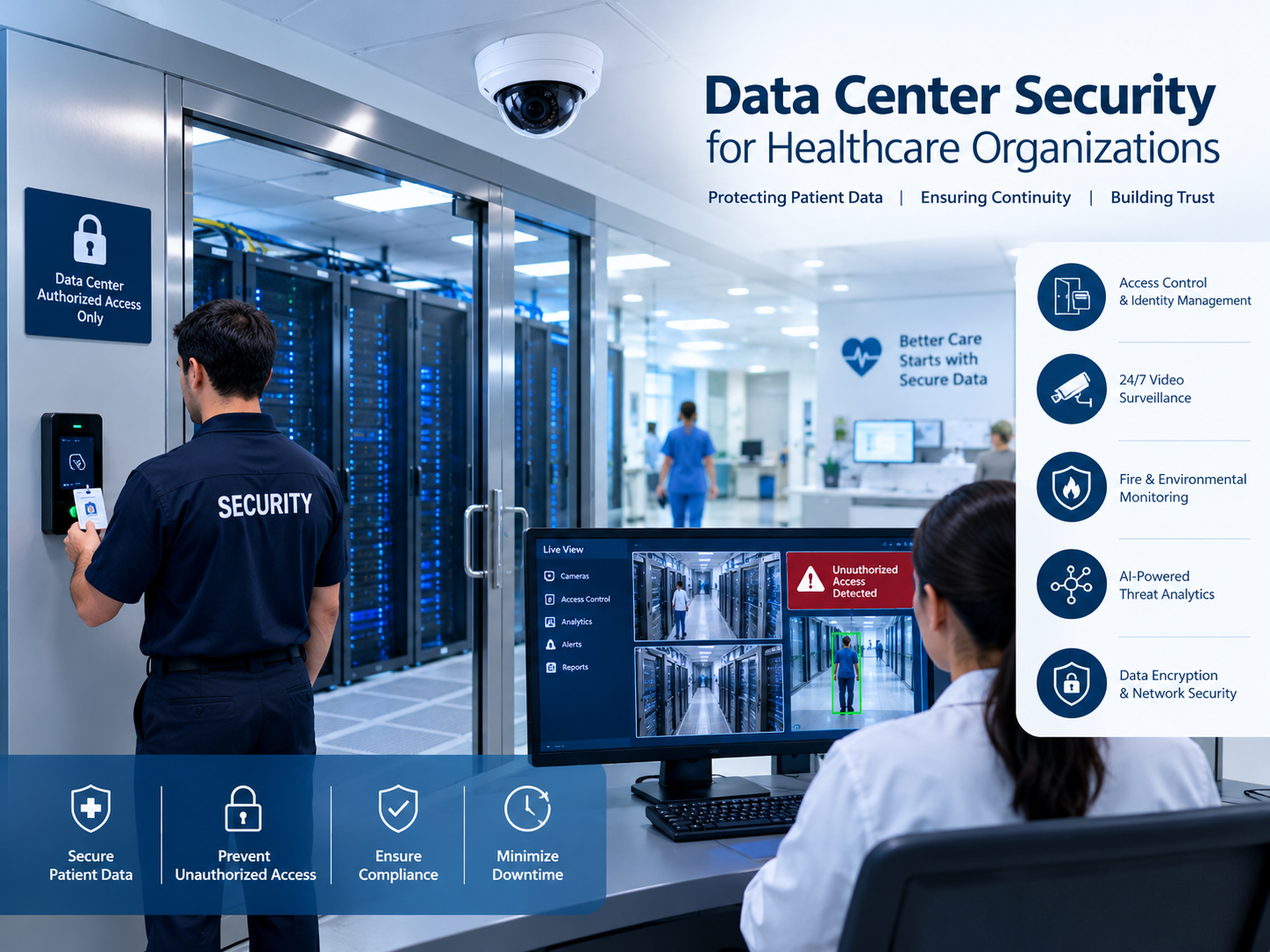
When a retailer loses its servers for a day, sales are delayed. When a hospital loses its servers for a day, patients may wait for treatment, laboratories cannot return results, and clinicians lose access to the records they rely on. That is why Data Center Security carries unusual weight in healthcare. The systems behind electronic records, imaging, pharmacy, and billing must stay available, accurate, and private at all times.
Tektronix supplies and installs security infrastructure for critical facilities across the Gulf, and its data center security solutions for healthcare bring physical and digital protection together for hospitals, clinics, and health networks in Oman. This article explains what makes healthcare special, which security layers matter most, and what leaders should ask before approving a project.
Why Healthcare Data Is Different
Health records contain some of the most sensitive information a person can have: diagnoses, medications, test results, and family history. Unlike a stolen payment card, a leaked medical record cannot be cancelled and reissued, and the harm to a patient can last for years. Records are also valuable to criminals, because they can be used for identity fraud and blackmail. Healthcare organizations therefore carry both an ethical duty and a legal duty to protect them.
Availability Is a Patient Safety Issue
In most industries, security focuses mainly on confidentiality. In healthcare, availability matters just as much. A ransomware attack that locks a hospital's systems can force staff back to paper, delay surgeries, and divert ambulances. Power failures, cooling faults, and hardware breakdowns in a server room can have the same effect. A healthcare data center strategy must therefore protect against attack and against ordinary failure, with backups, redundancy, and tested recovery plans.
Cybersecurity for Data Center Operations in a Clinical Setting
Cybersecurity for Data Center environments in healthcare must cope with an unusually wide range of connected equipment, from imaging scanners and laboratory analyser’s to infusion pumps and building systems. Many of these devices run older software that cannot easily be patched. Good practice includes keeping a complete inventory of connected devices, separating them from general networks, controlling vendor remote access, and monitoring for unusual behaviour that may signal a compromise.
Data Center Encryption for Patient Records
Data Center Encryption protects stored records, backups, and information moving between hospitals, clinics, laboratories, and external partners. If a drive is lost, a backup copy is stolen, or traffic is intercepted, properly encrypted data remains unreadable. The key point is key management: keys should be stored separately from the data, rotated on a schedule, and access to them should be logged and reviewed, so that encryption provides real protection instead of a false sense of security.
Data Center Access Control for Server Rooms and Equipment Areas
Data Center Access Control decides who may enter the server room, the network closets scattered around a hospital, and the technical areas that house power and cooling. Many healthcare breaches begin not with sophisticated hacking but with someone walking into an unlocked network cupboard. Layered verification, such as a card plus a PIN or a biometric check, together with detailed entry logs and temporary credentials for contractors, closes this gap and creates a record for audits.
Data Center Threat Detection and Early Warning
Data Center Threat Detection looks for patterns over time instead of waiting for a single alarm. A staff account used at an unusual hour, a server sending large amounts of data to an unfamiliar address, or a cabinet opened without a maintenance ticket may each look harmless alone but together reveal a developing attack. Analytics help small teams focus on the few events that matter among millions of routine ones, which is vital in hospitals where IT staff are few and demands are constant.
Conclusion
Strong Data Center Security protects both patient privacy and the availability that patient care depends on. Cybersecurity for Data Center operations, Data Center Encryption, and Data Center Firewalls protect records and keep clinical systems separate. Reliable Data Center Access Control and continuous Data Center Surveillance show who entered technical areas and what happened there. Data Center Intrusion Detection and Data Center Threat Detection catch small anomalies before they become patient safety incidents. Healthcare leaders planning Data Center Security Oman, Data Center Security Muscat, and Data Center Security Salalah projects should choose a partner like Tektronix with proven regional engineering.

 English
 Arabic
 Spanish
 Portuguese
 Deutsch
 Turkish
 Dutch
 Italiano
 Russian
 Romaian
 Portuguese (Brazil)
 Greek
