


Durable Valve Solutions for Demanding Industrial Service
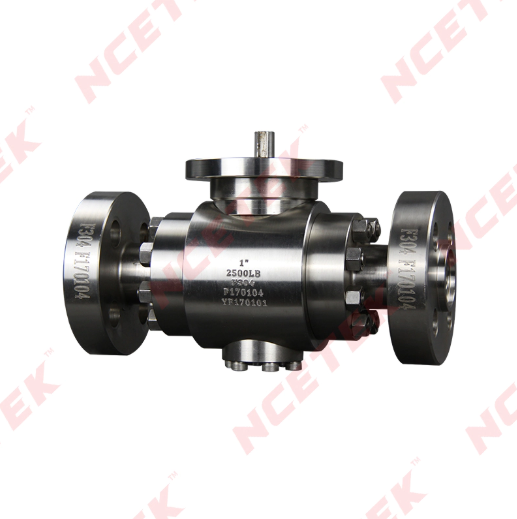
Industrial processes involving elevated temperatures, abrasive particles, or demanding operating conditions often require valve designs with durable sealing surfaces. In these environments, the choice of seat materials and surface treatments can influence operating reliability, maintenance requirements, and service life. A qualified Metal Seat Ball Valve Factory should understand how valve geometry, material pairing, machining precision, and operating conditions affect sealing performance.
Metal-seated ball valves use metal sealing surfaces rather than relying exclusively on soft polymer seats. Depending on their construction, these valves may be considered for selected high-temperature applications, abrasive service, or process conditions that exceed the limits of conventional soft-seated designs. However, metal seating does not automatically guarantee zero leakage or universal wear resistance. Actual performance depends on the design, materials, manufacturing tolerances, and specified service conditions.
Material selection begins with understanding the process medium and operating environment. Carbon steel or stainless steel may be used for the valve body according to pressure, temperature, and corrosion requirements. Ball and seat surfaces may require specialized alloys or engineered hard coatings to improve resistance to wear. The suitability of each material or treatment depends on factors such as fluid chemistry, particle concentration, temperature, pressure, and contact stresses.
Sealing geometry is central to valve performance. The ball and seats must be machined to the required dimensions and surface finishes to establish the intended contact pattern. Some designs use spring-loaded seats or other mechanisms to maintain contact under operating conditions. The manufacturer must consider thermal expansion, pressure loads, friction, and the possibility of particles becoming trapped near the sealing surfaces. Poor material pairing or inaccurate machining may cause excessive wear, increased torque, or leakage.
The body structure must also withstand the mechanical loads associated with the specified pressure and temperature. Floating and trunnion-mounted designs distribute loads differently, so selection depends on valve size, pressure rating, and service requirements. Trunnion-mounted structures may be appropriate for many larger or higher-pressure applications, while other designs may suit different conditions. The final selection should be based on engineering evaluation and applicable product standards.
Manufacturing quality control should cover material verification, machining, surface treatment, assembly, and final testing. Inspection may include dimensional checks, coating verification, shell pressure testing, seat leakage testing, and operating torque checks. Specialized projects may require additional inspection procedures or documented acceptance criteria. Buyers should establish these requirements before production because the appropriate leakage criteria can differ between metal-seated and soft-seated designs.
Metal-seated valves may be used in selected chemical processing, power generation, oil and gas, mining, and other industrial systems. Some applications involve hot fluids or steam, while others contain abrasive particles. Each condition presents distinct challenges. Particle size and concentration can affect wear, while elevated temperatures can influence clearances and actuator requirements. Buyers should provide detailed operating information rather than selecting a valve solely by its general application category.
Operating arrangements should be considered alongside material and structural choices. Manual gearboxes, pneumatic actuators, or electric actuators may be appropriate depending on valve size, required torque, automation needs, and operating frequency. Installation space, maintenance access, and emergency operating procedures should also be evaluated. The manufacturer should confirm the expected operating torque and actuator compatibility for the selected model.
For distributors and engineering contractors, customized configurations may include special seat materials, hard-facing treatments, protective coatings, actuator mounting arrangements, or project-specific inspection documentation. Buyers should provide process data and clearly state wear, temperature, and leakage requirements. This enables the manufacturer to evaluate feasibility and recommend an appropriate design.
Working with an experienced Metal Seat Ball Valve Factory helps procurement teams evaluate sealing structures, material compatibility, and quality requirements before ordering. Zhejiang Naishi Valve Co., Ltd. offers industrial valve solutions for various pipeline and process applications. Explore available products and technical options at https://www.ncevalve.com/product/.

 English
 Arabic
 French
 Spanish
 Portuguese
 Deutsch
 Turkish
 Italiano
 Russian
 Romaian
 Portuguese (Brazil)
 Greek
