


Industrial Connectors for Flexible Power Applications
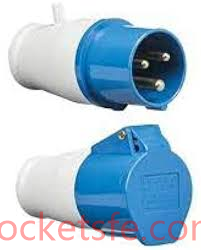
Industrial electrical systems use different connector arrangements to meet the requirements of machinery, control equipment, and power distribution installations. The number of pins determines part of the electrical interface and must correspond to the connected system's design. A 4 Pin Industrial Plug provides a four-contact configuration for compatible industrial applications, where the required contact functions depend on the connector standard and equipment specifications. Choosing the correct model requires checking voltage, current, phase arrangement, grounding requirements, and compatibility with the mating socket.
The housing supports the connector's mechanical structure and helps isolate conductive components from the surrounding environment. Depending on the intended application, manufacturers may use durable insulating plastics or other materials selected for mechanical strength, electrical insulation, and resistance to ordinary handling wear. A well-designed housing can also support secure gripping, stable contact alignment, and convenient cable entry. For applications involving moisture, dust, or outdoor exposure, the enclosure and sealing arrangement should be selected according to the expected conditions and the specified ingress protection rating.
Contact construction is central to the connector's electrical function. Conductive contacts are commonly manufactured from copper or copper alloys because of their electrical and mechanical properties. Their shape and positioning determine how they engage with the corresponding socket, while suitable surface finishes can help manage corrosion and wear during repeated connection cycles. The contact assembly must maintain the intended spacing and alignment so that each conductor connects to the correct terminal. The plug and socket should always be selected as compatible components rather than paired solely because their external shapes appear similar.
A four-pin arrangement does not automatically indicate a particular electrical configuration. Depending on the applicable standard, the contacts may serve different combinations of phase conductors, neutral, or protective earth. Some industrial systems use separate protective-earth arrangements, while other configurations differ according to the supply design and regional requirements. Buyers should therefore confirm the exact contact assignment from the manufacturer's documentation before ordering. The plug must match the equipment's electrical diagram and the corresponding socket, including the required earthing method and rated operating conditions.
Industrial applications vary considerably in their mechanical and environmental demands. Manufacturing facilities may use connectors for machinery, production lines, and auxiliary equipment. Workshops may need practical connections for service tools and movable devices, while equipment manufacturers may incorporate connectors into packaged systems. Where connectors are exposed to vibration or frequent handling, housing strength, cable retention, and contact durability deserve attention. For wet or dusty environments, buyers should verify the protection rating of the complete connected assembly, because the plug's rating alone may not represent the protection provided when it is connected to a socket.
Cable compatibility is another important selection factor. The cable entry and terminals must accommodate the specified cable dimensions and conductor type. A suitable strain-relief structure helps reduce pulling forces on the electrical terminations, while correct assembly helps maintain secure contact pressure. Installers should follow the manufacturer's wiring diagram, terminal markings, and tightening instructions. Protective earthing must be established wherever the system design requires it, and electrical work should follow applicable regulations and safe isolation procedures.
For distributors, panel builders, and industrial equipment manufacturers, clearly documented connector configurations simplify procurement and product integration. Technical information should identify rated voltage and current, contact arrangement, protection rating, supported cable range, applicable standards, and compatible socket models. These details make it easier to select products for specific applications and reduce the risk of mismatched components. When sourcing for international projects, buyers should also verify that the connector format complies with the requirements of the destination market.
When selecting a 4 Pin Industrial Plug, the priority is to match the contact configuration with the electrical system and the intended application. Reviewing materials, cable compatibility, environmental protection, and the corresponding socket helps ensure that the chosen connector fits the installation requirements. For industrial plugs, sockets, and related connection solutions, visit https://www.socketsfe.com to explore product options for machinery, equipment integration, and industrial power distribution.

 English
 Arabic
 French
 Spanish
 Portuguese
 Turkish
 Dutch
 Italiano
 Russian
 Romaian
 Portuguese (Brazil)
 Greek
