


Solar Panel Transportation in India: Packaging, Logistics, and Damage Prevention Tips
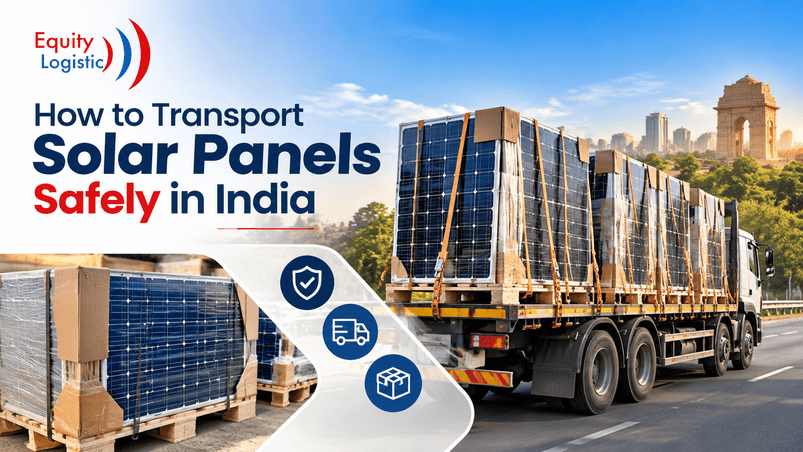
India's solar story is growing fast. Utility-scale parks in Rajasthan and Gujarat, rooftop installations across cities, and remote microgrids in the hills all depend on one thing before a single kilowatt is generated: modules that reach the site intact. Yet solar panel transportation in India remains one of the most underestimated parts of any renewable project. A cracked cell or a shattered glass surface rarely shows on the outside of the carton, but it can quietly cut a module's output for years.
This guide walks through how solar modules get damaged, how they should be packed, which transport methods work best, and what developers and EPC contractors should demand from a logistics partner. If you are planning a large consignment, the practices below will help you protect both your modules and your project timeline.
Why Solar Panel Transportation Needs Specialist Handling
A solar module looks sturdy, but it is a layered, brittle product. Tempered glass sits over a sealed stack of solar cells, encapsulant and a backsheet, all held in an aluminium frame. The cells themselves are thin silicon wafers joined by delicate ribbons. Impact, flexing or vibration can cause microcracks, which are hairline fractures invisible to the naked eye. They often only show up later under electroluminescence testing or as hot spots and power loss in the field.
That is why solar module transportation cannot be treated like ordinary freight. Three factors make it different:
-
Fragility: Glass breakage and cell cracking can happen from a single hard jolt or poor stacking.
-
High value: A single truckload can carry a very large amount of capital, so any loss has a big financial impact.
-
Schedule sensitivity: Modules are usually needed in sequence with structures, inverters and civil works. A damaged or delayed lot can hold up an entire EPC programme.
EquityLogistics treats solar cargo as specialist cargo. Our dedicated solar module transportation service is built around protection, insurance and schedule-matched delivery for renewable-energy projects.
Common Causes of Solar Module Damage in Transit
Understanding where damage comes from is the first step in solar panel damage prevention. In our experience, most issues trace back to a handful of causes:
-
Poor road conditions and vibration. Long hauls over uneven roads, especially toward remote project sites, subject modules to constant vibration and shocks.
-
Improper stacking. Stacking pallets too high, placing heavy items on top, or mixing module sizes can crush frames and stress glass.
-
Inadequate lashing. Loose or badly positioned straps let pallets shift during braking and cornering.
-
Rough loading and unloading. Forklifts used without care, dragging pallets, or unloading without proper equipment is a leading cause of corner and frame damage.
-
Moisture and weather exposure. Rain, humidity and dust can compromise cartons and pallets, and long monsoon transits raise the risk further.
-
Wrong vehicle selection. A vehicle with a worn suspension, uneven floor or unsuitable body type can damage cargo even when packing is good.
-
Multiple handovers. Each time cargo changes hands between subcontractors, the chance of rough handling and documentation gaps increases.
Most of these are preventable with the right packing, planning and supervision.
Solar Panel Packaging and Handling Best Practices
Good solar panel packaging and handling begins at the factory and continues all the way to the project site. While every manufacturer has its own standards, the following principles apply across most consignments.
Keep modules in original manufacturer packaging
Manufacturers design pallets and cartons to protect their specific module size and weight. Wherever possible, keep modules in the original packaging until they reach the installation point. Repacking should be avoided unless it is done under the manufacturer's guidance.
Maintain correct orientation
Modules are typically shipped upright on their long edge, in vertical stacks inside cartons or on pallets, because this orientation reduces stress on the glass. Never lay pallets flat unless the manufacturer specifically allows it, and always follow the printed handling marks on the carton.
Use edge protectors and strong pallets
Corner and edge protection prevents frame deformation, while sturdy, undamaged pallets keep weight evenly distributed. Check pallets for broken boards or loose nails before loading. Stretch wrapping and strapping should hold the stack together without pressing too hard on the frames.
Respect stacking limits
Every module model has a maximum stacking height specified by the manufacturer. Exceeding it compresses the lower layers and increases breakage risk. Stack only identical pallets, and never place heavy or unrelated cargo above modules.
Secure the load properly
Use load-rated straps and edge guards, and tie down in a way that prevents forward, backward and sideways movement. The goal is a load that behaves as one stable block. Dunnage or cushioning in any gaps helps stop pallets from rubbing or shifting.
Protect against weather
Keep modules dry. Use waterproof covers or choose covered vehicles, particularly during the monsoon. Moisture trapped between cartons can weaken packaging and affect handling safety.
Handle with the right equipment
Use forklifts or cranes with suitable forks and slings, operated by trained staff. Pallets should be lifted, not dragged. Panels should never be lifted by their junction boxes or cables, and workers should avoid stepping or leaning on cartons.
These habits form the foundation of solar panel logistics done right.
Choosing the Right Transport Method
The best transport option depends on volume, distance, terrain and schedule.
Road transport is the backbone of solar panel transportation in India. Closed-body trucks, container trucks and covered trailers are widely used because they offer door-to-door flexibility and protection from weather. For long distances and high volumes, multi-axle trailers can carry large quantities in a single trip. EquityLogistics offers nationwide domestic transport and a pan-India heavy transport network that suits large renewable projects.
Rail transport can be economical for bulk movement over long distances, though it usually needs road transport at both ends. This increases the number of handling points, so careful supervision is essential.
Sea transport matters for imported modules and for island destinations. Modules may arrive at ports in containers, and projects in places like the Andaman and Nicobar Islands or Lakshadweep need combined sea and road movement. Our sea transportation services handle these journeys, and we also serve island sites through dedicated routes to Andaman and Nicobar and Lakshadweep.
Remote and high-altitude locations need extra planning. Solar projects in the Himalayan belt or Ladakh involve steep, narrow roads and weather windows that limit when vehicles can move. Specialist support for Leh and Ladakh helps keep these deliveries on track.
Planning the Logistics: From Factory to Site
Planning is where most damage is avoided. A well-structured movement plan usually covers the following.
1. Assess the cargo
Confirm module type, pallet dimensions, weight per pallet, quantity and value. This determines vehicle type, number of trips and insurance requirements.
2. Survey the route
Check road quality, bridge limits, turning radius, toll points and seasonal restrictions. A poor road may need a different vehicle or a slower, more controlled movement. For unusually large or heavy consignments, such as mounting structures or inverter stations moving with the modules, over-dimension consignment planning may also apply.
3. Match deliveries to the project schedule
Modules should arrive when the site is ready to receive them. Early delivery creates storage and security problems, while late delivery delays installation. This is where project handling support becomes valuable, because multi-consignment programmes can be sequenced around milestones and site readiness.
4. Use warehousing and staging when needed
If the site is not ready, secure storage prevents modules from sitting in open yards. Covered, dry, well-organised warehousing services allow consolidation and phased release, so only the modules needed at a given time are sent to site.
5. Plan the unloading
Confirm that the site has a flat unloading area, the right equipment and trained handlers. Many damage claims arise in the last few metres of the journey, not on the highway.
Solar Panel Damage Prevention: A Practical Checklist
Use this checklist for every dispatch.
Before loading
-
Inspect pallets, cartons and edge protectors for visible damage.
-
Record the condition of each pallet with photographs.
-
Check the vehicle floor, body and tarpaulin or covering.
-
Confirm that the vehicle suits the load, with a clean, dry and level floor.
During loading
-
Use trained operators and suitable lifting equipment.
-
Follow manufacturer stacking limits and orientation marks.
-
Secure the load with straps and edge guards, and fill voids.
-
Avoid mixing modules with heavy, sharp or loose cargo.
In transit
-
Brief drivers on smooth driving, controlled braking and speed over rough patches.
-
Use GPS tracking for movement visibility and route compliance.
-
Avoid unplanned stops in unsafe or flood-prone areas.
-
Re-check lashings during long journeys.
At delivery
-
Inspect cartons before accepting delivery and note any visible damage on the receipt.
-
Unload slowly, using proper equipment.
-
Store modules upright, off the ground, covered and away from foot traffic.
-
Where possible, carry out sample testing on arrival, such as visual inspection and electroluminescence checks, to spot hidden microcracks early.
Following a structured process like this makes solar panel damage prevention repeatable rather than dependent on individual drivers or crews.
Insurance, Documentation and Accountability
Even with excellent practices, risk never drops to zero, so protection on paper matters as much as protection on the road.
-
Transit insurance covers loss or damage during movement. Confirm what is covered, including breakage, theft, accidents and weather events, and whether coverage extends to loading and unloading.
-
Condition reports and photographs at pickup and delivery create a clear record if a claim arises.
-
Proper paperwork, including consignment notes, e-way bills and invoices, prevents delays at checkpoints and supports smooth handover.
-
A single accountable partner avoids the blame-shifting that happens when several subcontractors handle one shipment.
EquityLogistics is an ISO 9001:2015 certified logistics company, and permits, insurance, condition reports and delivery documentation are handled as standard. You can learn more about our approach on the About Us page.
How to Choose a Solar Module Transport Services Provider in India
Not every transporter is equipped for renewable-energy cargo. When evaluating solar module transport services in India, ask these questions:
-
Do they have proven experience with solar and other fragile, high-value cargo? A provider that regularly handles sensitive consignments understands the risks. See their special cargo handling capability.
-
Is the fleet suitable? Look for covered or closed vehicles, well-maintained trailers and options for different volumes.
-
Can they cover your geography? Projects are often in remote areas. Check their network and their record on difficult destinations.
-
Do they offer end-to-end services? Planning, transport, warehousing, handling and delivery under one roof reduce handovers and risk.
-
How strong is their tracking and communication? Real-time visibility and a clear point of contact keep your project team informed.
-
Are insurance and documentation included? These should be standard, not optional extras.
-
Can they support the wider project? Renewable developers also move transformers, switchgear and structures. A partner that handles power and energy cargo across the project cycle simplifies coordination.
Related Cargo That Often Moves With Solar Projects
Solar parks involve more than modules. Inverters, transformers, cabling, mounting structures and substation equipment all need to reach the site in the right order. Some of these are heavy or oversized and need specialised trailers and permits. In remote regions, projects may also require telecom infrastructure, and EquityLogistics supports telecom tower transportation as well as hydro power project transportation for developers working across different energy segments. Explore the full range of logistics solutions to see how these services fit together.
Final Thoughts
Successful solar panel transportation in India comes down to preparation, protection and accountability. Pack modules in suitable, original packaging. Respect orientation and stacking limits. Choose a vehicle and route that suits the cargo and the terrain. Plan unloading as carefully as loading. And work with a logistics partner that provides tracking, insurance and clear documentation from origin to site.
When modules arrive undamaged and on schedule, installation moves faster, performance claims stay intact and project returns are protected.
Read original blog- https://www.equitylogistic.com/blogs/details/how-to-transport-solar-panels-safely-in-india/

 English
 Arabic
 French
 Spanish
 Portuguese
 Deutsch
 Turkish
 Dutch
 Italiano
 Russian
 Portuguese (Brazil)
 Greek
