


Recycled HDPE Plastic, PCR rPP & PCR rHDPE Solutions
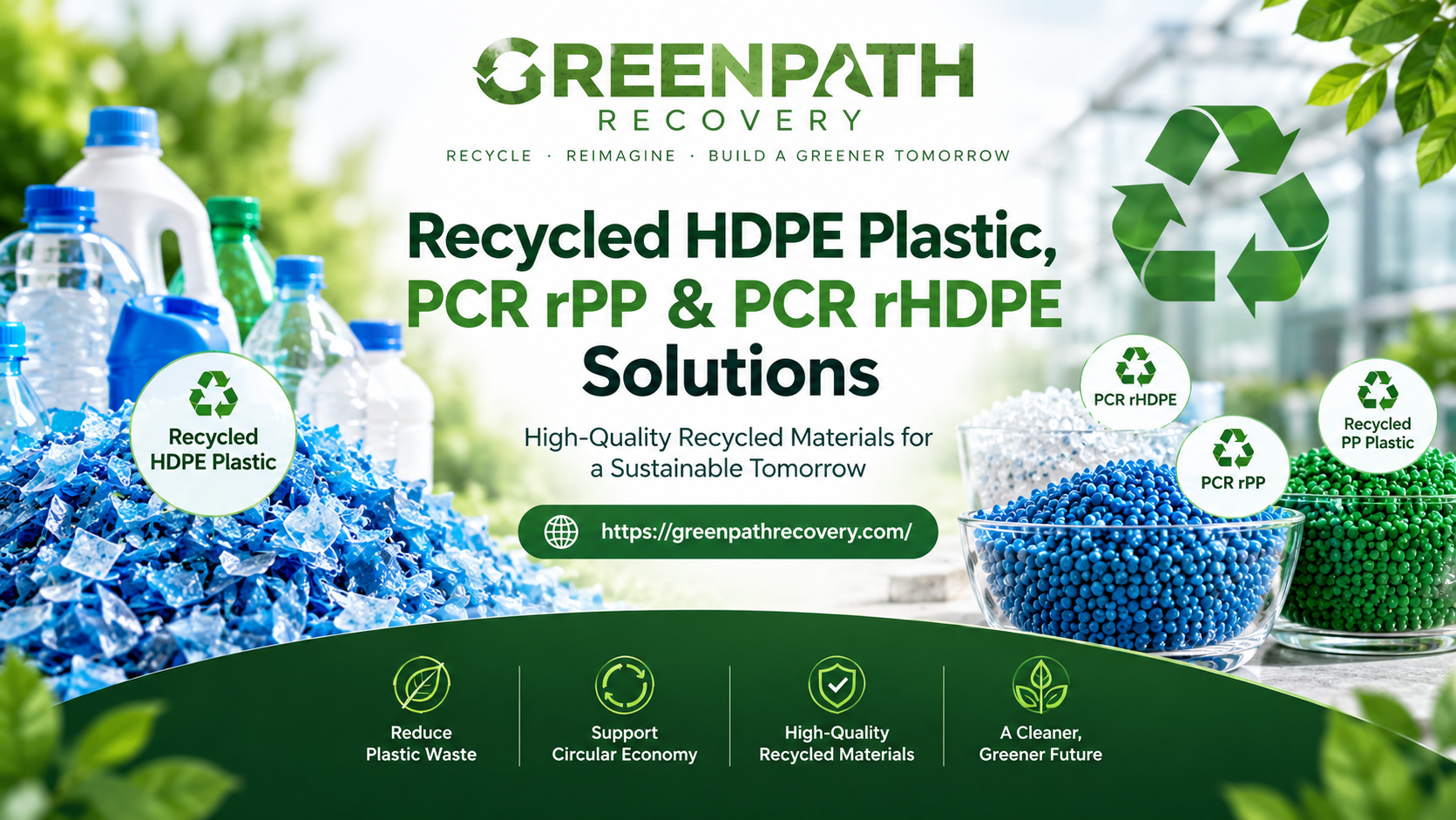
Businesses across manufacturing, packaging, retail, and industrial sectors are increasingly looking for practical ways to reduce plastic waste and improve resource efficiency. One effective approach is recovering used plastics and transforming them into materials that can be reused in manufacturing. Recycled polymers such as Recycled HDPE Plastic, Recycled PP Plastic, PCR rPP, and PCR rHDPE can help businesses move toward more responsible material management.
GreenPath Recovery supports commercial recycling initiatives that focus on recovering valuable plastic resources and keeping suitable materials in circulation. By understanding different plastic types, recycling processes, and material applications, businesses can make better decisions about waste reduction and recycled-content sourcing.
What Is Recycled HDPE Plastic?
High-density polyethylene (HDPE) is a versatile thermoplastic widely used in bottles, containers, packaging, caps, and industrial products. It is valued for its durability, chemical resistance, and strength, making it suitable for numerous applications.
Recycled HDPE Plastic is produced by collecting and processing used HDPE products so the recovered polymer can be used again. Depending on the source material and processing method, the recycled material may be supplied as flakes, regrind, or pellets for further manufacturing.
The recycling process generally involves collection, sorting, cleaning, shredding, and processing. Quality checks help identify contamination and determine whether the recovered material meets the requirements of its intended application.
For manufacturers seeking to reduce their reliance on virgin resin, Recycled HDPE Plastic can provide a practical material option when its properties are compatible with product specifications.
Understanding Recycled PP Plastic and PCR rPP
Polypropylene (PP) is another widely used plastic found in packaging, containers, closures, automotive components, household products, and industrial applications. Its lightweight structure, chemical resistance, and versatility make it useful across many industries.
Recycled PP Plastic is created by recovering and processing polypropylene products for reuse. The material can be converted into forms suitable for manufacturing applications, depending on its quality and intended purpose.
PCR rPP refers to post-consumer recycled polypropylene. It is produced from plastic products that have already been used by consumers, collected, and processed into a usable recycled material.
Businesses considering PCR rPP should evaluate material consistency, contamination levels, color, melt flow properties, and performance requirements. These factors can influence how easily the recycled resin can be processed and whether it is appropriate for a specific product.
Using Recycled PP Plastic can help manufacturers incorporate recovered resources into suitable products while supporting waste-reduction and circular manufacturing objectives.
What Is PCR rHDPE?
PCR rHDPE refers to post-consumer recycled high-density polyethylene. It combines the characteristics of HDPE with recycled material recovered after consumer use.
Unlike virgin HDPE, which is produced from newly sourced raw materials, PCR rHDPE comes from previously used plastic products that have been collected and processed for another potential use.
The material may be suitable for selected packaging, containers, non-food-contact products, and industrial applications, depending on its quality and the applicable regulatory requirements.
Choosing PCR rHDPE requires an understanding of the material's origin, processing history, consistency, and intended end use. Businesses should confirm that the recycled resin meets the necessary technical and safety standards before incorporating it into their manufacturing processes.
Key Benefits of Recycled Plastic Solutions
Recycled plastic solutions can support businesses in several ways when implemented with suitable collection and quality-control processes.
1. Reduced Plastic Waste
Recovering used plastics creates opportunities to divert suitable materials from disposal. Proper sorting and processing help prepare these resources for additional uses instead of allowing them to become waste prematurely.
2. More Efficient Material Use
Incorporating recycled resin into suitable products can reduce the amount of virgin plastic required. The actual reduction depends on the recycled-content percentage, product specifications, and manufacturing process.
3. Support for Circular Manufacturing
Circular manufacturing focuses on keeping materials in productive use for longer. Recycled HDPE Plastic, recycled polypropylene, and other recovered polymers can contribute to this approach when collection systems and end markets are available.
4. Progress Toward Sustainability Goals
Businesses can incorporate recycled materials into broader environmental initiatives, including waste reduction, responsible sourcing, and recycled-content targets. Accurate documentation and transparent reporting help organizations measure progress.
5. Potential Supply-Chain Advantages
Establishing reliable sources of recycled resin can help businesses diversify their material supply options. However, availability, pricing, and consistency depend on market conditions, material quality, and processing capacity.
How Businesses Can Improve Plastic Recycling
A successful commercial recycling program starts with understanding the types of plastic generated throughout daily operations. Businesses should identify their material streams, estimate waste volumes, and establish procedures for separating compatible plastics.
HDPE and PP should generally be identified and managed according to their polymer types because mixing incompatible materials can reduce the quality and usability of recovered resin.
Organizations can improve recovery by:
-
Separating HDPE and PP at the point of collection.
-
Keeping recyclable materials free from unnecessary contamination.
-
Establishing clear procedures for employees and waste-handling teams.
-
Working with qualified recycling partners.
-
Reviewing collection volumes and material recovery rates.
-
Maintaining records of collected, processed, and reused materials.
These measures can help businesses prepare more consistent material streams for processing into Recycled HDPE Plastic and other recycled polymers.
Choosing the Right Recycled Plastic Material
Selecting the appropriate recycled resin involves more than identifying its polymer type. Businesses should consider the material's intended application, mechanical requirements, processing conditions, and quality specifications.
For example, HDPE may be suitable for products requiring durability and chemical resistance, while PP may be preferred for applications that benefit from its particular stiffness, heat resistance, or processing characteristics.
When comparing PCR rHDPE and PCR rPP, manufacturers should review technical data sheets, batch consistency, contamination limits, and relevant testing results. Recycled materials can vary depending on their original products and processing methods, so application-specific evaluation is essential.
Businesses should also verify regulatory requirements when recycled plastics are intended for food contact, sensitive applications, or products subject to particular safety standards.
The Role of Commercial Recycling Partners
Managing plastic waste efficiently often requires reliable collection, sorting, processing, and material-recovery arrangements. A commercial recycling partner can help businesses identify recoverable materials and develop procedures that fit their operational needs.
GreenPath Recovery provides a commercial recycling context for organizations seeking more responsible ways to manage plastic resources. Businesses evaluating recycling solutions should look for clear communication about accepted materials, collection requirements, processing capabilities, and documentation.
A well-managed program can help organizations understand where their plastic waste goes and identify opportunities to recover more suitable material for productive use.
Whether the objective is to recover HDPE packaging, improve polypropylene waste separation, or source recycled resin, a structured approach helps connect waste management with broader resource-efficiency goals.
Conclusion
Recycled polymers offer businesses practical opportunities to reduce plastic waste and make better use of existing resources. Recycled HDPE Plastic, Recycled PP Plastic, PCR rPP, and PCR rHDPE each have distinct properties and potential applications that should be evaluated according to manufacturing requirements.
By improving material separation, controlling contamination, and working with reliable recycling partners, businesses can build more effective recycling programs and support circular manufacturing.
For organizations looking to improve plastic recovery and recycled-material sourcing, GreenPath Recovery provides a starting point for exploring commercial recycling solutions tailored to business needs. The most effective strategy combines appropriate material selection, consistent quality standards, and measurable waste-management practices to support long-term sustainability objectives.

 English
 Arabic
 French
 Spanish
 Portuguese
 Deutsch
 Turkish
 Dutch
 Italiano
 Russian
 Portuguese (Brazil)
 Greek
