


Practical Paper Materials for Everyday Baking
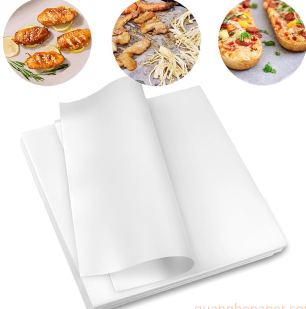
In commercial kitchens and food production environments, Baking Paper is a practical material that helps simplify preparation, improve handling, and make cleanup more convenient. Bakeries, restaurants, catering businesses, and food manufacturers use paper liners for a variety of products and equipment. Selecting an appropriate product requires attention to base paper quality, surface treatment, dimensions, and operating conditions rather than appearance alone.
The base paper influences how the finished material performs during daily use. Fiber structure, thickness consistency, surface smoothness, and mechanical strength affect flexibility and resistance to tearing. Consistent material also supports reliable processing when paper is converted into rolls or sheets. For businesses preparing large quantities of baked goods, these characteristics can reduce handling difficulties and support a more predictable workflow.
Surface treatment can improve the paper's suitability for baking. Silicone-coated paper is commonly used because its non-stick surface helps baked goods release more easily after cooking. Depending on the application, it may reduce the need for additional grease and make trays easier to clean. Coating consistency is important because uneven treatment can affect release performance. Buyers should confirm that the selected paper is appropriate for their intended process and equipment.
Different formats suit different preparation methods. Rolls allow users to cut paper according to the dimensions of trays, pans, or work surfaces. Pre-cut sheets provide convenience for bakeries and restaurants that benefit from standardized sizes and faster preparation. Food processing businesses may prioritize compatibility with production equipment, while catering operations may prefer easy storage and handling. Roll width, roll length, sheet dimensions, paper color, and packaging are all useful factors to consider.
Manufacturing technology contributes to consistency throughout production. Processes may include base paper inspection, coating application, drying, rewinding, slitting, and cutting. Stable machine tension helps reduce wrinkles, while accurate cutting supports uniform dimensions. Visual and dimensional checks can identify defects before products are packed. These controls help maintain consistent quality and are particularly relevant for businesses that purchase the same format repeatedly.
Application requirements should guide product selection. Different foods, tray surfaces, and preparation methods may require different handling characteristics. Buyers should consider the type of food, equipment design, contact conditions, and operating temperature before selecting a product. A paper suitable for one baking process should not automatically be assumed suitable for every application. Evaluating samples under normal working conditions can help establish whether the product meets operational needs.
Food-contact suitability is equally important. Buyers should verify that the paper and coating are appropriate for the intended food type and conditions of use. Technical specifications, relevant test reports, and compliance documents should be reviewed for the exact product and destination market. Temperature limits and special handling instructions should be confirmed with the supplier. Proper storage protects paper from moisture, dust, and damage before it reaches the kitchen or production line.
Packaging can influence both product protection and ease of use. Rolls should remain securely wound, while sheets need protection against folding, contamination, and deformation. Clear labels help warehouse teams identify product dimensions and formats. For international procurement, buyers should confirm carton quantities, shipping arrangements, and delivery schedules. These details can simplify receiving procedures and improve stock control.
Material efficiency is another consideration for commercial buyers. Selecting roll widths and sheet sizes that match actual requirements can reduce offcuts and unnecessary waste. Consistent dimensions also help operators use the paper more efficiently. Buyers may evaluate these benefits alongside handling performance, packaging, and supply reliability when comparing products for their business.
When choosing Baking Paper, businesses should consider material consistency, coating performance, product format, and suitability for the intended application. Clear specifications and sample evaluation help support more informed purchasing decisions. Zhejiang Guanghe New Materials Co., Ltd. provides food paper products for baking and packaging needs. Explore the available options at https://www.guanghepaper.com/product/ to identify suitable formats for your operation.

 English
 Arabic
 Spanish
 Portuguese
 Deutsch
 Turkish
 Dutch
 Italiano
 Russian
 Romaian
 Portuguese (Brazil)
 Greek
