


How Sustainability Consulting Supports Responsible Business Growth
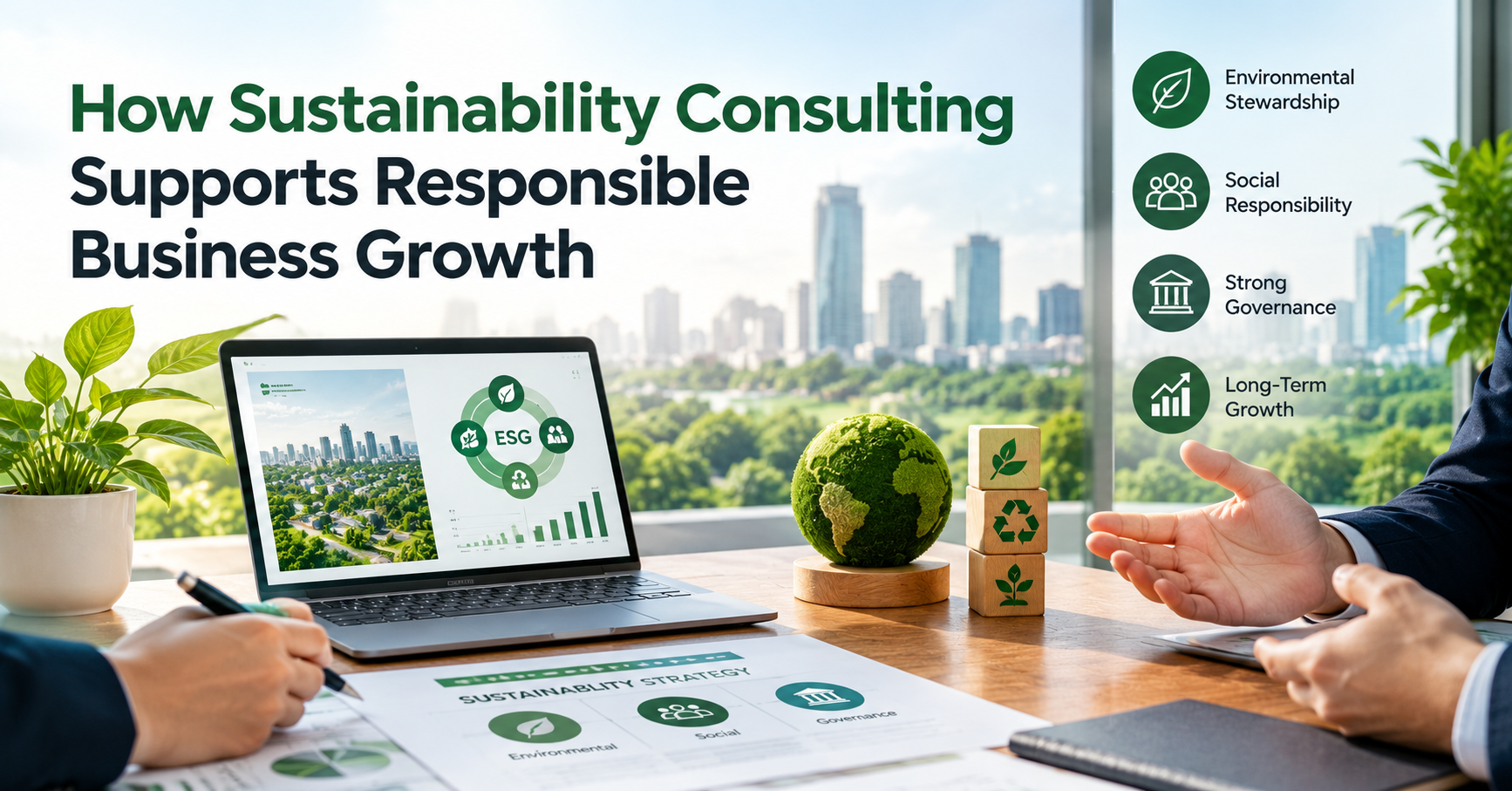
Businesses today are expected to balance profitability with environmental responsibility, social impact, and ethical operations. Customers, investors, employees, and regulators increasingly value organizations that demonstrate a commitment to sustainable practices. Working with sustainability consultancy firms can help businesses identify improvement opportunities, manage environmental risks, and develop practical strategies that support long-term growth. By integrating sustainability into everyday decisions, organizations can improve resource efficiency, strengthen stakeholder relationships, and prepare for changing market expectations.
1. Integrating Sustainability into Business Strategy
Sustainability is most effective when it becomes part of an organization's overall business strategy rather than a separate initiative. Consulting professionals help businesses evaluate their current operations, identify priority areas, and establish measurable objectives.
These objectives may include reducing energy consumption, minimizing waste, improving supply chain transparency, and strengthening employee welfare. By aligning sustainability goals with business priorities, companies can make informed decisions about investments, operational changes, and future expansion.
A clear strategy also helps departments understand their responsibilities and work toward common targets. Regular performance reviews allow organizations to measure progress and adjust their approach when necessary.
2. Improving Resource Efficiency and Reducing Costs
Efficient resource management is an important part of responsible business growth. Excessive energy consumption, water wastage, and inefficient material use can increase operating expenses and negatively affect the environment.
Sustainability assessments help businesses understand where resources are being consumed and where improvements are possible. Organizations may introduce energy-efficient equipment, improve maintenance practices, optimize production processes, and implement waste reduction programs.
For example, a manufacturing facility may reduce electricity consumption by upgrading outdated equipment and monitoring energy usage more closely. Such improvements can lower operating costs while supporting environmental objectives.
Over time, resource efficiency can help businesses improve productivity and manage operational expenses more effectively.
3. Strengthening Environmental Risk Management
Environmental risks can influence business continuity, supply chains, infrastructure, and long-term financial performance. Climate-related disruptions, water scarcity, changing regulations, and resource shortages may create challenges for organizations across different industries.
Sustainability consulting helps businesses identify these risks and evaluate their potential impact. Consultants can support environmental assessments, resource management planning, emissions monitoring, and the development of appropriate risk mitigation measures.
Organizations can use these findings to prepare contingency plans and improve operational resilience. Early identification of environmental challenges also allows businesses to consider practical solutions before risks become expensive problems.
A proactive approach helps companies respond to changing environmental conditions while maintaining greater stability in their operations.
4. Supporting ESG Performance and Transparent Reporting
Environmental, Social, and Governance (ESG) principles provide businesses with a framework for evaluating their environmental impact, social responsibilities, and governance practices.
Sustainability consulting can help organizations identify relevant performance indicators, collect reliable information, and establish reporting processes. Environmental indicators may include energy use, emissions, and waste generation, while social indicators may cover workplace safety, employee development, and community engagement.
Reliable reporting enables businesses to communicate their sustainability performance more clearly to stakeholders. It also helps management identify gaps, set realistic targets, and track improvements over time. Companies should ensure that their sustainability claims are supported by accurate data to maintain credibility.
5. Building Customer Trust and Brand Reputation
Responsible business practices can influence how customers, employees, investors, and business partners perceive an organization. Companies that demonstrate genuine environmental and social commitments may strengthen stakeholder confidence and differentiate themselves in competitive markets.
Sustainability consulting helps businesses develop initiatives that reflect their operational realities and stakeholder expectations. These initiatives may include responsible sourcing, improved working conditions, waste reduction, and community development programs.
However, businesses should communicate their progress honestly rather than making unsupported environmental claims. Clear reporting and measurable outcomes help demonstrate that sustainability commitments are backed by meaningful action.
Over time, consistent performance can support stronger relationships and contribute to a more credible brand reputation.
6. Encouraging Sustainable Supply Chain Practices
Business sustainability extends beyond an organization's immediate operations. Suppliers, logistics providers, contractors, and other partners can significantly influence environmental performance and social responsibility.
Consultants can help organizations evaluate supply chain risks, establish supplier expectations, and improve the visibility of sourcing practices. Businesses may assess material origins, transportation efficiency, waste management, and supplier compliance with relevant standards.
Collaborating with suppliers can also encourage improvements in packaging, resource consumption, and delivery planning. These efforts help companies identify opportunities to reduce environmental impacts across their value chains while maintaining operational efficiency.
A more responsible supply chain can strengthen resilience and support long-term business relationships.
7. Preparing Businesses for Future Opportunities
Sustainability can create opportunities for innovation, operational improvement, and new business models. Companies may explore renewable energy, circular economy practices, sustainable products, and energy-efficient infrastructure.
Consulting support helps organizations evaluate these opportunities, prioritize investments, and establish practical implementation plans. Rather than adopting initiatives simply to follow trends, businesses can focus on solutions that deliver measurable environmental and commercial benefits.
Integrating sustainability into future planning also encourages organizations to consider emerging regulations, evolving customer expectations, and resource availability when making strategic decisions.
Conclusion
Sustainability consulting supports responsible business growth by helping organizations improve resource efficiency, manage environmental risks, strengthen ESG performance, and build stakeholder trust. With clear objectives, reliable data, and consistent implementation, businesses can integrate responsible practices into their operations while pursuing long-term commercial success.
Organizations seeking structured guidance can work with Esg consulting Firms in India to identify relevant priorities, develop sustainability roadmaps, and align business strategies with environmental and governance objectives. By treating sustainability as an ongoing business priority, companies can improve resilience, encourage innovation, and prepare for a more responsible and competitive future.

 English
 Arabic
 French
 Spanish
 Portuguese
 Deutsch
 Turkish
 Dutch
 Italiano
 Russian
 Portuguese (Brazil)
 Greek
