


Magnus Opto Microscopes: Choosing the Right Solution for Your Laboratory
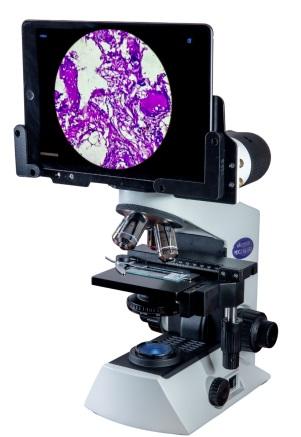
Choosing a microscope involves understanding the specimen, the required level of detail and the laboratory's day-to-day requirements. For laboratories exploring Magnus Opto microscopes, comparing microscope categories and their intended applications is an important first step.
Whether the requirement involves biological observation, prepared slide examination, specimen inspection or educational laboratory work, the right microscope should match the intended workflow rather than magnification alone.
Why Consider Magnus Opto Microscopes for Laboratory Applications?
Microscopes are used across educational institutions, research environments and laboratories for observing specimens that cannot be examined adequately with the naked eye.
When evaluating a microscope from Magnus Opto, users should consider the intended application, optical configuration, illumination, ergonomics and compatibility with any required accessories.
The most appropriate choice depends on the type of specimen and the detail that needs to be observed. Reviewing the specifications of individual models helps ensure that the selected configuration meets the laboratory's requirements.
Explore the Magnus Opto microscope range to review the available categories.
Exploring Different Types of Magnus Opto Microscopes
1. Compound Microscopes for Biological Observation
Compound microscopes are commonly used to examine thin specimens, prepared slides, cells and tissue sections. Their suitability depends on objective specifications, optical resolution, illumination and specimen preparation.
Laboratories should evaluate the required magnification range and the level of detail that needs to be distinguished.
Explore Magnus Opto compound microscopes to review this category.
2. Stereo Microscopes for Three-Dimensional Specimens
Stereo microscopes provide a three-dimensional viewing impression, making them useful for observing solid objects, surface features and specimens that require manipulation.
Working distance, specimen size and illumination are particularly important when selecting a stereo microscope for inspection or practical laboratory work.
Learn more about Magnus Opto stereo microscopes.
3. Model-Specific Microscope Selection
Magnus Opto also provides dedicated product pages for individual microscope models. Users considering the CH20i, MX21i, MLX Plus or MLXi Plus should compare the actual specifications and configurations listed on the respective pages.
Model selection should be based on verified features and application requirements rather than the product name alone.
What Should You Evaluate Before Choosing a Magnus Opto Microscope?
Before making a decision, consider these important factors:
Specimen type: Determine whether you will examine prepared slides, biological specimens or larger three-dimensional objects.
Magnification and resolution: Identify the level of detail required. Higher magnification does not automatically guarantee better resolution.
Illumination: Select a configuration suitable for the specimen's transparency, surface characteristics and observation method.
Ergonomics: Consider focusing controls, stage movement, viewing comfort and expected frequency of use.
Digital imaging: If image capture is required, verify compatibility with the intended camera, adapter and software.
Maintenance and support: Review operating instructions, cleaning requirements, warranty conditions and available technical assistance.
Magnus Opto Microscopes for Education and Research
Microscopy can help students connect theoretical concepts with direct specimen observation. In research settings, it can support the examination of biological structures, sample documentation and selected experimental workflows.
However, different applications have different equipment requirements. A microscope intended for routine educational observation may not be appropriate for every specialised research or clinical diagnostic procedure.
Laboratories should confirm that the selected instrument's specifications and intended use match the task.
How to Choose the Right Magnus Opto Microscope
Start by defining the observation task, specimen type and required level of detail. Next, compare suitable microscope categories and review the model-specific specifications.
For laboratories that need to examine both thin biological specimens and solid objects, compound and stereo microscopes may serve complementary purposes.
Explore the complete Magnus Opto microscope category to identify the relevant options for your laboratory.
Frequently Asked Questions
1. What are Magnus Opto microscopes used for?
Magnus Opto microscopes are intended for microscopy applications according to the specifications and intended use of each model. The appropriate instrument depends on the specimen and observation requirements.
2. How do I choose a Magnus Opto microscope?
Identify your specimen type, required magnification and resolution, illumination requirements, workflow and any digital imaging needs. Then compare the specifications of suitable models.
3. What is the difference between Magnus Opto stereo and compound microscopes?
Stereo microscopes are commonly used for three-dimensional objects and surface inspection, while compound microscopes are generally suited to thin specimens and biological slides.
4. Where can I find Magnus Opto microscope specifications?
Review the official Magnus Opto microscope category and the relevant individual product pages for model-specific details.
5. Can Magnus Opto microscopes be used for digital image documentation?
Digital imaging depends on the microscope configuration and compatible cameras, adapters and software. Confirm compatibility for the specific model before selecting accessories.
6. Which Magnus Opto microscope is suitable for my laboratory?
The best option depends on your application, specimen type, optical requirements and workflow. Compare the official product specifications or contact Magnus Opto for model-specific guidance.

 English
 Arabic
 French
 Spanish
 Portuguese
 Deutsch
 Turkish
 Dutch
 Italiano
 Russian
 Romaian
 Portuguese (Brazil)
