


Guanfeng Grinding Equipment for Industrial Food Preparation
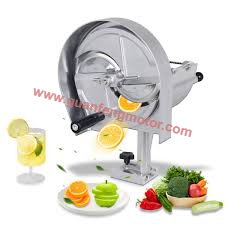
Can a Vegetables & Fruits Grinding Machine Process Ingredients for Sauces and Purees?
Sauces and purees play an important role in food preparation, appearing in products such as tomato sauces, fruit fillings, vegetable pastes, cooking bases, and blended ingredients for commercial kitchens. A Vegetables & Fruits Grinding Machine may help process suitable raw materials into smaller particles or a paste, depending on its structure, grinding method, and intended application. For food manufacturers exploring machinery information through guanfengmotor, understanding the relationship between ingredient properties, grinding performance, and motor operation is an important step when assessing equipment for a production line. How can buyers determine whether a grinding machine is suitable for the ingredients and texture required by their recipes?
How Grinding Equipment Processes Food Ingredients
Grinding involves reducing materials through mechanical actions such as cutting, crushing, shearing, or friction. The exact process depends on the machine's design and the physical characteristics of the material. When preparing sauces, certain equipment may help break down ingredients such as tomatoes, onions, garlic, peppers, and selected herbs into smaller pieces that can be mixed with other components. In fruit processing, suitable machinery may be used to prepare apples, pears, berries, and similar produce for fillings, toppings, or puree-based recipes.
The result depends on the equipment's intended function. A machine designed for dry grains may use a grinding structure that is not suitable for wet or juicy ingredients. Moisture can affect material movement, particle formation, and discharge, while fibrous skins or seeds may create additional processing challenges. For this reason, buyers should confirm that the machine is specifically designed for the material they intend to process instead of assuming that every grinder can handle both dry and wet food products.
It is also important to distinguish grinding from other food-processing operations. Cutting equipment reduces ingredients into pieces, blending equipment mixes materials, and pulping or refining equipment may be designed to produce a particular consistency. Some production lines use several stages to achieve the desired result. A grinding machine may form part of this process, but its suitability depends on the recipe, the raw materials, and the required final texture.
Ingredient Properties and Texture Requirements
Raw materials vary in moisture content, firmness, fiber structure, and particle composition. Ripe tomatoes and berries contain substantial moisture, whereas carrots, firm apples, and certain other vegetables require different handling because of their texture. Ingredients containing tough skins, seeds, or fibrous sections may need preparation before entering the machine. Washing, sorting, removing unsuitable parts, and cutting produce into manageable pieces can help prepare materials for processing, provided these steps follow the equipment instructions and food hygiene requirements.
The desired texture should guide the selection process. Some sauces retain visible pieces of vegetables, while other recipes call for a smooth, uniform consistency. Fruit fillings may require a pulp that holds its shape, whereas puree products often need a finer texture. The grinding mechanism, feed arrangement, and discharge design all influence the result, but additional operations such as sieving, blending, or refining may still be required.
Production teams should also consider the behavior of ingredients during continuous operation. Excessive feeding may cause a machine to become overloaded, while irregular material sizes can affect the consistency of the output. A controlled feeding process helps maintain a steady flow of ingredients and allows operators to observe changes in machine performance. Testing representative raw materials before full-scale production can reveal whether the equipment meets the actual processing requirements.
The Role of Motor Performance
A grinding machine depends on its drive system to supply the mechanical power required for material processing. The motor must operate within its intended range while responding to resistance from the grinding mechanism and the ingredients. Dense materials, fibrous produce, or uneven feeding may create changing loads, making appropriate motor selection and system configuration important for stable operation.
When evaluating a motor for processing machinery, buyers should review rated power, speed, voltage, frequency, starting characteristics, and expected operating duration. The required specifications depend on the machine's construction, the type of material, the desired output, and the resistance encountered during processing. Rated power alone does not establish whether a motor is suitable for a particular grinding task, since transmission components and the design of the working mechanism also affect the overall system.
Mechanical maintenance deserves attention as well. Worn bearings, poor shaft alignment, damaged couplings, insufficient lubrication, or excessive friction may increase the load on the motor. Regular inspection can help identify these issues before they interrupt production. Operators should follow the manufacturer's maintenance schedule and avoid exceeding the machine's specified operating limits.
For equipment suppliers and purchasers, the key consideration is compatibility across the entire system. The motor, transmission, grinding components, feed arrangement, and discharge section need to work together according to the intended application. Confirming these details helps reduce the risk of choosing machinery based on a single specification without considering the full production process.
Cleaning, Safety, and Practical Selection
Food-processing equipment must be evaluated for cleaning access and hygiene requirements, particularly when handling moist ingredients that may leave pulp or residue inside the machine. Surfaces that contact food should be maintained according to the manufacturer's cleaning instructions and the rules applicable to the production facility. Buyers should ask about disassembly, inspection access, cleaning procedures, and the suitability of materials that contact the ingredients.
Safety features are equally important. Guards, electrical protection, emergency stopping arrangements, and clear operating instructions help support safe use. Before cleaning or maintenance, operators should isolate the equipment from its power source and wait until moving components have stopped completely. The manufacturer's instructions should determine the correct procedure for each machine.
Practical selection begins with a clear production plan. Buyers should identify the ingredients, expected batch size, desired texture, operating frequency, available power supply, and space for installation. They should also confirm whether the equipment is intended for dry materials, wet food, or a defined range of applications. Where product specifications do not clearly address a particular ingredient, consulting the supplier and conducting a controlled trial can help establish suitability.
Matching Equipment to Production Requirements
Choosing grinding equipment for sauce and puree preparation requires attention to the relationship between raw materials, processing methods, and the finished product. A machine suitable for one ingredient may not perform in the same way with another, so purchasers should examine technical documentation, material compatibility, cleaning requirements, and operating limits before making a decision. Motor capacity and transmission design should also be considered as part of the complete system rather than as isolated features.
Businesses researching industrial machinery through guanfengmotor can use the available product information as a starting point for understanding equipment specifications and application requirements. If grain-processing machinery is also relevant to your purchasing plans, visit https://www.guanfengmotor.com/ to review the product details and confirm its intended materials and operating conditions with the supplier. A Vegetables & Fruits Grinding Machine should be selected according to its documented capabilities, since a grinder intended for dry grain cannot automatically be assumed suitable for moist fruits or vegetables. Careful comparison of the ingredients, desired consistency, machine structure, and motor requirements helps buyers identify equipment that aligns with their production process.

 English
 Arabic
 French
 Spanish
 Portuguese
 Deutsch
 Turkish
 Dutch
 Russian
 Romaian
 Portuguese (Brazil)
 Greek
