


Binocular vs. Trinocular Microscopes: A Practical Buying Guide
Introduction
When choosing a compound microscope, buyers often need to decide between binocular and trinocular configurations. Both can support visual observation through eyepieces, but they differ in the provision of a third optical port intended for imaging equipment.
The right choice depends on how the microscope will be used, whether images or videos need to be captured, and how frequently digital documentation is required.
What is a binocular microscope?
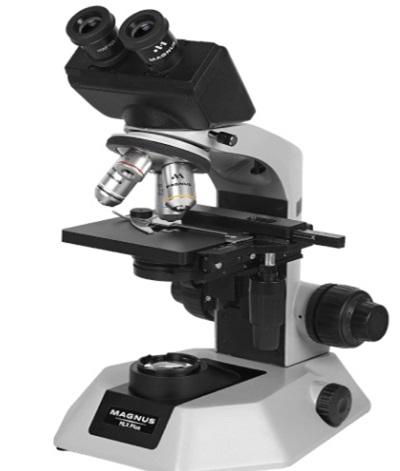
A binocular microscope has two eyepieces, allowing the user to observe a specimen with both eyes. This configuration is commonly used in laboratories, educational settings and routine microscopy.
Potential advantages include:
-
Comfortable two-eye observation.
-
A straightforward setup for routine viewing.
-
Suitability for applications that do not require a dedicated camera port.
A binocular model may still support imaging through a compatible accessory or a different arrangement, but this should be confirmed for the specific model.
What is a trinocular microscope?
A trinocular microscope has two eyepieces and a third optical port intended for a camera or other compatible imaging attachment. Depending on the model, optical design and port configuration, the third port can support digital documentation alongside visual observation.
Potential benefits include:
-
Capturing images for reports and records.
-
Recording specimens for teaching or presentations.
-
Supporting compatible digital microscopy workflows.
-
Sharing observations with colleagues or students.
A trinocular port alone does not guarantee that a camera is included. The camera, adapter, software and compatibility requirements should be checked separately.
Key differences
| Factor | Binocular microscope | Trinocular microscope |
|---|---|---|
| Viewing | Two eyepieces | Two eyepieces plus a third optical port |
| Camera connection | Depends on available accessories | Designed to support a compatible camera connection |
| Image documentation | May require an alternative setup | Often more convenient when the third port is configured for imaging |
| Typical consideration | Routine visual observation | Visual observation plus regular digital imaging |
| Additional equipment | Depends on the imaging plan | Camera and adapter may be additional purchases |
Which configuration should you choose?
Choose based on your daily workflow
If your primary task is observing prepared slides and recording results manually, a binocular configuration may meet your needs. If you frequently capture specimen images, prepare digital reports or demonstrate observations on a screen, a trinocular configuration may be more practical.
Check camera compatibility
Before purchasing, confirm the microscope's camera port, required adapter, supported camera and software compatibility. Ask whether the camera is included or sold separately.
Consider the users
For a shared laboratory, consider whether several users will need to capture images, whether the microscope will be used for training and whether digital records are part of the standard workflow.
Compare the complete system
Do not choose based on the number of ports alone. Evaluate optical performance, objective options, illumination, focusing controls, stage design, service support and the total cost of any imaging accessories.
Microscope options from Magnus Opto
Magnus Opto offers microscope models with different configurations for laboratory and educational use. For example, the MX21i microscope and CH20i microscope have model-specific binocular and trinocular versions listed in their specifications. Review the exact configuration before ordering to confirm the viewing head and any imaging accessories included.
Conclusion
A binocular microscope is a practical option for routine two-eye observation, while a trinocular microscope provides an additional port intended for compatible imaging equipment. The best option depends on whether digital documentation is an occasional task or a regular part of the workflow.
Before purchasing, compare the complete configuration and confirm camera compatibility rather than assuming every trinocular microscope includes a camera.
FAQs
What is the main difference between binocular and trinocular microscopes?
A binocular microscope has two eyepieces. A trinocular microscope has two eyepieces and an additional optical port intended for compatible imaging equipment.
Does a trinocular microscope come with a camera?
Not necessarily. The camera and adapter may be optional accessories, so confirm the included items before purchasing.
Can a binocular microscope be used for digital imaging?
Depending on the model, compatible accessories or alternative imaging arrangements may be available. Check the manufacturer's specifications.
Is a trinocular microscope better for research?
It can be more convenient when image capture and documentation are regular requirements. Suitability also depends on the microscope's optical performance and the research application.
What should I check before buying a trinocular microscope?
Check camera-port compatibility, adapter requirements, software support, included accessories, objectives, illumination and the intended application.

 Arabic
 French
 Spanish
 Portuguese
 Deutsch
 Turkish
 Dutch
 Italiano
 Russian
 Romaian
 Portuguese (Brazil)
 Greek
