


What Is BIS Certification? Meaning, Types and Benefits Explained Simply
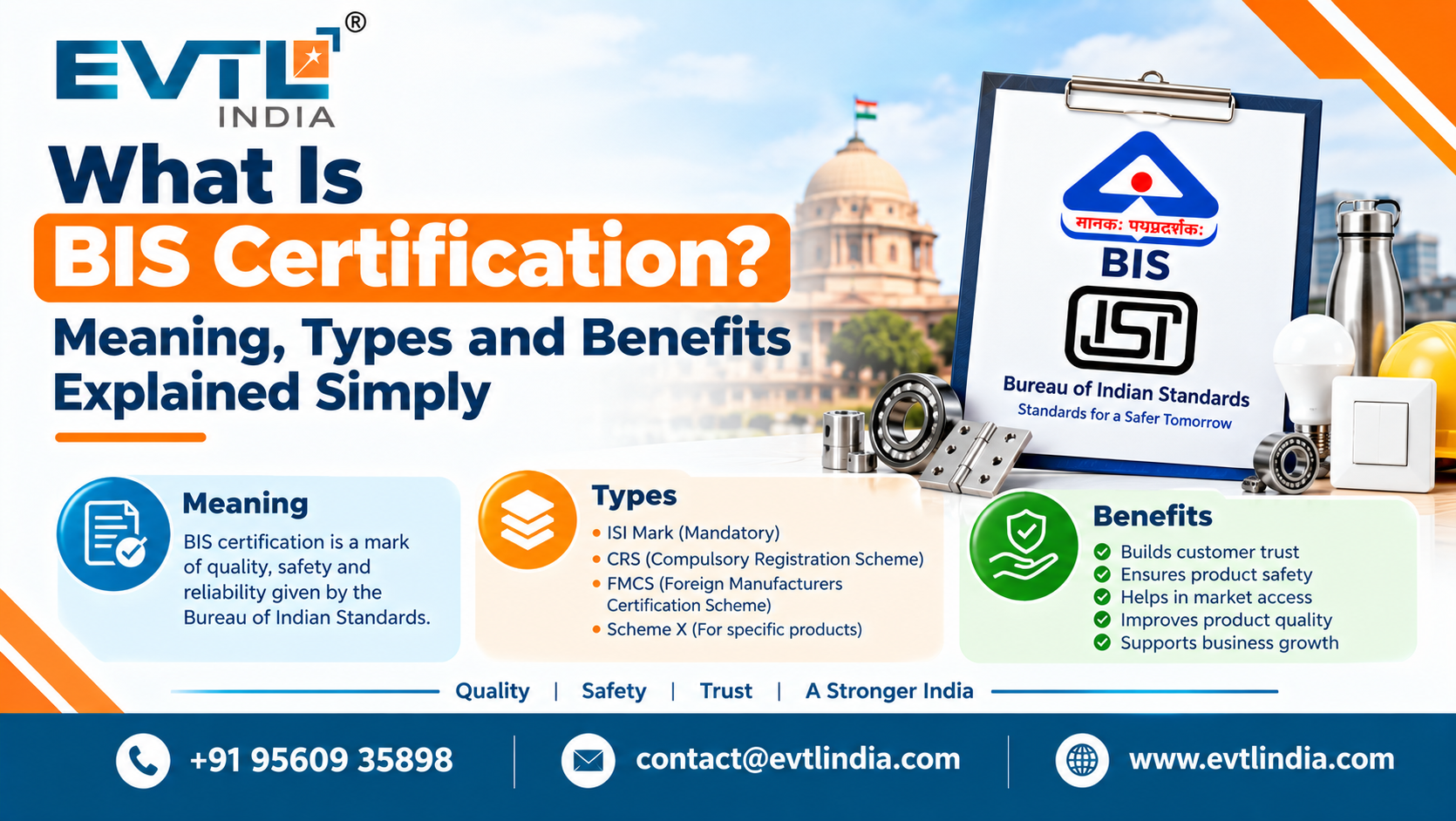
Walk into any shop and pick up a helmet, a switch board or a pressure cooker. Look closely, and you will often see a small mark on it. That mark is given by the Bureau of Indian Standards, or BIS. But what does it really tell you, and why do so many business owners talk about it? Let us understand it step by step, in very easy words.
The Meaning in Simple Words
BIS Certification is a quality and safety approval from the Government of India. When a product passes the required tests and checks, the maker gets a license to put the BIS mark on it. For a buyer, the mark says, “This product has been checked and is safe to use.”
Who Is BIS?
BIS is the national standards body of India. It works under the Government of India. Its main work is to make quality rules, called Indian Standards (IS), and to make sure that makers follow them. Every product has its own rules. A cement bag, a toy and a phone charger all follow different standards.
Why Does It Exist?
Imagine buying a helmet that cracks in an accident, or a wire that catches fire. These are real dangers. To protect people, the government decided that some products must be checked before they are sold. This keeps weak and unsafe goods out of the market and gives buyers peace of mind.
Main Types
Here are the common types, explained simply.
- ISI Mark: For products made in India. The product is tested in a lab, and a BIS officer visits the factory. It is common for steel items, cement, helmets and electrical goods.
- CRS Registration: For electronics and IT products like chargers, phones and LED lights. The product is tested in a lab, and usually there is no factory visit.
- FMCS: For companies outside India that want to sell here. They need an Indian representative, and their factory is checked.
- Hallmarking: For gold and silver jewellery. It shows the metal is pure.
- Voluntary approval: For products not on the mandatory list. A maker can still take it to gain trust.
Is It a Must for Everything?
No. The government keeps a list of products where the mark is required. If your product is on that list, you cannot make, import or sell it without approval. If it is not on the list, getting approval is your choice. Since the list keeps growing, check it often.
Benefits for Businesses
Many owners see this only as a rule. But it gives real gains too:
- More trust: Buyers feel safe when they see the mark.
- Legal safety: You avoid fines, seized stock and court trouble.
- Better sales: Dealers and big buyers prefer approved products.
- Tender chances: Many tenders ask for the mark.
- Better quality: Tests and checks help you find weak spots in your product.
- Stronger brand: Your product looks more professional.
Benefits for Customers
Customers gain a lot as well:
- Safer products for the family
- Fewer cases of products breaking early
- Better value for money
- A clear way to raise a complaint if something goes wrong
Why It Is Growing in Importance
Today, buyers compare brands and ask more questions. Having BIS Certification in India tells them that your brand cares about safety. It also helps you win bigger orders and enter new markets. For foreign companies, it is the key that opens the door to the Indian market.
The Process in Short
- Find the Indian Standard for your product.
- Choose the right scheme.
- Collect your documents.
- Apply on the BIS portal.
- Send samples to a recognised lab.
- Be ready for a factory check, if needed.
- Receive your license.
Documents Usually Needed
- Business registration and owner ID proof
- Factory address proof
- Machine and testing tool list
- Product details and test reports
- Authorised Indian Representative papers (for foreign makers)
Validity
A BIS license is normally valid for one to two years. You must renew it before it ends. BIS may also pick samples from the market and test them. If your product fails, the license can be stopped. So keep your quality steady even after you get approval.
Mistakes to Avoid
- Choosing the wrong scheme
- Giving wrong or missing papers
- Using the mark before the license is issued
- Not keeping production records
- Forgetting the renewal date
Is It Smart to Take Expert Help?
For many business owners, yes. The steps are detailed and the rules change from time to time. A BIS Certification Consultant can check if you need approval, pick the right scheme, prepare your papers and reply to BIS questions for you. This saves time and lowers the chance of rejection.
Conclusion
EVTL India is one of the leading BIS Consultant in India, helping manufacturers obtain their BIS licenses hassle-free. Our team explains each step in plain words and supports you from start to finish.
Have a question about your product? Contact us today:
📞 +91 95609 35898
📧 contact@evtlindia.com
🌐 www.evtlindia.com

 English
 Arabic
 French
 Spanish
 Portuguese
 Deutsch
 Dutch
 Italiano
 Russian
 Romaian
 Portuguese (Brazil)
 Greek
