


Cash in Transit Service: Safe Transport and Risk Management for Businesses
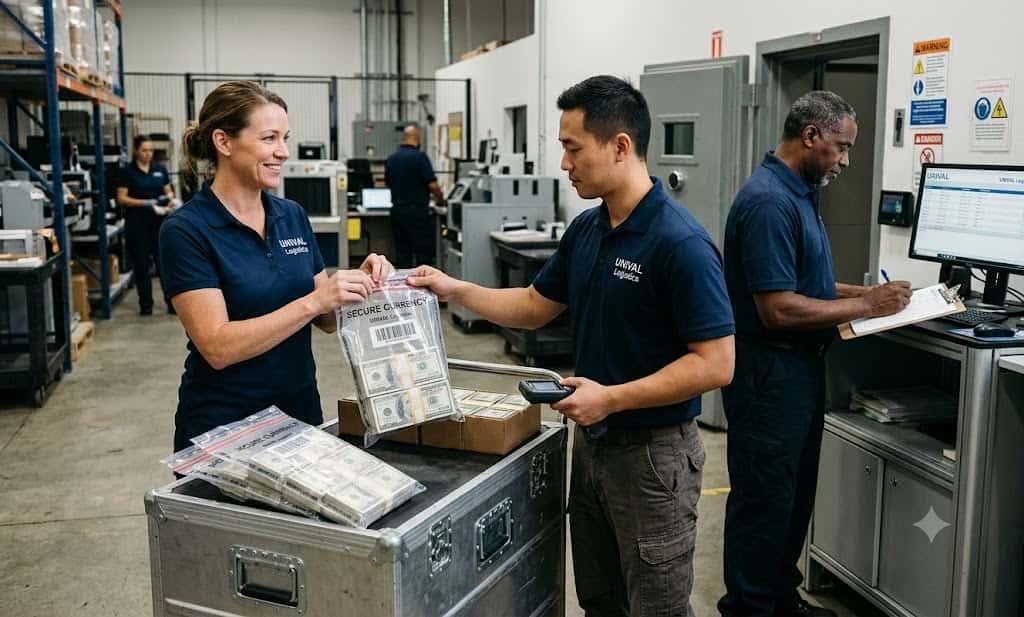
Summary: Safe Cash Transportation and Business Risk Management
A reliable cash transportation process combines security planning, authorized personnel, documented custody transfers, suitable transportation arrangements, and insurance verification. Businesses should assess the amount being transported, collection frequency, destination requirements, and potential exposure before selecting a service provider.
UNIVAL Logistics helps businesses evaluate the practical logistics considerations associated with valuable shipments, including security requirements, transportation coordination, documentation, and financial risk. Establishing clear procedures can reduce avoidable exposure and improve accountability throughout the cash transfer process.
Overview
Cash transportation is a specialized logistics activity that requires a different approach from conventional parcel or freight shipping. Physical currency can be difficult to recover once lost or stolen, and even a minor procedural failure can create significant financial and operational consequences.
A professional cash in transit service generally involves collecting, transporting, and delivering cash under controlled conditions. Depending on the service arrangement, it may also include secure containers, authorized personnel, custody documentation, collection scheduling, and reconciliation procedures.
Businesses should understand that ordinary courier services are not automatically authorized, equipped, or insured to transport physical currency. Service eligibility, security arrangements, and insurance coverage must be confirmed before a shipment is booked.
For organizations operating in Los Angeles, New York, Miami, Chicago, Dallas, Houston, Philadelphia, Atlanta, Las Vegas, San Francisco, Boston, Newark, and Northern New Jersey, transportation planning should reflect the relevant provider's service area, local operating requirements, and the business's security policies.
Key Takeaways
-
Security first: Use qualified providers with documented security procedures appropriate for physical cash.
-
Controlled handovers: Maintain clear records of collection, custody, delivery, and reconciliation.
-
Insurance verification: Confirm that physical currency is specifically eligible for coverage and review all applicable limits and exclusions.
-
Risk assessment: Evaluate cash volume, collection frequency, route exposure, and operational vulnerabilities.
-
Regulatory compliance: Verify applicable licensing, financial regulations, and contractual requirements.
-
Professional coordination: UNIVAL Logistics can help businesses assess transportation planning and risk-management considerations for valuable shipments.
Quick Answer: A cash shipping service transports physical currency using controlled collection, secure handling, documented custody transfers, and appropriate risk-management procedures. Businesses should use qualified providers and verify cash-specific insurance coverage before arranging transportation. UNIVAL Logistics helps businesses evaluate the logistics and protection requirements associated with valuable shipments across the USA.
What Is a Cash in Transit Service?
A cash in transit service is a specialized transportation arrangement for moving physical currency between authorized locations. Typical movements include retail cash deposits, bank transfers, collections from commercial premises, and transfers to cash-processing facilities.
Depending on the provider and contract, services may include scheduled collections, secure transport, cash bags or containers, documented handovers, delivery confirmation, and reconciliation support. Some providers also offer related services such as cash processing or deposit preparation, although these are separate capabilities that should be confirmed individually.
Cash transportation should not be confused with an ordinary parcel delivery. A standard courier may exclude cash from its permitted shipment categories or limit its liability for currency. Businesses must establish whether a provider expressly accepts physical cash and whether the service meets their security and compliance requirements.
Which Businesses Need Cash Transportation?
Cash transportation can be relevant to several business sectors.
Retail and supermarkets: Businesses handling frequent customer payments may need to transfer accumulated cash to banks or authorized processing facilities.
Hospitality and restaurants: Hotels, restaurants, and entertainment venues may require scheduled collections to reduce the amount of physical currency retained on their premises.
Financial institutions: Banks and authorized financial service providers may arrange cash movements between approved locations under established operational controls.
Events and entertainment: Venues handling ticket sales, concessions, or other cash transactions may require secure collection arrangements during or after events.
Multi-location businesses: Companies with multiple branches may need standardized procedures for moving cash between authorized locations and maintaining consistent records.
Each organization should determine whether a specialized cash-in-transit operator, a bank-provided service, or another authorized arrangement best meets its requirements.
Essential Security Standards for Cash Transportation
Cash transportation security depends on multiple controls working together. A secure vehicle or container alone cannot compensate for weak access management, poor documentation, or inadequate collection procedures.
1. Use Qualified and Authorized Providers
Before engaging a provider, verify its legal authorization, relevant licenses, insurance, security procedures, and experience with physical currency transportation. Requirements vary by jurisdiction and service type.
Businesses should also establish who is responsible for the cash at each stage, how exceptions are handled, and what evidence will be supplied after collection and delivery.
Written service agreements should specify collection responsibilities, accepted cash types, custody transfer procedures, reporting requirements, incident escalation, and contractual liability.
2. Maintain Secure Packaging and Restricted Access
Cash should be placed in suitable tamper-evident bags or secure containers approved by the service provider. Packaging and sealing procedures should help identify unauthorized access and preserve accountability.
Access to cash preparation areas should be limited to authorized personnel. Businesses should maintain internal controls for counting, recording, sealing, and releasing cash rather than relying entirely on the transportation provider's procedures.
Specific operational details, such as transport routes, collection times, security arrangements, and access credentials, should be shared only with personnel who need the information.
3. Establish Documented Chain of Custody
A documented chain of custody records who was responsible for the cash at each transfer point. It helps establish accountability if a discrepancy or incident occurs.
Records may include collection references, authorized signatures, sealed-container identifiers, timestamps, declared amounts where appropriate, and delivery confirmation.
The business and provider should agree on how discrepancies are investigated and how records are retained. Digital records can improve traceability when access controls and data protection measures are properly implemented.
4. Apply Appropriate Personnel and Vehicle Controls
Cash transportation providers may use trained personnel, controlled vehicle access, communications procedures, monitoring systems, and other safeguards appropriate to their operations.
Businesses should verify the safeguards included in the contracted service without assuming that every provider offers identical security capabilities. Staff training should cover confidentiality, authorized handovers, incident reporting, and procedures for suspected tampering or loss.
UNIVAL Logistics recommends assessing security as a complete operational process, with clear responsibilities for both the customer and the transportation provider.
Risk Management for Business Cash Transfers
Risk management begins before collection and continues until delivery and reconciliation are complete.
Identify the Main Risks
Common risks include theft, robbery, unauthorized access, internal fraud, misplaced containers, incorrect recording, transportation accidents, and service interruptions. Administrative errors can also create disputes when the recorded amount does not match the amount received.
Businesses should consider how much cash is being transported, how frequently collections occur, how many people handle the funds, and whether existing procedures create unnecessary exposure.
Build a Formal Risk Assessment
A practical assessment should document the purpose of the transfer, responsible personnel, approved provider, insurance conditions, custody records, and procedures for unusual circumstances.
It should also identify business continuity requirements. For example, a delay in collecting cash may affect storage capacity, reconciliation schedules, or the company's ability to process payments and deposits.
Where multiple branches are involved, standardized procedures can help ensure that each location follows the same approval, recording, and handover requirements.
Prepare for Incidents and Service Disruptions
Businesses should have a documented escalation process for suspected theft, missing cash, damaged seals, unexplained discrepancies, delayed collections, or failed delivery.
Staff should know whom to notify, what evidence to preserve, and how to secure records without compromising an investigation. Suspected criminal activity should be reported to the appropriate authorities.
Regularly reviewing incidents and near misses can help businesses identify weaknesses and improve their procedures over time.
Cash Transit Insurance and Financial Protection
Insurance is a central consideration when arranging the transportation of physical currency. However, general cargo insurance, parcel insurance, and ordinary carrier liability may not cover cash.
Businesses should obtain written confirmation that the specific service and type of currency are eligible for coverage. The policy wording, contractual liability provisions, and any exclusions should be reviewed before transportation begins.
Understand the Available Coverage
Depending on the provider and insurer, a business may have access to a specialized cash-in-transit policy or other insurance arrangements designed for physical currency. Availability and terms vary.
The following questions can help clarify the protection offered:
-
Does the policy explicitly cover physical cash while being collected, transported, and delivered?
-
Are collections from business premises and deliveries to the intended destination included?
-
What are the per-collection, per-vehicle, per-location, or aggregate limits?
-
Are theft, robbery, accidental loss, employee dishonesty, or unexplained shortages covered or excluded?
-
What deductibles, security conditions, and claims notification deadlines apply?
-
Which party is responsible for the loss under the transportation contract?
A policy may cover only specific stages of a transfer or require particular security procedures. Businesses should not assume that coverage applies from the moment cash is prepared until it is reconciled at its destination.
Establish Accurate Valuation and Documentation
Cash values should be recorded through an agreed process that preserves accountability and limits unnecessary exposure of sensitive information.
The business should retain appropriate collection records, reconciliations, custody confirmations, and incident documentation. Any discrepancy should be reported promptly in accordance with the service agreement and insurance requirements.
UNIVAL Logistics encourages businesses to verify cash-specific insurance conditions and contractual responsibilities before committing to a transportation arrangement.
Cash Transportation Across Major US Markets
Businesses operating in different US markets may face varying provider availability, collection requirements, traffic conditions, building-access restrictions, and operating schedules. The appropriate service should be selected based on verified local capabilities rather than assumed nationwide coverage.
Los Angeles, California
Retailers, hospitality businesses, and commercial operators should consider collection scheduling, premises access, documented handovers, and coordination with authorized financial destinations. Businesses with multiple locations may benefit from consistent collection and reconciliation procedures.
New York, New York
High-density commercial environments can involve complex building access and delivery coordination. Businesses should verify the provider's authorization, establish clear collection responsibilities, and maintain secure procedures for communicating schedule changes.
Miami, Florida
Businesses should consider service continuity, collection coordination, and appropriate contingency arrangements for severe weather or transportation disruptions. Cash storage and handover procedures should remain consistent when schedules change.
Chicago, Illinois
Retail and commercial businesses may need reliable collection arrangements across multiple locations. Clear records, standardized branch procedures, and documented exception handling can help reduce reconciliation disputes.
Dallas and Houston, Texas
Businesses with distributed operations should confirm service coverage, authorized collection locations, and contingency procedures. Contract terms should clearly define responsibilities if collections are delayed or a transfer cannot be completed as scheduled.
Philadelphia, Pennsylvania; Atlanta, Georgia; Las Vegas, Nevada; San Francisco, California; Boston, Massachusetts; Newark and Northern New Jersey
Organizations in these markets should assess the same core requirements: qualified providers, appropriate security controls, clear custody records, and confirmed cash-specific insurance. Collection frequency, premises access, and local operating conditions should be reviewed for each location.
UNIVAL Logistics can help businesses evaluate high-value transportation requirements and identify the questions to resolve before engaging a suitable cash transportation provider. Actual cash-in-transit availability, licensing, security capabilities, and coverage must be confirmed with the provider serving the relevant location.
Cost Factors for Cash in Transit Services
Cash transportation pricing depends on the provider, service scope, collection frequency, cash value, location, and security requirements. Because these services involve specialized operational controls, prices should be obtained through a provider-specific quotation rather than assumed from ordinary parcel or freight rates.
The main cost categories businesses should evaluate include:
-
Collection and delivery fees: Charges for scheduled or on-demand collection, delivery, and the agreed service area.
-
Security and specialized handling: Additional charges, where applicable, for specific security arrangements, approved containers, or enhanced handling requirements.
-
Insurance premiums: Costs determined by the insured amount, coverage scope, risk profile, deductible, and policy conditions.
-
Recurring service fees: Contract charges for regular collections, multiple locations, or agreed service schedules.
-
Additional service charges: Potential fees for exceptional collections, waiting time, rescheduling, or services outside the original agreement.
Important Disclaimer
The cost prices are baseline estimates subject to market fluctuations, supplier changes, and variable logistics fees. Actual cash transportation costs vary by provider, location, cash value, service frequency, security requirements, and insurance terms. Contact UNIVAL Logistics for the latest and most accurate prices and professional guidance on your specific logistics requirements. Any quotation should clearly distinguish transportation charges from insurance premiums and other applicable fees.
Compliance and Documentation Requirements
Cash transportation can involve regulatory obligations beyond ordinary shipping documentation. Requirements depend on the nature of the business, the provider, the type of service, and the jurisdictions involved.
Businesses should verify applicable state and local licensing requirements, contractual responsibilities, financial regulations, and any relevant anti-money-laundering or reporting obligations. Specialized cash transportation providers may be subject to requirements that do not apply in the same way to their customers.
For business-to-business transfers, useful records may include collection receipts, custody confirmations, service agreements, reconciliation reports, and incident documentation. The precise records required should be established through internal policies, provider procedures, and applicable legal obligations.
Organizations should also apply appropriate privacy and information-security controls. Cash values, collection schedules, personnel details, and other sensitive operational information should be accessible only to authorized individuals.
Common Cash Transportation Mistakes to Avoid
Choosing a Provider Without Verifying Authorization
A low price or convenient collection schedule does not establish that a provider is qualified to transport physical currency. Verify the provider's legal status, service capabilities, security procedures, and insurance arrangements before entering into a contract.
Assuming General Shipping Insurance Covers Cash
Many ordinary shipping policies restrict or exclude currency. Obtain written confirmation of coverage for the exact service and transportation stages involved.
Allowing Incomplete Handover Records
Missing signatures, inconsistent records, and unclear custody responsibilities can make it difficult to investigate a discrepancy. Use an agreed process for documenting every transfer.
Sharing Sensitive Operational Details Too Widely
Collection schedules, security procedures, and cash-handling information should not be distributed unnecessarily. Apply access controls and approved communication procedures.
Failing to Reconcile Delivered Amounts
Transportation confirmation does not replace financial reconciliation. Businesses should compare their authorized records with the receiving records and escalate discrepancies promptly.
How UNIVAL Logistics Supports High-Value Logistics Planning
Managing valuable shipments requires clear communication, practical transportation planning, and a thorough understanding of insurance and operational responsibilities.
UNIVAL Logistics helps businesses evaluate the logistics considerations associated with high-value transportation. Depending on the service requirements, relevant planning areas include:
Transportation assessment: Identify the shipment's nature, destination, timing, and specialized handling requirements.
Provider verification: Determine which qualifications, licenses, security arrangements, and service capabilities need to be confirmed with a suitable cash transportation operator.
Insurance considerations: Identify questions concerning declared values, coverage scope, policy exclusions, and responsibility for loss.
Documentation and accountability: Establish the records and handover confirmations required to support operational control and reconciliation.
Service coordination: Review collection schedules, destination requirements, and contingency planning for transportation disruptions.
Physical currency requires specialized handling, and any actual cash-in-transit arrangement must be undertaken by an appropriately authorized provider with suitable security and insurance provisions. Businesses should confirm the exact services available rather than assume that all high-value logistics providers directly offer cash transportation.
Best Practices for a Safer Cash Transportation Process
A repeatable process helps businesses maintain accountability and manage risk consistently.
Before a collection, authorized staff should verify the request, prepare the necessary records, follow approved cash-handling procedures, and confirm the agreed collection arrangements. Cash should be packaged and sealed using the provider's approved method, with the handover documented according to the contract.
During transportation, responsibility should remain clearly assigned to the authorized provider. Businesses should use the agreed communication and escalation procedures rather than request unnecessary disclosure of sensitive security details.
After delivery, authorized staff should verify receipt, reconcile the relevant records, and report discrepancies promptly. Any suspected loss, theft, tampering, or other incident should be handled under the established incident-response and claims procedures.
Regular reviews of provider performance, insurance conditions, operational incidents, and internal controls can help businesses identify opportunities for improvement.
Frequently Asked Questions
1. What is a cash shipping service?
A cash shipping service is a specialized arrangement for transporting physical currency between authorized locations. Depending on the provider, it may include collection, secure transport, documented custody transfers, delivery confirmation, and related cash-handling services.
2. Is cash transportation different from ordinary courier shipping?
Yes. Physical currency may be excluded from ordinary courier services or subject to special restrictions. Cash transportation generally requires a provider authorized and equipped to handle currency under appropriate security procedures and contractual arrangements.
3. Do businesses need insurance for cash in transit?
Businesses should assess their financial exposure and contractual obligations before arranging transportation. If insurance is required, they should verify that the policy explicitly covers physical cash during the relevant stages of collection, transit, and delivery.
4. Which businesses commonly use cash transportation services?
Retailers, supermarkets, hotels, restaurants, entertainment venues, financial institutions, and businesses with multiple locations may require specialized cash collection and transportation arrangements.
5. How is cash protected during transportation?
Protection may involve qualified personnel, secure containers, controlled access, documented handovers, approved transportation procedures, and incident-response protocols. Specific safeguards depend on the provider and service agreement.
6. What documents are required for cash transportation?
Depending on the arrangement, records may include service agreements, collection receipts, custody confirmations, authorized handover records, reconciliation reports, and insurance documentation. Additional records may be required by applicable laws or internal policies.
7. How much does a cash in transit service cost?
Costs depend on location, collection frequency, cash value, service requirements, security arrangements, and insurance terms. Businesses should request a detailed quotation that separates transportation charges, insurance premiums, and additional fees.
8. Can businesses arrange cash transportation across multiple US cities?
Potentially, yes, but availability depends on the provider's authorized operating area, local capabilities, and contractual arrangements. Businesses should verify coverage for each required location before establishing a multi-location service.
9. What should a business do if cash is missing or a seal is damaged?
Follow the provider's incident procedures, notify the designated contacts promptly, preserve relevant records, and report suspected criminal activity to the appropriate authorities. Follow the insurer's notification and evidence requirements if a claim may be involved.
10. How can UNIVAL Logistics help businesses plan cash transportation?
UNIVAL Logistics can help businesses evaluate high-value logistics requirements, transportation planning, documentation, and insurance considerations. Businesses should separately confirm that the selected cash transportation provider is authorized and offers the required cash-specific security and coverage.
Conclusion
Safe cash transportation requires more than moving physical currency from one location to another. Businesses need appropriate provider verification, controlled handovers, secure handling, accurate records, suitable insurance, and clear procedures for responding to incidents.
A well-designed cash transportation process can improve accountability, reduce operational vulnerabilities, and help organizations manage financial exposure. Businesses should review their requirements regularly and verify that every provider meets the applicable legal, contractual, and security standards.
UNIVAL Logistics supports a structured approach to high-value logistics planning, helping businesses understand transportation requirements, risk management, and insurance considerations. By establishing clear responsibilities and verifying service capabilities before collection, organizations can make more informed decisions about protecting valuable assets across the United States.

 English
 Arabic
 French
 Spanish
 Portuguese
 Deutsch
 Turkish
 Dutch
 Russian
 Romaian
 Portuguese (Brazil)
 Greek
