


Robotic Applications Across Industries: Exploring the Power of Intelligent Machines
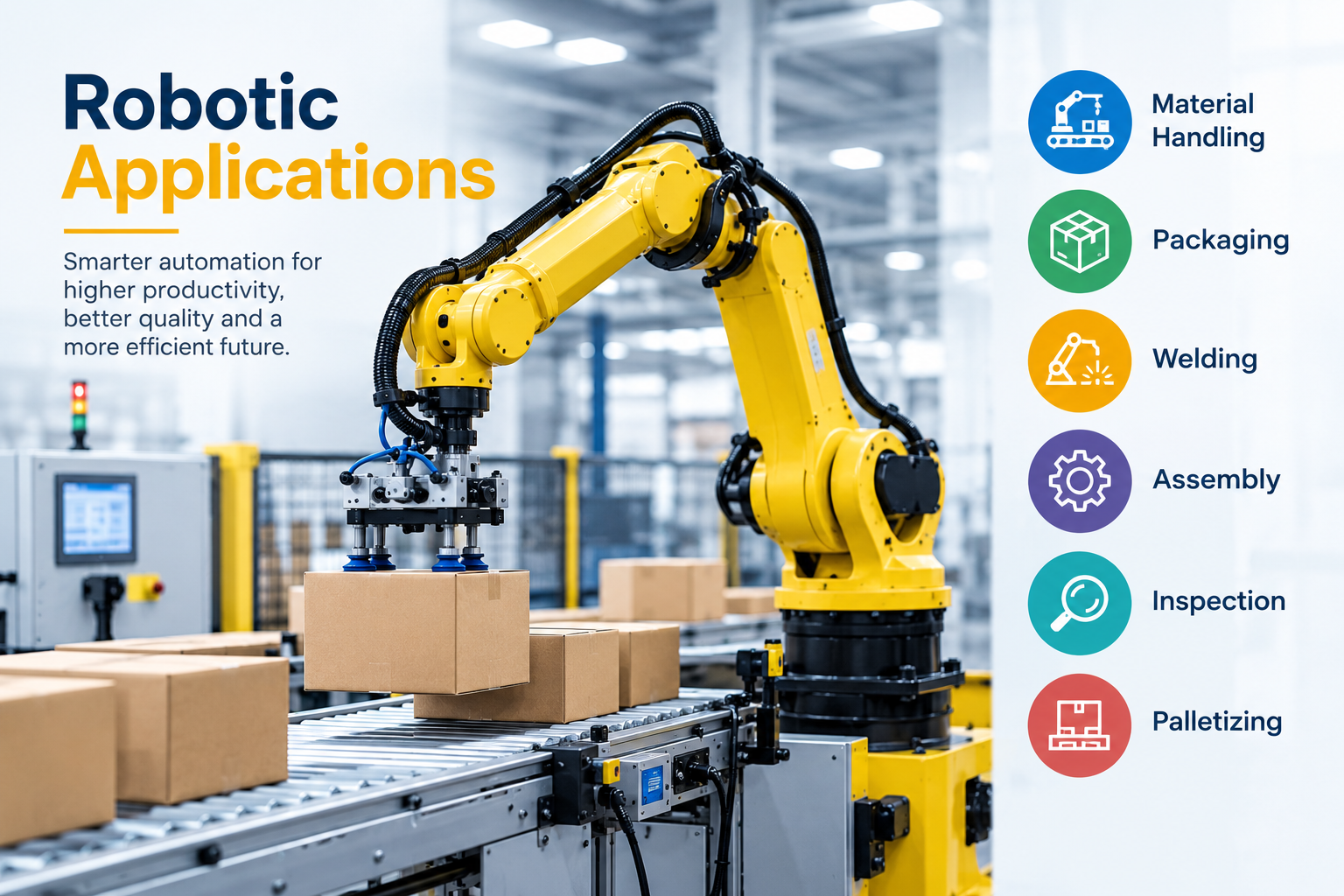
Robotics has become an important part of technological development, helping businesses improve efficiency, automate repetitive work, and solve complex operational challenges. From advanced manufacturing facilities to agricultural fields and healthcare environments, robots are being developed to perform tasks that require accuracy, consistency, and controlled movement. Robotic Applications continue to expand as engineers combine mechanical design, electronics, sensors, and intelligent software to develop practical solutions for different industries.
Understanding how robots are used across various sectors helps businesses identify opportunities to improve productivity and modernize their operations.
The Growing Importance of Robotics
Traditional working methods often involve repetitive tasks that require significant time, physical effort, or precise movements. Robotic systems can assist with these activities by following programmed instructions and responding to information collected through sensors.
A typical robotic system includes mechanical components, motors, electronic controllers, and software. Depending on its purpose, it may also use cameras, proximity sensors, or other technologies to understand its surroundings.
When these elements work together effectively, robots can perform specific tasks with repeatable accuracy. Their capabilities depend on the system's design, programming, environment, and maintenance.
Robotic Applications in Healthcare
Healthcare is an area where robotics is supporting the development of specialized equipment and automated processes.
Medical robotic systems can assist trained healthcare professionals during certain surgical procedures. Rehabilitation robots may support guided physical movements, while laboratory robots can automate selected testing and sample-handling tasks.
Hospitals may also use robotic equipment to transport supplies, deliver materials, or support inventory management. These applications can help reduce repetitive workloads and improve the organization of certain hospital operations.
However, medical robotics requires careful evaluation, appropriate professional supervision, and compliance with applicable safety standards. Robots support healthcare professionals rather than automatically replacing their knowledge and judgment.
Robotics in Agriculture
Agriculture faces challenges involving labour availability, resource management, crop monitoring, and changing environmental conditions. Robotic technologies offer new ways to address some of these requirements.
Depending on their design, agricultural robots can assist with planting, harvesting, crop monitoring, and targeted weed removal. Camera systems and sensors can help identify plants, assess field conditions, and guide equipment towards specific locations.
Automated agricultural machinery may also help farmers carry out selected tasks more consistently. The suitability of these systems depends on farm size, crop type, terrain, equipment costs, and local operating conditions.
As agricultural technology develops, robotics may provide additional opportunities to improve farm management and resource efficiency.
Applications in Construction and Infrastructure
Construction projects involve material transportation, measurement, inspection, and other activities that require coordination and careful execution. Robotic technologies can assist with selected tasks in these environments.
Robotic equipment may support bricklaying, concrete printing, surveying, and the inspection of difficult-to-access infrastructure. Specialized robots can also be used to examine pipelines or other confined spaces where direct human access may be challenging.
These applications require suitable planning because construction environments frequently change. Engineers must consider terrain, obstacles, weather conditions, worker safety, and the reliability of the equipment.
How Robotics Improves Business Operations
Robotic systems can offer practical benefits when matched to the right tasks.
Consistent Performance: Robots can repeat programmed movements and help maintain consistency during repetitive operations.
Improved Productivity: Automation can reduce the time required for certain processes and support smoother workflows.
Enhanced Safety: Properly designed robots can handle selected hazardous or physically demanding activities with appropriate protective measures.
Better Precision: Sensors, control systems, and accurate movement mechanisms can support precise positioning and inspection.
Operational Flexibility: Some robotic systems can be reprogrammed to perform different tasks when business requirements change.
Businesses should assess the total cost, maintenance needs, training requirements, and expected benefits before introducing robotic equipment.
Challenges in Adopting Robotics
Introducing robotics requires more than purchasing a machine. Businesses must determine whether the technology is suitable for their working environment and whether it can integrate with existing systems.
Initial investment, technical support, programming, employee training, and maintenance can affect implementation. Some applications also require specialized sensors, advanced control software, or additional safety equipment.
A practical starting point is to identify a repetitive or difficult task, evaluate available robotic solutions, and test the proposed system before expanding its use. This approach helps organizations make informed decisions based on actual operational requirements.
The Future of Robotic Technology
Developments in artificial intelligence, computer vision, sensor technology, and control engineering are creating new opportunities for robotics. Robots are becoming more capable of recognizing objects, navigating certain environments, and performing tasks that require greater coordination.
Collaborative robots can support human workers in appropriately designed workspaces, while autonomous mobile robots are being used for transportation and logistics. Continued improvements in software and hardware are expected to expand the range of tasks that robotic systems can support.
Successful adoption will depend on responsible implementation, effective integration, and continuous performance evaluation.
Conclusion
Robotic Applications are transforming how different industries approach repetitive work, specialized operations, and technological innovation. Healthcare, agriculture, construction, manufacturing, and logistics all offer opportunities for using robotic systems to improve selected processes.
By understanding their requirements and choosing suitable technologies, organizations can explore automation while maintaining a focus on safety, reliability, and practical results. As robotics continues to advance, intelligent machines will remain an important part of modern engineering and industrial development.

 English
 Arabic
 French
 Spanish
 Portuguese
 Deutsch
 Turkish
 Dutch
 Italiano
 Russian
 Romaian
 Portuguese (Brazil)
