


Why Risk Management Is Essential for Successful Project Management
Introduction
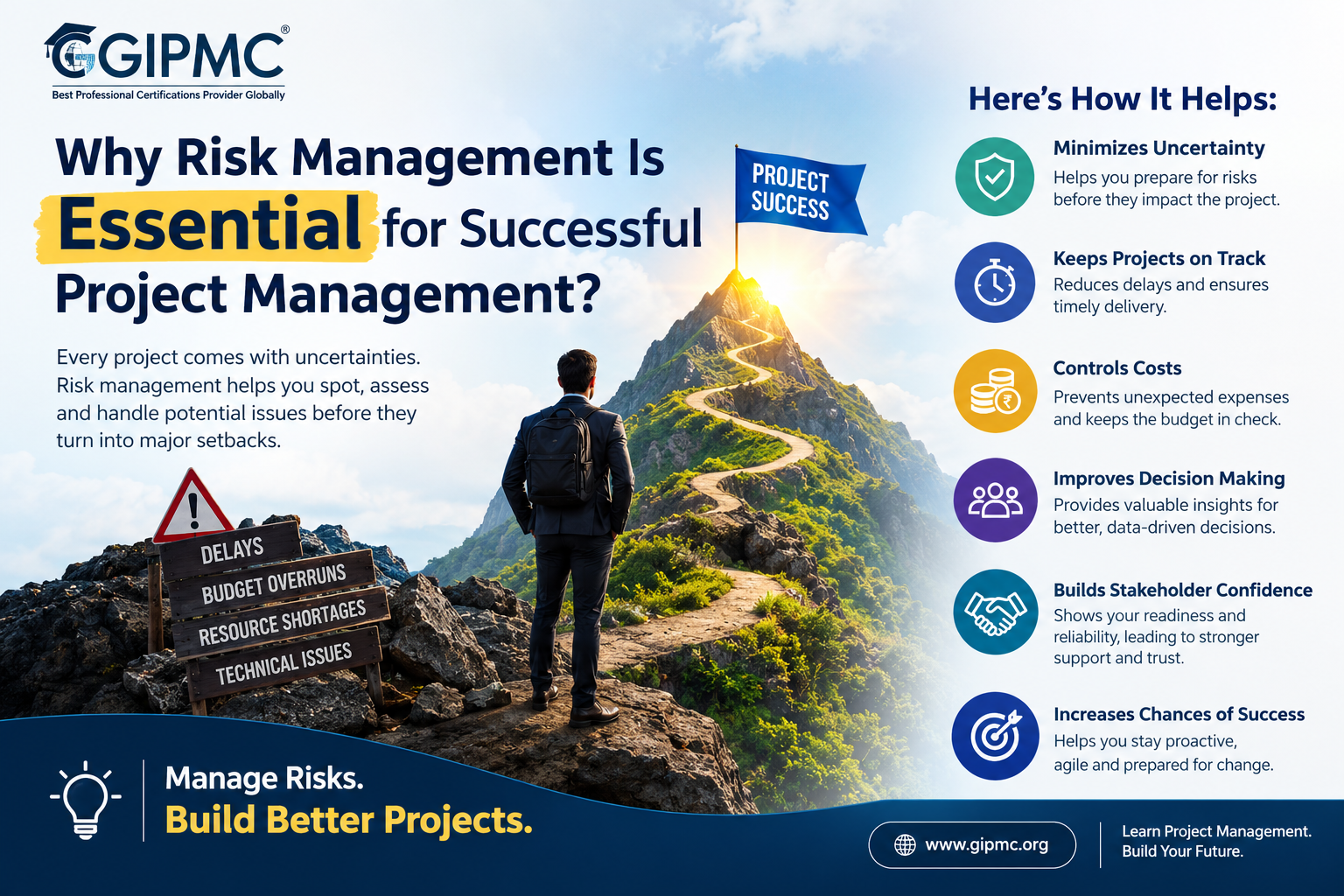
Managing risks is an essential aspect within project management. There are always elements of risk within any project that can cause unforeseen delays, increased costs, lack of resources, technical problems and changing customer needs. If managed incorrectly this can cause issues meeting deadlines, increasing costs and negative results.
With it being possible to identify potential issues, assessing how they could affect a project and putting appropriate measures in place to reduce the impacts of them; this helps project managers make educated decisions keeping them on track. Gaining extra knowledge within project management through Project Management Certification can help professionals understand the principles of risk management and put them in place effectively across their project.
Understanding Risk Management in Project Management
Risk Management consists of identifying, analysing, and addressing any potential risks which may cause issues when completing a project. This can include financial, technological, human resources, suppliers, timeliness and external risks.
For example a construction project may have issues with delays due to bad weather conditions. Or may face issues with lack of materials. In a software development project, the project might have issues with technology and fluctuating customer needs. Early identification of these issues allows the project manager to plan alternative solutions.
Good risk management will not prevent all issues from happening but will give insight to uncertainty surrounding your project, reduce any avoidable risks and allow the team to prepare for any unexpected situations.
Identifying Potential Risks Early
One of the main aspects of project management is identifying risks early. This gives you more time to assess any potential issues. By identifying risks through your project requirements, team discussions, previous projects and stakeholder concerns. Team brainstorming and risk registers can help identify potential issues.
For example, if there is only one supplier involved in the project, the project manager may identify that late deliveries could be an issue. The team can then consider other suppliers or plan to purchase materials early. This will help reduce surprises and allow the project team to be prepared for any issues.
Protecting Project Budgets and Resources
Controlling your budget is an important aspect of successfully completing a project. Unplanned costs can impact your profitability and cause the organisation to reduce the scope or delay important aspects of the project.
Identifying and estimating the likelihood of financial risk will help project managers to understand what could happen. Risks could include increased material costs, extra labour needed, equipment failure or unexpected maintenance costs.
This can help managers to create realistic budgets and allocate appropriate contingency costs. By identifying the risks, managers will be able to use resources more effectively by knowing where there may be a lack of staff, equipment or conflict of resources.
Improving Project Scheduling and Time Management
Project delays can have an impact on costs, customer satisfaction and stakeholder relations. Delays to one activity can also affect other activities. Risk management can help project managers to identify areas of risk where specific activities are at risk. This allows them to look into factors such as task dependencies, supplier timelines, resource availability etc.
If it is identified that a key component may be delayed they can look into other suppliers or reorganise the activities that are not reliant on the component. Frequent checks to the schedule can help the team identify issues early and make sure they can make changes quickly. This helps with planning and will allow the project to be delivered more reliably.
Supporting Better Decision-Making
In many situations, project managers will have to make decisions based on partial information. This can cause project managers to select solutions which cause further issues without appropriate risk analysis.
A risk management process will allow professionals to weigh up the possible outcomes of a decision. This allows them to compare options, understand the probability of certain events occurring and determine what could happen.
For example, a manager would want to consider the cost of implementing new software, training required for employees and compatibility of the software. When deciding whether to implement new software.
Strengthening Team Communication
Good risk management will require working with your team, project manager, client, suppliers and other stakeholders. As different people will have different knowledge and experiences different risks may be identified.
Good communication with your team will allow them to voice any concerns, report issues and talk about possible solutions. Regular risk reviews will help ensure nothing important is missed. The project manager should clearly communicate the risks that have been identified, what they could affect and who is responsible for monitoring them. This will allow everyone to understand their role and help the team respond faster and more efficiently.
Maintaining Quality and Customer Satisfaction
Risk management can be used to safeguard quality within the project. This identifies risks that could lead to issues with the final output of the project. Examples of risks could be technical faults, poor testing, vague requirements and poor staff training. Managers can implement quality checks which will mean they can check deliverables at key points within the project and identify potential issues.
For example when developing software regular testing can be implemented to identify any defects earlier. This would save time and money in fixing issues later on. When delivering work to meet the agreed set of requirements organisations will gain customer confidence and develop better professional relationships.
Supporting Successful Project Execution
Throughout the project, risk management should be maintained. Risks can be identified at different points throughout the project. Project managers should regularly check their risk register. They should note any indicators of risk and review their risk responses. It should also be assessed whether the current risk controls are effective.
A PMC qualification can give professionals knowledge on how to plan, assess, monitor and respond to risks. This will help create a more structured approach. If looking into getting a PMC qualification it may be worth considering GIPMC. Ensure to look at the programme content, method of assessment, recognition and whether it will help you meet your goals.
Conclusion
Effective risk management plays a vital role in project management by helping professionals avoid issues. This will help you protect your budget, manage timelines and make better decisions. It will also ensure that your projects are of a high quality. Overall it helps to prepare for any uncertainty within the project so you can manage any issues better.
Effective risk management needs constant monitoring, good communication, working as a team and practical knowledge. By having risk management embedded within your projects, planning can be improved, resources protected and achieve more consistent results.
Frequently Asked Questions (FAQs)
1. What is risk management in project management?
Risk management is the process of identifying, assessing, and responding to potential events that could affect a project's budget, schedule, quality, resources, or objectives.
2. Why is risk management important for project success?
It helps project managers prepare for uncertainty, reduce avoidable problems, make informed decisions, and keep project activities aligned with established goals.
3. What are common project management risks?
Common risks include budget overruns, missed deadlines, resource shortages, technical problems, supplier delays, communication gaps, and changing project requirements.
4. How can project managers identify risks early?
They can review project requirements, consult stakeholders, analyze previous projects, conduct brainstorming sessions, and maintain a risk register.
5. How can PMC certification help with risk management?
PMC certification can help professionals understand risk assessment, response planning, project monitoring, and decision-making. Applying these concepts in real projects helps strengthen practical risk management skills.

 English
 Arabic
 Spanish
 Portuguese
 Deutsch
 Turkish
 Dutch
 Italiano
 Russian
 Romaian
 Portuguese (Brazil)
 Greek
