


Buzzer Cum Flasher: Understanding Combined Audible and Visual Warning Devices
Introduction
In industrial environments, a warning needs to be noticed quickly and understood clearly. Machines, electrical panels, production lines, and control rooms often operate simultaneously, creating conditions where an operator may not immediately notice a change in equipment status. A buzzer cum flasher helps address this challenge by combining an audible signal with a flashing visual indication in one compact device.
Unlike a warning device that relies only on sound or light, this combined unit gives operators two ways to notice an alert. The buzzer attracts attention through sound, while the flashing light provides a visible signal that can be noticed from a suitable viewing position. This combination can be useful in applications where timely awareness of a warning is important.
What Is a Buzzer Cum Flasher?
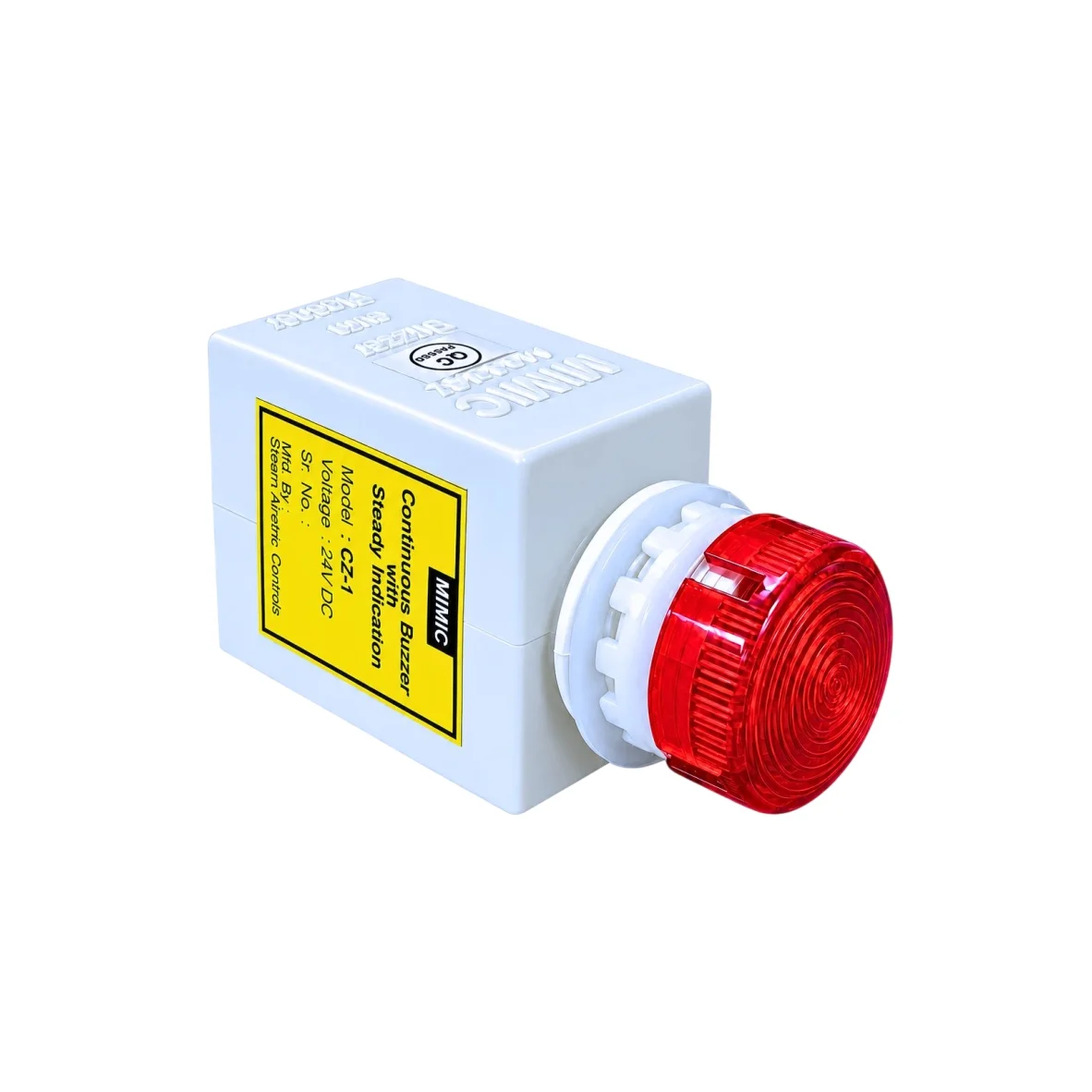
A buzzer cum flasher is an electrical warning device that combines a buzzer and a flashing light. When activated by a compatible electrical signal, it produces an audible warning and a visual indication. Depending on the model and circuit arrangement, these outputs may operate together when the unit receives power.
The device is commonly considered for electrical control panels, industrial machinery, process equipment, and automation systems. It can be used to draw attention to an operating condition, an alarm signal, or a status that requires an operator to check the equipment.
The exact purpose depends on the control circuit connected to it. A buzzer cum flasher does not automatically identify the cause of a fault. Instead, it alerts personnel that a defined signal or condition has activated the warning circuit.
Why Combine Sound and Light?
Industrial work areas can be noisy, busy, and visually complex. A sound-only alarm may be difficult to hear near running machinery, while a light-only indicator may be missed when an operator is looking elsewhere.
Combining sound and light offers a practical way to improve the visibility of an alert.
1. Audible attention
The buzzer creates a sound that can help draw attention to a warning. This is particularly useful when the operator is not facing the control panel directly. The effectiveness of the audible signal depends on the device's sound output, ambient noise, distance, and surrounding conditions.
2. Visual recognition
The flashing light adds a visible indication. It may help an operator identify the panel or equipment associated with an alert, provided the light is positioned where it can be seen.
3. Compact installation
A combined device can provide both warning functions in a single assembly. This can simplify panel layouts compared with installing separate sound and light units, although the final choice depends on space, circuit design, and application requirements.
4. Consistent warning indication
Using a combined unit can make the audible and visual signals operate together when the circuit is designed for that purpose. This may help establish a clear and consistent warning method for operators.
Common Applications of a Buzzer Cum Flasher
The device can support several types of industrial warning arrangements.
Electrical control panels: It may be connected to a control circuit to alert personnel when a selected condition occurs.
Industrial automation: Automated equipment can use an audible and visual warning to indicate a cycle condition, an interruption, or a signal requiring attention.
Machinery and production lines: A warning device can draw attention to a machine status or an event configured by the control system.
Process monitoring: Where operators monitor multiple systems, a combined signal can help highlight a change that requires inspection.
Equipment rooms and service areas: Audible and visual warnings can provide a common method of alerting maintenance personnel to selected operating conditions.
The suitability of a particular model should be checked against the application, electrical supply, installation environment, and control requirements.
Important Features to Evaluate
Not every buzzer cum flasher is suitable for every installation. Buyers and panel designers should review the product specifications before choosing a model.
Supply voltage
The operating voltage must match the intended circuit. Available models may be designed for different AC or DC supplies. Connecting a unit to an incompatible voltage can damage it or cause unreliable operation.
Sound output
The buzzer's sound level should be considered alongside the background noise in the intended location. A warning that is too quiet may not be noticed, while an unnecessarily loud sound may create discomfort in a smaller workspace.
Flashing indication
Check the type and colour of the visual indicator, its flash pattern, and whether the indication is visible from the expected viewing distance. The colour should follow the site's established signalling conventions where applicable.
Mounting dimensions
Panel-mounted devices must fit the specified cut-out and leave sufficient space for wiring and access. Confirm the mounting arrangement and depth before ordering.
Environmental protection
The enclosure and front protection rating should suit the installation location. Dust, moisture, vibration, heat, and exposure to cleaning materials can affect product suitability. A stated protection rating should not be interpreted as proof that a unit is waterproof or approved for every hazardous location.
Construction and serviceability
Review the housing materials, terminal arrangement, wiring instructions, and maintenance requirements. A practical device should fit the panel design and be accessible for inspection when needed.
Choosing Between AC and DC Models
Electrical systems may use AC or DC control supplies, depending on their design. For example, some installations use an AC-powered warning device, while others require a DC model connected to a control supply.
The choice should be based on the actual circuit voltage and the manufacturer's stated operating range. Do not select a device solely because its physical dimensions or appearance match an existing unit. Also check polarity requirements for DC models, terminal identification, and any restrictions on continuous operation.
When replacing an existing device, record its voltage and relevant specifications before selecting a substitute. If the circuit details are uncertain, consult a qualified electrical professional.
Installation and Operating Considerations
A buzzer cum flasher should be installed according to the manufacturer's instructions and the site's electrical safety procedures. The control circuit should be isolated before installation or wiring work begins.
The mounting location should allow operators to hear the sound and see the flashing light without unnecessary obstruction. Wiring should be routed securely, terminals tightened according to the specified requirements, and the unit tested as part of the complete warning circuit.
It is also important to establish what the signal means. If a warning corresponds to a particular fault, alarm, or operating state, the control logic and panel labelling should make that relationship clear. Operators should know the appropriate response rather than treating every alarm as interchangeable.
Periodic checks can confirm that the sound and light operate when the intended signal is activated. Testing should follow the site's approved procedures and avoid creating confusion during live operations.
Buzzer Cum Flasher Options from Mimic Products
Mimic Products lists buzzer cum flasher products intended for electrical and industrial warning applications. Its product range includes models designed for different supply requirements, so users should review the individual product page for the exact voltage, mounting dimensions, and other specifications before choosing a device.
The correct model should be selected according to the control circuit and operating environment, not just by product name.
Conclusion
A buzzer cum flasher combines audible and visual warning functions in one device, helping industrial operators notice selected equipment conditions. Its value depends on suitable voltage selection, effective placement, clear alarm meaning, and correct integration with the control circuit. By checking technical specifications and following safe installation practices, panel designers and maintenance teams can choose a warning device that fits their operational requirements.

 English
 Arabic
 French
 Spanish
 Portuguese
 Deutsch
 Turkish
 Dutch
 Italiano
 Romaian
 Portuguese (Brazil)
 Greek
