


How Commercial Dry Cleaning Machines Work and Which Solvents Are Used
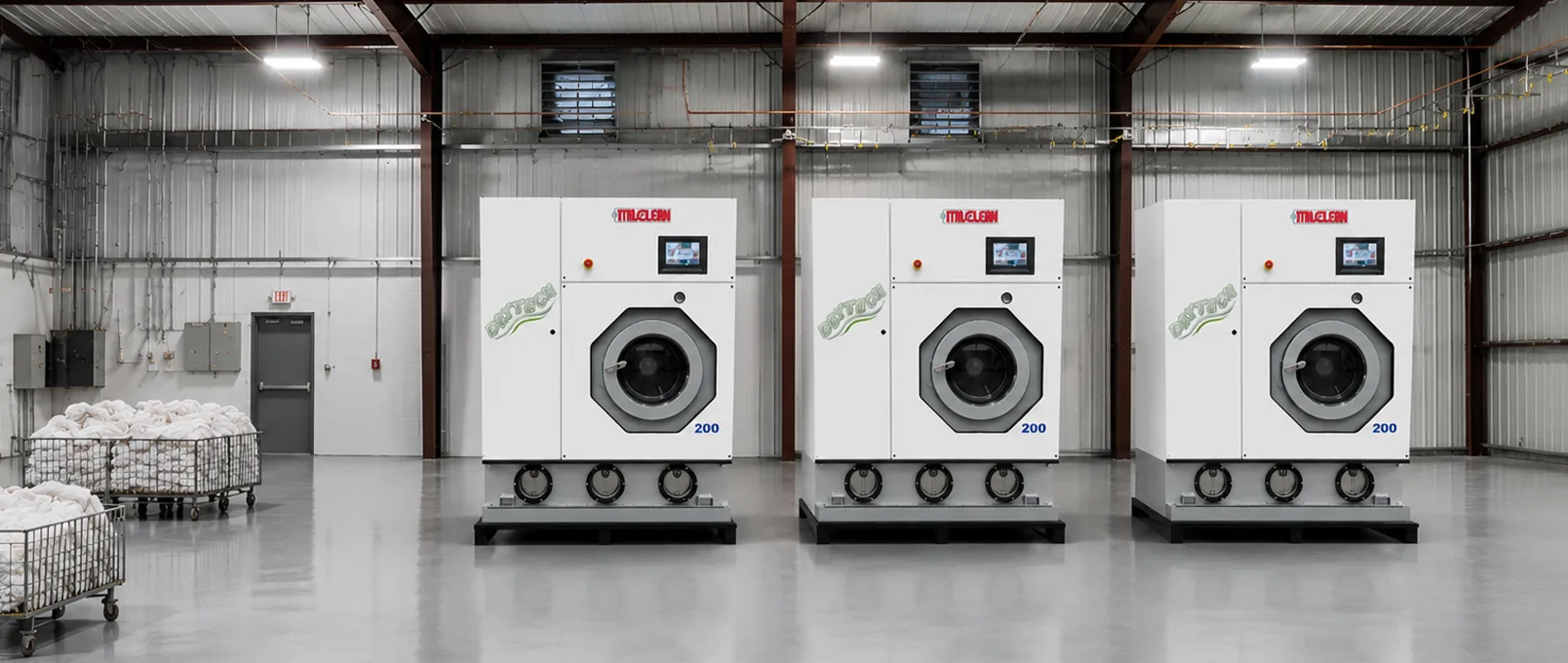
Professional garment care requires more than removing visible stains. Hotels, hospitals, garment manufacturers, uniform suppliers and commercial laundry businesses in India must select cleaning equipment that suits different fabrics, soil types, garment volumes and operational requirements. A dry cleaning washing machine is designed to clean suitable garments using a solvent rather than relying primarily on water, helping businesses care for materials that may be unsuitable for conventional washing. Understanding the machine's operation, solvent choices and maintenance requirements helps purchase managers and facility operators make informed equipment decisions.
For businesses evaluating a dry cleaning washing machine, the key considerations include cleaning effectiveness, fabric compatibility, solvent recovery, operator safety and the total cost of operating the equipment. Commercial systems generally combine washing, solvent separation and drying within a controlled process, although machine designs and features vary. The right solution depends on the garments being processed, local operating conditions and the facility's workflow. Supershine Laundry helps businesses explore commercial and industrial laundry equipment options according to their operational needs, with a focus on practical equipment selection rather than unsupported performance promises.
What Is a Commercial Dry Cleaning Machine?
A commercial dry cleaning machine is specialised equipment that cleans suitable garments using a liquid solvent instead of conventional water-based washing as the primary cleaning method. The machine combines mechanical movement, solvent circulation, extraction and drying to remove soil while managing the solvent used during the process.
Unlike a standard washing machine, a dry cleaning system is designed around solvent handling and recovery. Many modern machines perform washing and drying in the same enclosed unit, while some older or specialised arrangements use separate equipment. Filtration and distillation systems may also be included to maintain solvent quality and separate contaminants.
Commercial dry cleaning equipment can support businesses handling:
-
Hotel suits, uniforms, curtains and selected furnishing fabrics.
-
Hospital staff uniforms and suitable textile items.
-
Corporate uniforms and professional clothing.
-
Garments from retail stores, boutiques and garment manufacturers.
-
Specialist textile-care orders handled by professional cleaning facilities.
The equipment must be matched to fabric care requirements, cleaning volumes and the facility's available utilities.
How Does a Commercial Dry Cleaning Machine Work?
Understanding the cleaning cycle helps operators evaluate equipment features, process efficiency and maintenance needs.
1. Garment inspection and stain treatment
Before loading, staff inspect garments for care-label instructions, fabric composition, colour stability, loose buttons, embellishments and visible stains. Items that require special handling should be separated.
Where appropriate, trained staff apply a compatible spotting agent to specific stains. Different contaminants require different treatments: oily marks, food residues and water-soluble stains do not always respond to the same cleaning method.
2. Solvent washing
The garments are loaded into the machine's rotating drum. The equipment introduces the selected solvent, sometimes with a compatible detergent or other approved cleaning additive.
As the drum rotates, the garments move through the cleaning liquid. This mechanical action helps loosen soil, while the solvent dissolves or carries away suitable contaminants.
The cleaning cycle depends on the solvent, garment type, soil level, load size and machine settings. Correct loading matters because overloading can restrict garment movement and affect cleaning consistency.
3. Solvent extraction
After washing, the machine spins the drum to separate much of the liquid solvent from the garments. The extracted solvent is directed into the machine's recovery or filtration system, depending on the design.
Effective extraction helps reduce the amount of solvent that must be removed during drying. Operators should follow the manufacturer's specified loading limits and extraction settings rather than adjusting the process without technical guidance.
4. Drying and solvent recovery
Warm air circulates through the garments in systems designed for integrated drying. Residual solvent evaporates and is directed through recovery equipment, such as a refrigerated condenser or an appropriate vapour-control system.
The recovered solvent may be condensed back into liquid form for reuse. Some systems also use activated carbon adsorption to capture solvent vapours. The exact configuration varies with the machine and solvent technology.
5. Cooling, unloading and finishing
Once drying is complete, the machine follows its prescribed cooling and residual-solvent control cycle. Staff then unload the garments and check their condition.
Depending on the fabric and garment construction, finishing may include steam pressing, professional ironing, shaping or other finishing treatments.
The complete workflow is therefore more than washing alone: garment inspection, cleaning, extraction, drying, recovery and finishing all contribute to the final result.
Which Chemicals and Solvents Are Used in Dry Cleaning?
The answer to the question, “How does a commercial dry cleaning machine work and what chemicals are used,” depends on the cleaning technology selected. A solvent is the liquid that dissolves or carries away suitable soils, while detergents and spotting agents support particular cleaning tasks.
1. Perchloroethylene (PERC)
Perchloroethylene, also called tetrachloroethylene or PERC, is a chlorinated solvent historically used in professional dry cleaning. It can remove many oily soils and is compatible with a range of commercial cleaning processes.
However, PERC presents significant health and environmental concerns. Exposure may occur through inhalation or skin contact, and occupational health authorities identify serious risks associated with improper handling. Businesses must consider applicable requirements, exposure controls, ventilation, maintenance and waste management before selecting or operating equipment using this solvent.
2. Hydrocarbon solvents
Hydrocarbon solvents are petroleum-derived liquids formulated for professional cleaning. Their properties differ from those of PERC, and machines must be specifically suitable for the selected formulation.
An important consideration is flammability. Some hydrocarbon solvents can create fire hazards if equipment, storage, ventilation and operating procedures are unsuitable. A facility should never assume that a machine designed for one solvent can safely use another.
3. Silicone-based solvents
Some dry cleaning systems use silicone-based fluids, including formulations based on siloxane chemistry. These offer an alternative to conventional chlorinated or petroleum-derived solvents.
Their suitability depends on the specific formulation, fabric, cleaning requirements and equipment design. Businesses should review the supplier's safety documentation and avoid assuming that an alternative solvent is automatically harmless or environmentally preferable in every respect.
4. Liquid carbon dioxide
Some specialised systems use carbon dioxide in a pressurised liquid state as the cleaning medium. These systems require equipment specifically engineered to operate under pressure.
Liquid CO₂ cleaning differs substantially from conventional solvent systems in machine design, infrastructure and operating requirements. It may be worth evaluating for certain specialist applications, but its technical and financial suitability must be assessed for the individual facility.
5. Detergents and spotting agents
Solvents are not the only substances involved in professional garment care. Compatible detergents can support soil removal, while spotting agents are selected for particular stains.
These products must be compatible with the machine, solvent, fabric and intended process. Mixing chemicals without the manufacturer's approval can create safety problems, damage textiles or interfere with cleaning performance.
Dry Cleaning Solvent Comparison: What Should Businesses Consider?
Choosing a solvent requires balancing garment-care needs, safety, equipment compatibility and operating requirements.
-
PERC: Offers established cleaning capabilities but requires careful assessment of health, exposure and environmental risks.
-
Hydrocarbon solvents: Provide an alternative solvent route but require appropriate fire-risk controls and compatible equipment.
-
Silicone-based solvents: May suit selected garment-care applications, depending on formulation and process requirements.
-
Liquid CO₂: Requires specialised pressure-rated equipment and a different operating setup.
-
Professional wet cleaning: Uses water, specialised detergents and controlled washing and drying processes. It can be suitable for many garments, but not every textile or construction.
These approaches are not interchangeable. The garment care label, textile composition, stain characteristics and equipment manufacturer's instructions should guide the decision.
How to Select Commercial Dry Cleaning Equipment in India
For Indian businesses, selecting a machine should begin with a clear understanding of the operation rather than a capacity figure alone.
Assess daily workload and garment mix
Estimate the number and type of garments processed per shift. A hotel handling formalwear and curtains may have different needs from a garment-care business serving retail customers. Hospitals and industrial facilities should distinguish suitable dry-cleaning items from textiles that require other validated cleaning and hygiene processes.
Review utilities and installation requirements
Check the available electrical supply, ventilation, cooling arrangements, drainage where applicable, service access and space for safe chemical storage. Some systems have additional requirements for pressure management, steam or solvent recovery.
Evaluate safety and maintenance
Ask the equipment supplier about preventive maintenance, filter replacement, solvent recovery, leak detection, operator training and waste handling. Review the safety data sheets for all solvents and additives.
Calculate the total operating cost
Compare more than the initial purchase price. Relevant factors include energy consumption, solvent replenishment, detergents, maintenance, consumables, labour, downtime and waste disposal. Request documented specifications and operating requirements for the proposed machine instead of relying on general industry estimates.
Supershine Laundry supports businesses exploring commercial and industrial laundry equipment by helping them consider equipment suitability, workflow requirements and operational priorities. For a dry cleaning application, buyers should confirm the specific machine configuration, solvent compatibility and available technical support before committing to a purchase.
Safety, Maintenance and Responsible Solvent Handling
Commercial dry cleaning involves equipment and chemicals that require trained operation. A documented safety programme helps reduce exposure, equipment damage and avoidable downtime.
Important practices include:
-
Train operators in loading, unloading, emergency procedures and chemical handling.
-
Inspect hoses, seals, pumps and connections according to the manufacturer's schedule.
-
Maintain filters, condensers and other recovery components as specified.
-
Store chemicals in compatible, clearly labelled containers.
-
Use appropriate personal protective equipment based on the product safety data sheet and workplace risk assessment.
-
Manage spent filters, still residues and other contaminated waste through appropriate authorised channels.
-
Keep maintenance, solvent consumption and incident records.
Before installation, Indian businesses should verify applicable central, state and local requirements with qualified safety and environmental professionals. Requirements can depend on the chemicals used, facility type, equipment configuration and waste streams.
How Supershine Laundry Can Support Equipment Selection
Supershine Laundry works in the commercial and industrial laundry equipment sector, where equipment selection should reflect the facility's actual processing requirements. Businesses considering garment-care equipment can use a structured evaluation to identify their garment mix, expected workload, available utilities, maintenance needs and operator training requirements.
A useful supplier discussion should establish whether the proposed machine is intended for dry cleaning, professional wet cleaning or another textile-care process. It should also clarify solvent compatibility, recovery technology, installation conditions, consumables and after-sales service arrangements.
For purchase managers, the goal is to select equipment that fits the intended application and can be operated safely and consistently. Verified specifications and a documented assessment are more useful than assumptions about capacity, savings or cleaning results.
Conclusion
Commercial garment care depends on choosing the right cleaning process, solvent and equipment for the textiles being handled. A dry cleaning system typically combines solvent washing, extraction, controlled drying and solvent recovery, while the chemicals used vary by machine technology and cleaning requirements. For businesses evaluating dry cleaning washing machine options in India, safety, fabric compatibility, maintenance and total operating cost should all influence the decision.
Supershine Laundry can be considered as a starting point for discussions about commercial and industrial laundry equipment requirements. Before selecting a system, buyers should confirm the intended application, obtain the relevant technical specifications and assess the solvent's safety documentation. Understanding how does a commercial dry cleaning machine work and what chemicals are used helps businesses make better-informed decisions about equipment suitability, responsible operation and long-term maintenance.
Frequently Asked Questions
1. What is the main solvent used in commercial dry cleaning?
Perchloroethylene (PERC) is a well-established dry cleaning solvent. Hydrocarbon and silicone-based solvents, liquid carbon dioxide and professional wet cleaning are alternatives for selected applications. Suitability depends on equipment compatibility, fabric requirements and safety considerations.
2. Does a dry cleaning machine use water?
The primary cleaning liquid in conventional dry cleaning is a non-aqueous solvent rather than water. Small amounts of water may be used in some processes, and professional wet cleaning uses water as its main cleaning medium.
3. Can one machine use different dry cleaning solvents?
Not necessarily. Machines are designed for particular solvents and operating conditions. Switching solvents without explicit manufacturer approval can create fire, chemical compatibility, performance and safety risks.
4. Is dry cleaning suitable for hospital textiles?
It may be appropriate for selected garments, such as certain staff uniforms, depending on fabric requirements and contamination risks. Healthcare linen requiring validated infection-control processing should follow the facility's established laundry and hygiene protocols rather than being assigned to dry cleaning automatically.
5. What should buyers check before purchasing a commercial dry cleaning machine?
Buyers should assess workload, garment types, solvent compatibility, recovery technology, installation requirements, safety controls, maintenance support, consumables and total operating cost. They should also verify applicable local requirements and request documented technical specifications before purchasing.

 English
 Arabic
 French
 Spanish
 Portuguese
 Turkish
 Dutch
 Italiano
 Russian
 Romaian
 Portuguese (Brazil)
 Greek
