


Non-Stick Paper for Efficient Commercial Baking
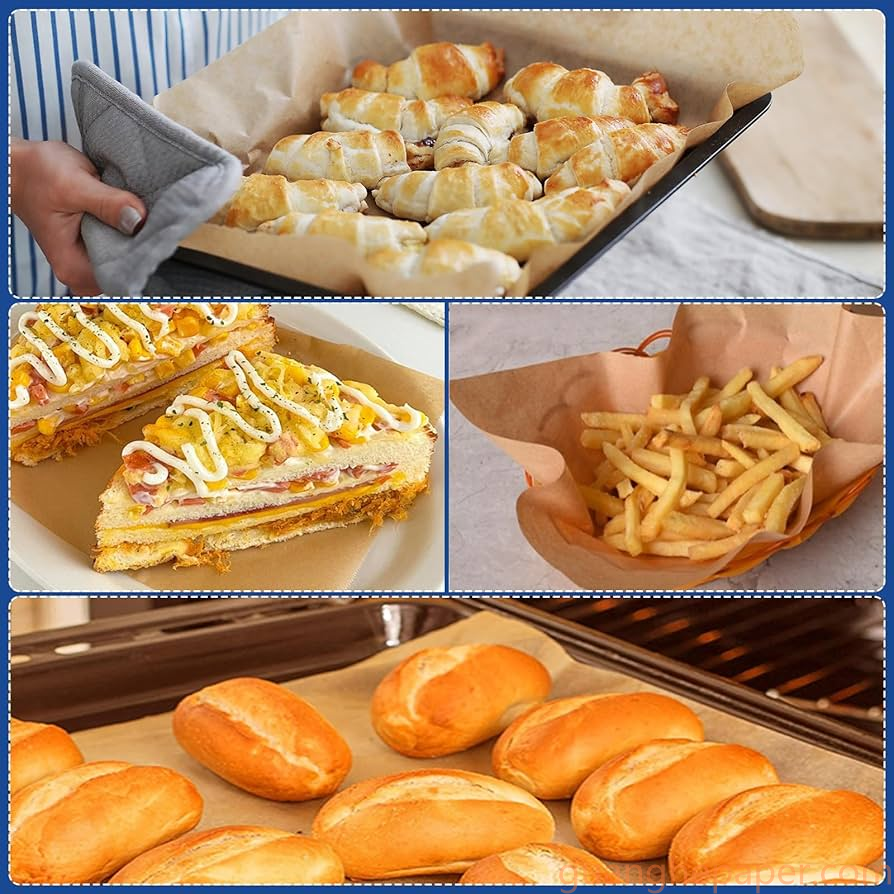
Paper materials play an important role in modern baking because they support food handling, tray preparation, and production efficiency. Baking Paper is commonly used in bakeries, restaurants, catering facilities, and food manufacturing plants to create a convenient surface for preparing a wide range of products. Its non-stick properties can help reduce food residue on trays and simplify cleaning after baking. For professional users, choosing the right paper involves considering its base material, coating, heat resistance, format, and compatibility with specific applications.
The performance of baking paper begins with its base paper structure. Manufacturers generally use selected pulp fibers to produce paper with suitable flexibility, surface consistency, and handling strength. The material needs to remain stable during cutting and placement while being flexible enough to fit different tray shapes. A uniform paper surface also supports more consistent coating application. If the base paper has irregularities, the finished product may experience variations in appearance or performance.
A non-stick coating is a major feature of many commercial baking paper products. Silicone coating is widely used because it helps prevent dough, pastry, and other baked foods from adhering strongly to the paper. This makes it easier to remove finished products while reducing the need for additional grease or oil in suitable applications. Consistent coating coverage is important because it helps maintain similar release behavior across the usable surface. Manufacturers need to control coating application and subsequent processing to achieve reliable results.
Heat resistance is another essential factor. Baking paper is designed for use in appropriate oven conditions, but its performance depends on the specific paper grade and coating system. Buyers should confirm the recommended temperature range and intended use with the manufacturer before introducing a product into regular production. Different foods, ovens, baking durations, and tray conditions may influence actual performance. Following product instructions helps reduce the risk of discoloration, material deterioration, or unsuitable use.
The material is available in several formats to support different workflows. Roll products allow users to cut paper according to the dimensions of their trays, making them useful for facilities with varied equipment. Pre-cut sheets are convenient for bakeries and restaurants that frequently use standard tray sizes. Customized formats can also help food manufacturers reduce trimming and improve material utilization. Selecting the right dimensions can make daily preparation faster and simplify inventory management.
Applications cover a broad range of baked foods. Bakeries use the material for cookies, biscuits, bread, cakes, pastries, and other products that require a suitable release surface. Restaurants and catering businesses may use it for baking and selected food preparation tasks. Food processors can incorporate it into production workflows where clean handling and easier product separation are important. Some businesses also use baking paper for portion separation or presentation, provided the selected grade is suitable for that purpose.
For buyers, food-contact documentation should be reviewed alongside product performance. Requirements can differ according to destination markets and intended applications. Commercial users should ask suppliers for relevant declarations or testing information and verify that the selected material is appropriate for direct food contact. Storage conditions also matter. Paper should generally be kept in a clean, dry environment and protected from moisture, dust, and physical damage to preserve its usability.
When purchasing in bulk, businesses should evaluate more than the initial quotation. Paper weight, coating uniformity, roll dimensions, sheet accuracy, packaging, and batch consistency can all influence operational results. Samples provide an opportunity to test the paper with actual foods, trays, and oven conditions. This process can reveal whether the material releases products effectively, remains easy to handle, and fits the existing production setup.
Customization and supply stability are particularly valuable for distributors and large-scale food businesses. Buyers may need different colors, dimensions, roll lengths, or private-label packaging. Suppliers with flexible converting capabilities can help accommodate these requirements while maintaining consistent production standards. Clear communication about specifications, order quantities, and delivery schedules supports more predictable procurement.
Selecting suitable Baking Paper is ultimately a matter of matching material properties with actual production needs. Base paper quality, coating performance, format, and application suitability all contribute to a practical solution for commercial food operations. Guanghe provides paper products for different business requirements, and buyers can explore its range at https://www.guanghepaper.com/ to identify suitable options for their baking and food preparation processes.

 Arabic
 French
 Spanish
 Portuguese
 Deutsch
 Turkish
 Dutch
 Italiano
 Russian
 Romaian
 Portuguese (Brazil)
 Greek
