


Capacitor Technology for Industrial Power Networks
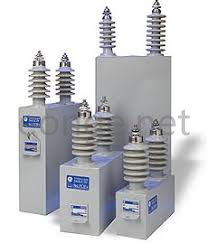
Industrial electrical networks often contain motors, transformers, pumps, compressors, and other inductive loads that require reactive power during operation. When reactive demand is not properly managed, it can contribute to lower power factor and increased current in parts of the distribution system. A Shunt Power Capacitor provides capacitive reactive power at a selected point in the network, helping offset part of the inductive demand. Its suitability depends on electrical characteristics, dielectric construction, operating conditions, and coordination with the wider power system.
The performance of a power capacitor begins with its dielectric materials. The dielectric separates conductive elements and determines important characteristics such as insulation behavior, capacitance stability, and electrical losses. Film-based materials are commonly used in modern capacitor designs because they can provide consistent properties when processed under controlled manufacturing conditions. Material cleanliness, thickness uniformity, and surface quality are important because defects may create uneven electrical stress and influence long-term reliability.
Electrode construction also contributes to capacitor performance. Conductive layers must work with the dielectric structure to provide the required electrical characteristics while maintaining appropriate insulation. Depending on the design, the internal elements may be arranged through winding or other assembly methods. Production accuracy is essential because inconsistent winding tension, poor alignment, or weak internal connections may affect electrical behavior. Manufacturers use controlled processing and inspection to reduce variations between individual units.
Thermal management is another important design consideration. Electrical losses produce heat within the capacitor, and prolonged exposure to excessive temperature may accelerate the aging of dielectric materials. Engineers need to consider ambient temperature, enclosure design, ventilation, installation position, and the operating profile of the connected network. Appropriate heat dissipation helps maintain stable operation. In installations where several units operate together, cabinet layout and airflow should be considered as part of the overall system design.
Industrial facilities commonly use capacitor equipment to address reactive power demand from inductive loads. Motors and transformers create magnetic fields during operation, resulting in reactive power consumption that does not directly contribute to useful mechanical output. Capacitive compensation can offset part of this demand near the load, reducing the reactive power supplied through upstream network sections. This may improve power factor and help make better use of distribution capacity, although the actual result depends on load conditions and system configuration.
Load behavior is a major factor in compensation planning. Some facilities have relatively consistent electrical demand, while others experience significant changes during production cycles. A fixed capacitor arrangement may suit stable loads, but variable operating conditions can require switched compensation stages. Automatic control systems can monitor electrical parameters and connect or disconnect capacitor stages according to changing demand. Correct control settings help prevent overcompensation during periods when inductive loads are reduced.
Voltage conditions also influence the placement and capacity of compensation equipment. Reactive power flow can affect voltage levels across distribution networks, particularly where feeders are long or loads fluctuate substantially. Engineers should assess the network configuration before deciding where compensation should be installed. An arrangement that is suitable at one point may not provide the same result elsewhere. System studies help evaluate voltage behavior, switching effects, and interactions with existing electrical equipment.
Harmonic distortion requires additional attention in facilities using variable-frequency drives, rectifiers, and switching power supplies. These nonlinear loads can introduce harmonic currents that interact with capacitor banks and network impedance. Under certain conditions, this interaction may create resonance or increase electrical stress. Engineers should review harmonic measurements and system characteristics before selecting a compensation arrangement. Where required, reactors or filtering components may be incorporated to improve compatibility with the network.
Protection and maintenance practices contribute to operational reliability. Capacitor installations may require suitable switching devices, discharge arrangements, overcurrent protection, and monitoring functions. These components should be coordinated with the electrical system and selected according to the manufacturer's instructions. Before maintenance, personnel must follow appropriate isolation and discharge procedures. Routine inspection can include checking terminals, enclosure condition, ventilation paths, switching equipment, and signs of overheating or abnormal operation.
Manufacturing quality assurance supports consistent field performance. Relevant checks may include dimensional inspection, capacitance measurement, dielectric testing, loss evaluation, and terminal verification. Buyers should review technical documentation and confirm that the product's ratings and construction are suitable for the intended application. Traceable production processes and clear inspection records are valuable for projects involving multiple capacitor units or repeated equipment orders.
Effective reactive power management requires coordination between component design and system engineering. When selecting a Shunt Power Capacitor, engineers should consider dielectric quality, thermal conditions, load variation, harmonics, switching arrangements, and protection requirements together. For further information about electrical equipment and related product categories, visit https://www.eonge.net/product and confirm that the selected solution is appropriate for the operating characteristics of the installation.

 English
 Arabic
 French
 Spanish
 Portuguese
 Deutsch
 Dutch
 Italiano
 Russian
 Romaian
 Portuguese (Brazil)
 Greek
