


Practical Products for Organized Parking Facilities
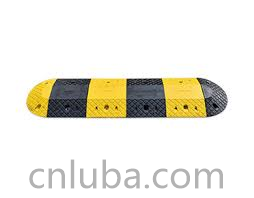
Parking management involves more than marking spaces and directing vehicles into available areas. Residential developments, shopping centers, industrial facilities, and public parking structures need practical systems that help drivers position vehicles consistently. Poorly controlled parking can result in vehicles extending beyond designated spaces or approaching walls, landscaping, and pedestrian routes too closely. Car Wheel Stopper products provide a physical reference point that helps drivers recognize where to stop and supports more organized parking arrangements.
Material selection is an important part of product manufacturing. Rubber is commonly used because it offers flexibility, impact absorption, and resistance to repeated contact with vehicle tires. Manufacturers may use natural rubber, synthetic rubber, or recycled rubber compounds depending on the intended application. A suitable material formulation should balance strength, elasticity, abrasion resistance, and environmental durability. Consistent material quality helps maintain the product's shape and function under normal parking conditions.
The design should reflect the vehicles and surfaces involved. Parking areas for passenger cars may require different product characteristics from commercial facilities that accommodate larger vehicles. Dimensions, profile, weight, and fixing arrangements all influence stability and usability. The height should provide a recognizable stopping reference without creating an unnecessary obstacle for the vehicles expected to use the space. Buyers should also consider ground clearance and the distance between the parking position and nearby structures.
Visibility is essential for effective vehicle positioning. Drivers need to recognize the stopping point while approaching a parking space, especially in underground garages, covered facilities, and areas with inconsistent lighting. Contrasting colors can help distinguish the product from the surrounding pavement. Reflective markings may provide additional visibility in darker environments. Consistent positioning across a parking facility also helps drivers become familiar with the layout and improves the overall appearance of the space.
Installation quality determines whether the product remains securely positioned. Before installation, the pavement should be inspected for surface damage, unevenness, loose material, and other conditions that could affect fastening. The selected anchors must be suitable for the supporting surface and compatible with the product design. Concrete and asphalt may require different installation approaches. Following manufacturer guidance helps reduce movement and supports stable performance under repeated vehicle contact.
Placement should be planned as part of the wider parking layout. A stopper positioned too close to a wall may restrict clearance, while one placed too far forward may reduce the available pedestrian space or interfere with nearby facilities. Site planners should consider vehicle dimensions, parking angles, access routes, drainage, and the location of utilities. For accessible parking spaces, the complete route must be considered so that the installation does not create unnecessary barriers for users.
Environmental conditions can influence long-term material performance. Outdoor products may be exposed to sunlight, rain, temperature fluctuations, oils, cleaning agents, and road contaminants. These factors can affect color retention, surface condition, and flexibility. Buyers should select products according to their intended indoor or outdoor use and consider the maintenance requirements of the installation environment. Material information can help procurement teams compare different products more effectively.
Regular inspection helps preserve parking safety. Facility managers should check for cracks, deformation, loose anchors, fading markings, and displacement. Products that no longer provide a clear stopping reference or remain securely attached should be repaired or replaced. Cleaning can improve visibility and make it easier to identify surface damage. Maintenance frequency should reflect traffic intensity, weather exposure, and the number of vehicles using the facility.
For parking contractors, property developers, distributors, and facility managers, purchasing decisions should account for durability, installation requirements, visibility, and overall operating costs. A suitable product should match the parking layout and vehicle types rather than simply offering the lowest initial price. Consistent product dimensions and reliable manufacturing are especially valuable for projects involving large numbers of parking spaces.
A well-selected Car Wheel Stopper can support orderly vehicle positioning when combined with clear markings, suitable lighting, and an effective parking layout. It is one part of a broader parking management system that should also account for pedestrian movement, accessible routes, and safe vehicle circulation.
Zhejiang Luba Traffic Technology Co.,Ltd. provides traffic and parking safety products for commercial, residential, and industrial applications. Buyers planning parking facility improvements can explore the available range at https://www.cnluba.com/product/ and evaluate suitable options according to vehicle types, pavement conditions, installation requirements, and visibility needs.

 English
 Arabic
 Spanish
 Portuguese
 Deutsch
 Turkish
 Dutch
 Italiano
 Russian
 Romaian
 Portuguese (Brazil)
 Greek
