


Low Temperature Resistant Label Market to Reach USD 3.02 Billion by 2034 at 5.6% CAGR
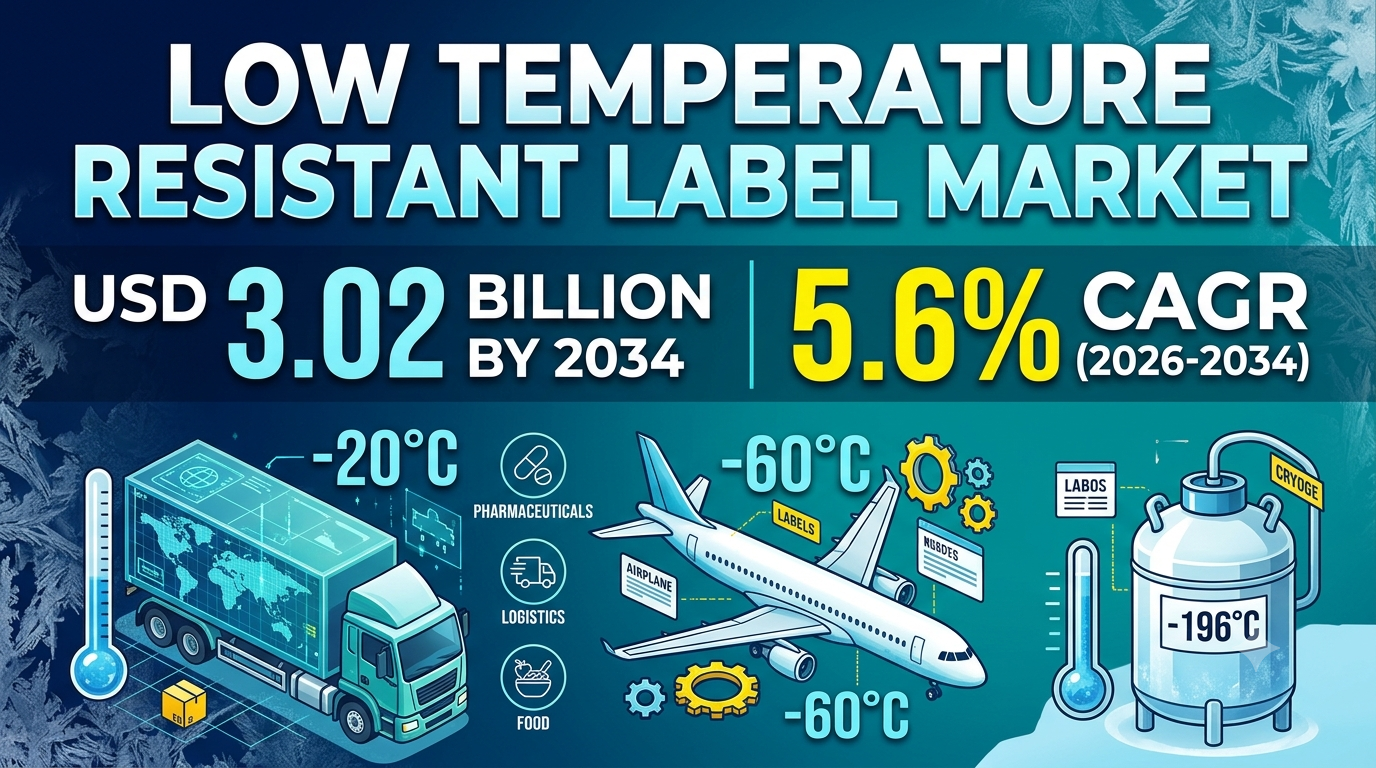
Global Low Temperature Resistant Label Market is gaining attention across transportation and logistics, aerospace, chemical manufacturing, pharmaceuticals, food processing, and other industrial applications. Low temperature resistant labels are specialized identification solutions designed to maintain adhesion, legibility, and data integrity in extremely cold environments, with certain products engineered for temperatures as low as -196°C. These labels support product identification, asset tracking, safety communication, and traceability in applications involving refrigeration, deep-freeze storage, and cryogenic conditions.
According to 24ChemicalResearch, the global Low Temperature Resistant Label Market was valued at USD 1.85 billion in 2025. The market is projected to grow from USD 1.95 billion in 2026 to USD 3.02 billion by 2034, registering a compound annual growth rate (CAGR) of 5.6% during the forecast period from 2026 to 2034. Growth is supported by the expansion of cold chain logistics, increasing pharmaceutical storage requirements, stringent product traceability standards, and technological improvements in specialized adhesives and label materials.
Read the Complete Low Temperature Resistant Label Market Report:
https://www.24chemicalresearch.com/reports/304997/low-temperature-resistant-label-market
Market Overview
Low temperature resistant labels are designed to perform in environments where conventional labels may lose adhesion, become brittle, or experience printing and readability problems. These specialized labels use engineered adhesives and durable face materials to maintain their performance during freezing, transportation, storage, and temperature fluctuations.
The market includes non-adhesive labels and sticky labels. Sticky labels use specialized adhesives to maintain attachment under low-temperature conditions, while non-adhesive labels serve applications where conventional direct adhesion is unsuitable or unnecessary.
Low temperature resistant labels are used across several industries, including transportation and logistics, aerospace, chemicals, and medical applications. They are particularly important in pharmaceutical cold chains, where accurate identification and traceability are essential for products stored at extremely low temperatures.
Material innovation is a major market development area. Polyester-based films, polypropylene labels, and specialty synthetic papers offer different combinations of durability, moisture resistance, chemical resistance, and flexibility. Manufacturers are also exploring smart labeling technologies, including RFID and digital tracking features, to support supply chain visibility.
Despite these opportunities, the market faces challenges associated with the cost of specialized materials, technical performance under extreme conditions, compatibility with printing and application equipment, and the need to meet industry-specific requirements.
Key Market Growth Drivers
1. Expansion of Cold Chain Logistics
The expansion of cold chain logistics is a major driver of demand for low temperature resistant labels. Pharmaceutical products, vaccines, frozen foods, and other temperature-sensitive goods require reliable identification throughout storage and transportation.
Labels must remain attached and readable despite exposure to freezing temperatures, condensation, moisture, and repeated temperature changes. As cold chain networks expand, the need for dependable labeling solutions is increasing.
2. Growing Pharmaceutical and Biopharmaceutical Applications
Pharmaceutical companies increasingly require reliable labels for medicines, vaccines, biological samples, and other temperature-sensitive products. Certain biological materials must be stored in ultra-low-temperature freezers or cryogenic environments.
Labels used in these applications must maintain identification information and support traceability throughout storage and handling. This creates demand for specialized materials that perform reliably under extreme conditions.
3. Increasing Regulatory and Traceability Requirements
Regulatory requirements and quality-control procedures are encouraging businesses to adopt durable labeling solutions. In pharmaceutical, chemical, and food-related supply chains, labels may need to preserve product information, safety instructions, batch details, and tracking codes.
Labels that remain legible and securely attached during freezing and transportation help businesses maintain identification accuracy and operational traceability.
4. Growth in Global Transportation and Logistics
Global supply chains frequently involve multiple transportation stages, storage facilities, and handling environments. Products may experience significant temperature fluctuations between manufacturing, distribution, and final delivery.
Low temperature resistant labels help preserve identification information throughout these processes. Increasing demand for reliable shipment tracking and inventory management supports the adoption of specialized labels.
5. Advancements in Adhesive and Material Technologies
Developments in adhesive chemistry and face materials are improving label performance in extreme environments. Specialized acrylic adhesives, synthetic papers, and polymer films can help reduce label failure and maintain readability at low temperatures.
Manufacturers are focusing on improving adhesion, flexibility, print quality, and resistance to moisture and chemicals to address the requirements of demanding industrial applications.
Manufacturing Costs and Market Challenges
High Cost of Specialized Materials
Low temperature resistant labels often use advanced synthetic films, specialty papers, and engineered adhesives. These materials can be more expensive than conventional label stocks, increasing production costs.
Price sensitivity among smaller businesses and high-volume users can limit the adoption of premium labeling solutions, particularly where standard labels appear sufficient for less demanding applications.
Technical Limitations in Extreme Conditions
Maintaining adhesion and legibility across a broad temperature range is technically challenging. Some labels may experience adhesive failure, brittleness, ink smudging, or reduced readability when exposed to extreme cold or repeated temperature changes.
Manufacturers must carefully select materials and validate product performance for the intended application.
Compatibility with Printing and Application Equipment
Specialized label materials may require adjustments to printing systems, adhesives, and label application equipment. Thicker or more durable materials can present challenges for standard equipment, potentially requiring additional investment.
These compatibility requirements can increase the total cost of adopting low temperature resistant labels.
Environmental and Sustainability Considerations
Developing sustainable labels that retain their performance in freezing and cryogenic environments remains challenging. Businesses increasingly seek recyclable, biodegradable, or lower-impact materials, but these alternatives must still satisfy demanding requirements for adhesion, durability, and legibility.
Manufacturers must balance environmental considerations with technical performance and cost efficiency.
Limited Awareness and Standardization
Some businesses may not fully understand the performance differences between standard labels and specialized low temperature resistant products. Differences in application requirements and testing standards can complicate product selection.
Greater awareness of suitable labeling solutions and clearer performance specifications can help reduce the risk of label failure in critical applications.
Market Opportunities
Growth in Biopharmaceuticals and Life Sciences
The expansion of biopharmaceutical manufacturing, vaccine distribution, biobanking, and advanced medical research creates opportunities for cryogenic labeling solutions.
Biological samples and certain medical products require accurate identification during ultra-low-temperature storage. Labels designed for these environments can support traceability and help preserve critical sample information.
Development of Smart Labels
Integrating low temperature resistant materials with RFID, barcodes, QR codes, and other digital identification technologies can improve inventory management and supply chain visibility.
Smart labels can help businesses track products and assets through storage, transportation, and handling stages. Combining reliable low-temperature performance with digital tracking capabilities offers opportunities for product innovation.
Sustainable Label Materials
Growing interest in environmental responsibility creates opportunities for manufacturers developing recyclable, biodegradable, and resource-efficient labeling solutions.
The challenge is to maintain reliable adhesion, durability, and print quality while improving the environmental profile of label materials.
Expansion of Chemical and Aerospace Applications
Chemical manufacturers require labels that preserve safety information and identification details in challenging storage conditions. Aerospace applications may require labels capable of withstanding demanding environmental conditions while maintaining component identification.
These specialized applications create opportunities for suppliers that can provide reliable, application-specific products.
Advanced Cold Chain Infrastructure
Investment in temperature-controlled storage, pharmaceutical distribution, and frozen food logistics is creating opportunities for low temperature resistant labels.
Manufacturers that provide products suitable for different temperature ranges, storage conditions, and tracking requirements can serve a broader range of customers.
Market Segmentation
By Type
Non-Adhesive Labels: Non-adhesive labels are used in applications where conventional direct adhesion is not feasible or is not required. They may be suitable for selected reusable containers, temporary identification systems, and specialized industrial processes.
Sticky Labels: Sticky labels use specially formulated adhesives designed to maintain attachment under low-temperature conditions. They are used for product identification, asset tracking, and logistics applications where reliable adhesion and long-term readability are important.
By Application
Transportation and Logistics: This segment includes labeling solutions used for shipments, containers, inventory, and temperature-sensitive products. Labels must remain readable and securely attached throughout cold storage, transportation, and handling.
Aerospace: Aerospace applications require dependable identification for components and equipment exposed to demanding environmental conditions. Label performance and information readability are important for identification and operational requirements.
Chemical Industry: Chemical applications require labels that preserve product identification, handling instructions, and safety information. Materials may need to withstand low temperatures and exposure to demanding storage environments.
Medical: Medical applications include pharmaceutical products, vaccines, biological samples, and materials stored in refrigerators, ultra-low-temperature freezers, or cryogenic systems. Reliable identification is essential for traceability and sample management.
Others: Other applications include food and beverage logistics, industrial asset tracking, specialized storage, and additional uses requiring reliable labeling in low-temperature environments.
By End User
Industrial Manufacturing: Industrial manufacturers use specialized labels to identify products, components, equipment, and materials stored or processed under low-temperature conditions.
Pharmaceutical Companies: Pharmaceutical companies require durable labels for product identification, storage management, and traceability. Demand is supported by the handling and distribution of temperature-sensitive medicines and biological products.
Food and Beverage Producers: Food and beverage businesses use low temperature resistant labels for frozen products, refrigerated goods, packaging, and cold chain inventory management.
Other End Users: Additional users include aerospace companies, chemical manufacturers, logistics providers, medical research facilities, and organizations managing temperature-sensitive assets.
By Material Composition
Polyester-Based Films: Polyester-based films offer durability and resistance to moisture, chemicals, and temperature fluctuations. They are suitable for applications requiring long-term readability and reliable performance.
Polypropylene Labels: Polypropylene-based materials provide an option for applications requiring flexible, durable labeling solutions. Their suitability depends on the specific temperature range, adhesive system, and operating conditions.
Specialty Synthetic Papers: Specialty synthetic papers are designed to provide enhanced durability compared with conventional paper labels. Depending on their construction, they can support applications involving moisture exposure and demanding storage conditions.
By Resistance Level
Cryogenic Resistance: Cryogenic labels are engineered for extremely low temperatures, including applications involving liquid nitrogen storage. They are important in biobanking, medical research, and other specialized environments where sample identification must remain reliable.
Deep Freeze Resistance: Deep-freeze labels are designed for frozen storage and transportation applications. They are used for products and materials that require dependable identification during extended exposure to low temperatures.
Standard Low-Temperature Resistance: These labels serve applications involving refrigeration and other low-temperature environments that do not require the most extreme cryogenic performance.
Regional Outlook
North America
North America represents an important market for low temperature resistant labels, supported by established pharmaceutical, medical, aerospace, chemical, and logistics industries. Demand is influenced by cold chain infrastructure, product traceability requirements, and the need for reliable labeling in regulated applications.
The presence of established labeling manufacturers and continued development of specialized materials also supports market innovation.
Europe
Europe's market is supported by pharmaceutical manufacturing, industrial production, chemical processing, and transportation networks. Requirements for product identification, safety communication, and traceability contribute to demand for specialized labeling solutions.
Manufacturers are also exploring durable materials and sustainable alternatives to meet changing customer and environmental expectations.
Asia
Asia offers growth opportunities through industrial manufacturing, pharmaceutical production, logistics development, and expanding cold chain infrastructure. China, Japan, South Korea, India, and Southeast Asian markets represent important areas of industrial activity.
Demand is influenced by the development of temperature-controlled distribution networks and increasing requirements for reliable identification across supply chains.
South America
South America's market is influenced by pharmaceutical distribution, food transportation, industrial activity, and the development of temperature-controlled logistics infrastructure.
As businesses invest in improved storage and distribution systems, demand for labels capable of maintaining readability and adhesion in refrigerated and frozen environments may increase.
Middle East and Africa
The Middle East and Africa offer opportunities associated with pharmaceutical distribution, food logistics, chemical handling, and industrial development. The adoption of specialized labels depends on the expansion of cold chain facilities, regulatory requirements, and investment in logistics infrastructure.
Competitive Landscape
The global Low Temperature Resistant Label Market includes established industrial labeling companies and specialized suppliers serving applications that require reliable identification in extreme cold.
Competition is shaped by adhesive performance, material durability, printing compatibility, technical support, product reliability, and the ability to meet application-specific requirements. Manufacturers are investing in material innovation and product development to address increasingly demanding storage and transportation conditions.
Key companies identified in the report include:
-
3M
-
Bay Tech Label
-
Clarion Safety Systems
-
Brady UK
-
CILS International
-
Robos-labels
-
Crystal Code Package Group
-
Matform
These companies serve different industrial and specialty labeling requirements. Product development focuses on improving adhesion, preserving print quality, supporting traceability, and maintaining performance under extreme temperatures.
What Does the Report Cover?
The Low Temperature Resistant Label Market report provides an analysis of global market size, historical performance, future forecasts, segmentation, regional demand, and competitive developments.
The report covers:
-
Global market size and forecasts from 2021 to 2034
-
Historical market data and projected revenue
-
Market segmentation by label type
-
Application analysis across transportation and logistics, aerospace, chemicals, medical applications, and other sectors
-
End-user analysis
-
Material composition analysis
-
Temperature-resistance categories
-
Regional and country-level market analysis
-
Company profiles and competitive positioning
-
Manufacturer sales, revenue, and pricing analysis
-
Production capacity and capacity utilization
-
Production costs and gross-margin analysis
-
Supply chain and value chain assessment
-
Import, export, and regional trade analysis
-
Market drivers, restraints, opportunities, and emerging trends
Key Report Highlights
-
Market Size: USD 1.85 billion in 2025.
-
Forecast Market Size: USD 3.02 billion by 2034.
-
CAGR: 5.6% from 2026 to 2034.
-
Primary Growth Driver: Expansion of cold chain logistics and demand for reliable product traceability.
-
Key Types: Non-adhesive labels and sticky labels.
-
Major Applications: Transportation and logistics, aerospace, chemical industry, and medical applications.
-
Key End Users: Industrial manufacturers, pharmaceutical companies, and food and beverage producers.
-
Important Materials: Polyester-based films, polypropylene labels, and specialty synthetic papers.
-
Emerging Technologies: Advanced adhesives, durable face materials, RFID, barcode, and QR-code integration.
-
Major Challenges: High specialty-material costs, technical limitations in extreme conditions, equipment compatibility, and sustainability requirements.
-
Growth Opportunities: Cryogenic medical labeling, smart labels, sustainable materials, and expansion of cold chain infrastructure.
Complete Report
For detailed market estimates, segmentation, regional analysis, competitive information, and forecasts, read the complete report:
https://www.24chemicalresearch.com/reports/304997/low-temperature-resistant-label-market
About 24ChemicalResearch
24ChemicalResearch provides market research and industry analysis covering market size, demand trends, competitive landscapes, segmentation, and forecasts across chemical, materials, and industrial markets.
Contact Us
Website: https://www.24chemicalresearch.com/
Phone: +91 9169162030
Email: help@24chemicalresearch.com

 English
 Arabic
 French
 Spanish
 Portuguese
 Deutsch
 Turkish
 Dutch
 Italiano
 Romaian
 Portuguese (Brazil)
 Greek
