


Dacron-Mylar-Dacron Market to Reach USD 1.32 Billion by 2034 at 4.8% CAGR
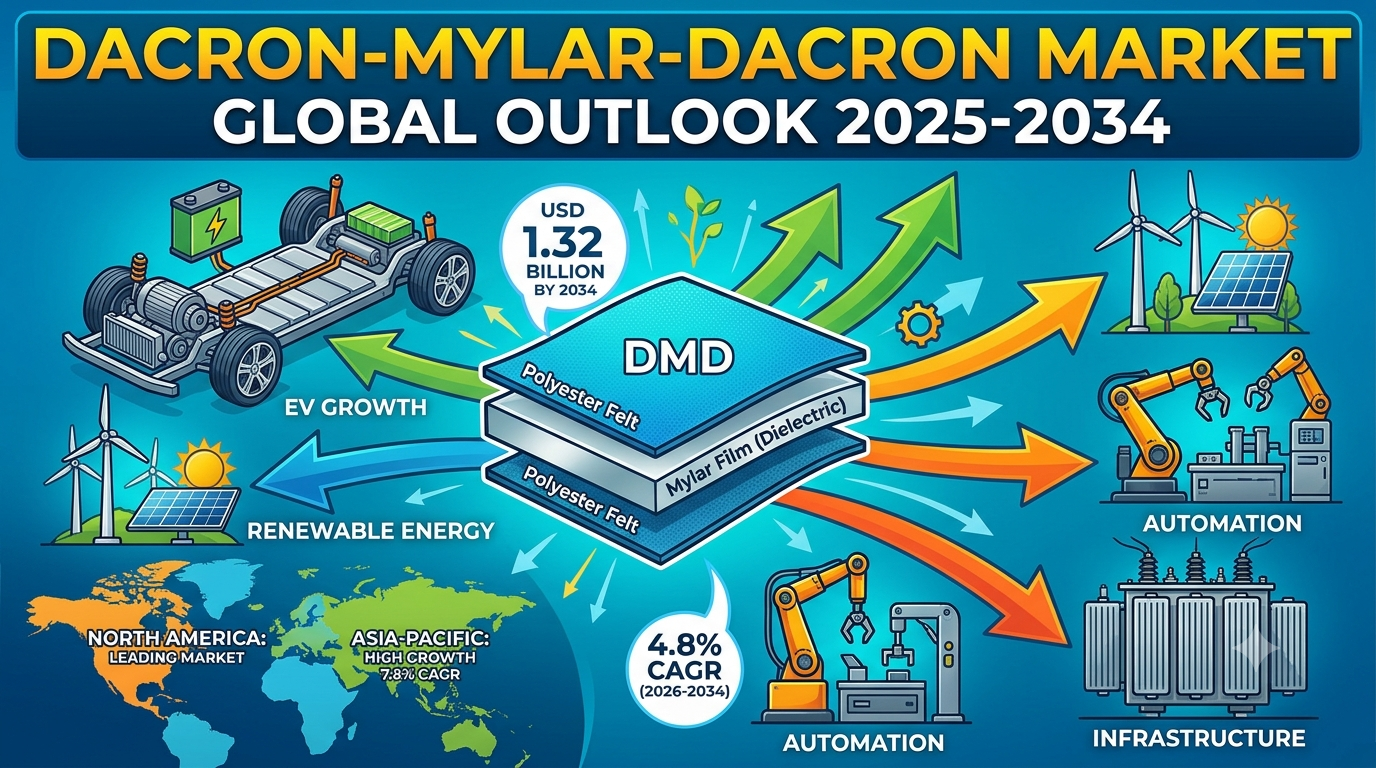
Global Dacron-Mylar-Dacron (DMD) Market is gaining attention across electrical equipment manufacturing, power generation, industrial automation, renewable energy infrastructure, and electric vehicle manufacturing. Dacron-Mylar-Dacron is a composite electrical insulation material consisting of a central Mylar film layer made from biaxially oriented polyethylene terephthalate (BOPET), positioned between two layers of polyester felt. This structure provides dielectric strength, mechanical durability, thermal stability, and moisture resistance, making DMD suitable for electrical insulation applications in motors, transformers, and generators.
According to 24ChemicalResearch, the global Dacron-Mylar-Dacron Market was valued at USD 845.7 million in 2025. The market is projected to grow from USD 891.2 million in 2026 to USD 1.32 billion by 2034, registering a compound annual growth rate (CAGR) of 4.8% during the forecast period from 2026 to 2034. Increasing demand for high-performance electrical insulation, renewable energy infrastructure, electric vehicle manufacturing, and energy-efficient industrial equipment is supporting market growth.
Read the Complete Dacron-Mylar-Dacron Market Report:
https://www.24chemicalresearch.com/reports/304453/dacronmylardacron-market
Market Overview
Dacron-Mylar-Dacron is a composite insulation material used in electrical equipment that requires reliable dielectric performance, mechanical strength, and thermal stability. Its layered structure combines the properties of polyester felt and Mylar film to provide insulation in demanding operating environments.
DMD materials are used primarily in motors, transformers, and other electrical equipment. The composite structure helps separate electrical components, maintain insulation integrity, and support equipment operation under elevated temperatures. The material is particularly relevant to applications requiring thermal performance up to Class F, or 155°C, depending on the specific product grade and equipment design.
The market is influenced by the expansion of electricity infrastructure, industrial automation, renewable energy projects, and electric vehicle production. Wind turbine generators, solar inverters, and electric motors require dependable electrical insulation materials to support efficient operation and long service life.
Manufacturers are also focusing on improved composite manufacturing techniques, material consistency, and insulation grades designed for demanding electrical applications. At the same time, raw material price fluctuations, supply chain challenges, and environmental compliance requirements influence manufacturing costs and market competition.
Key Market Growth Drivers
1. Growing Demand for High-Performance Electrical Insulation
Electrical equipment manufacturers require insulation materials that can withstand thermal stress, maintain dielectric strength, and provide reliable mechanical performance. DMD composites combine polyester felt and Mylar film to address these requirements.
The increasing use of electrical equipment across industrial, commercial, and energy applications supports demand for specialized insulation materials. Manufacturers are also seeking materials that provide consistent performance and help improve equipment reliability.
2. Expansion of Renewable Energy Infrastructure
The development of renewable energy infrastructure is creating opportunities for electrical insulation suppliers. Wind turbine generators, solar inverters, and related power equipment require insulation materials capable of operating under demanding electrical and thermal conditions.
As investment in renewable energy projects expands, demand for reliable insulation solutions is expected to benefit from the installation and maintenance of associated electrical equipment.
3. Growth in Electric Vehicle Manufacturing
Electric vehicles rely on electric motors and other electrical components that require dependable insulation materials. The expansion of EV production is encouraging suppliers to develop insulation products suited to evolving equipment designs and operating requirements.
DMD materials can serve selected electrical insulation applications where thermal stability, dielectric properties, and mechanical durability are important considerations.
4. Increasing Industrial Automation
Industrial automation depends on motors, transformers, generators, and other electrical equipment used in manufacturing systems. These components require reliable insulation to support continuous operation and reduce the risk of electrical failures.
As industrial facilities modernize their equipment and improve production efficiency, demand for durable electrical insulation materials can increase.
5. Focus on Energy Efficiency and Equipment Reliability
Energy efficiency has become an important consideration in power systems and industrial equipment. Manufacturers are seeking materials that help maintain insulation performance and support reliable operation throughout equipment service life.
DMD insulation can contribute to the design of electrical equipment where thermal stability, moisture resistance, and dielectric performance are required.
Manufacturing Costs and Market Challenges
Raw Material Price Volatility
DMD production depends on polyester materials and Mylar film, which can be affected by changes in raw material prices, manufacturing costs, and supply conditions. Price fluctuations can influence production expenses and reduce profit margins.
Manufacturers must manage procurement, inventory, and supplier relationships to maintain stable production costs.
Supply Chain Constraints
The market can be affected by fragmented supply chains and variations in the availability of specialized insulation materials. Delays in obtaining raw materials may affect production schedules and customer deliveries.
Establishing reliable sourcing arrangements and improving inventory planning can help manufacturers manage these risks.
Technical Performance Requirements
Electrical insulation materials must meet application-specific requirements for dielectric strength, thermal stability, mechanical durability, and moisture resistance. Consistent quality is particularly important for motors and transformers operating under demanding conditions.
Manufacturers must maintain suitable production controls and product testing procedures to ensure reliable performance.
Environmental and Regulatory Compliance
Chemical safety and environmental requirements can influence the manufacture and use of composite insulation materials. Compliance may require changes in material selection, production processes, and quality management.
These requirements can increase development and operating costs, particularly for manufacturers serving multiple markets with different technical standards.
Competition and Pricing Pressure
DMD suppliers face competition from established insulation manufacturers and alternative electrical insulation materials. Customers may evaluate products based on price, thermal classification, electrical performance, durability, and availability.
Manufacturers must balance cost competitiveness with product consistency and technical performance.
Market Opportunities
Expansion of Electric Vehicle Applications
The growth of electric vehicle manufacturing creates opportunities for suppliers of electrical insulation materials used in motors and related equipment. Developing products that meet evolving thermal, electrical, and mechanical requirements can help manufacturers address this expanding application area.
Renewable Energy Projects
Wind energy, solar power, and associated electrical infrastructure require motors, generators, inverters, and transformers. These applications create demand for reliable insulation materials that can support long-term equipment performance.
Suppliers that can meet the requirements of renewable energy equipment manufacturers may benefit from expanding project activity.
Smart Grid and Power Infrastructure Development
Investment in electricity transmission, distribution, and grid modernization supports demand for transformers and other electrical equipment. These systems require dependable insulation materials to maintain electrical separation and operational reliability.
DMD suppliers may benefit from demand associated with new installations, equipment upgrades, and replacement requirements.
Development of Advanced Insulation Grades
Manufacturers can explore improvements in composite construction, thermal performance, mechanical strength, and manufacturing consistency. Specialized grades designed for particular motor and transformer applications may provide opportunities for product differentiation.
Industrial Automation and Electrification
The increasing use of electrically powered machinery and automated production systems creates opportunities for insulation suppliers. Equipment manufacturers require materials that support reliable operation and meet application-specific performance requirements.
Market Segmentation
By Type
Class B DMD: Class B insulation materials are used in electrical applications designed for the corresponding thermal classification. They provide insulation performance suitable for equipment operating within the applicable temperature limits.
Class F DMD: Class F insulation materials are designed for applications requiring a higher thermal classification than Class B. Class F insulation systems are associated with a thermal class of 155°C, subject to the requirements of the complete equipment insulation system.
Other Types: This category includes additional DMD insulation grades designed for specific electrical equipment requirements and specialized operating conditions.
By Application
Motors: Electric motors require insulation materials to separate electrical components and maintain reliable operation under thermal and mechanical stress. DMD composites can be used in selected motor insulation applications.
Transformers: Transformers depend on insulation materials to maintain electrical separation between conductive components. DMD materials can support insulation requirements where suitable dielectric and thermal properties are needed.
Other Applications: Additional applications include selected generators and other electrical equipment requiring composite insulation materials.
Regional Outlook
North America
North America is identified in the report as a leading region in the DMD market. Demand is supported by established electrical equipment manufacturing, industrial infrastructure, power systems, and investment in energy-related technologies.
The region's demand for motors, transformers, and other electrical components supports the use of high-performance insulation materials.
Asia-Pacific
Asia-Pacific is identified as a region with significant growth potential. Industrial expansion, electric vehicle manufacturing, renewable energy investment, and growing electricity infrastructure are contributing to demand for electrical insulation materials.
The report highlights an expected growth rate of 7.8% for Asia-Pacific, supported by investment in electric vehicles and renewable energy markets.
Europe
Europe's market is influenced by industrial electrification, renewable energy projects, power infrastructure, and demand for energy-efficient electrical equipment. These applications create opportunities for insulation materials designed to meet demanding performance requirements.
South America
South American demand is associated with industrial development, electricity infrastructure, and investment in electrical equipment. Market growth depends on regional manufacturing activity, infrastructure investment, and the development of renewable energy projects.
Middle East and Africa
The Middle East and Africa offer opportunities linked to power infrastructure development, industrial expansion, and electricity generation projects. Demand for DMD materials is influenced by investment in motors, transformers, generators, and other electrical equipment.
Competitive Landscape
The global Dacron-Mylar-Dacron Market includes established electrical insulation suppliers and specialized composite material manufacturers. Competition is influenced by product quality, thermal classification, dielectric performance, manufacturing capabilities, pricing, and customer relationships.
Manufacturers seek to differentiate their products through consistent material properties, reliable supply, application-specific insulation grades, and improvements in composite manufacturing technology.
Key companies identified in the report include:
-
3M
-
The Gund Company
-
Nantong Zhongling
-
Xuchang Newdesen
These companies operate within the broader electrical insulation and composite materials supply chain. Competitive positioning depends on the ability to meet customer specifications, maintain consistent quality, and support the evolving needs of electrical equipment manufacturers.
What Does the Report Cover?
The Dacron-Mylar-Dacron Market report provides analysis of market size, historical performance, future forecasts, product segmentation, applications, regional demand, and the competitive landscape.
The report covers:
-
Global market size and forecasts from 2021 to 2034
-
Historical market performance and projected revenue
-
Market segmentation by insulation type
-
Class B, Class F, and other insulation grades
-
Application analysis for motors, transformers, and other equipment
-
Regional and country-level market analysis
-
Company profiles and competitive positioning
-
Manufacturer sales and revenue analysis
-
Product pricing and market share assessment
-
Production capacity and utilization analysis
-
Production cost and gross-margin analysis
-
Supply chain and value chain analysis
-
Import, export, and regional trade analysis
-
Market drivers, restraints, challenges, and opportunities
Key Report Highlights
-
Market Size: USD 845.7 million in 2025.
-
Forecast Market Size: USD 1.32 billion by 2034.
-
CAGR: 4.8% from 2026 to 2034.
-
Key Product Types: Class B, Class F, and other DMD insulation grades.
-
Major Applications: Motors, transformers, and other electrical equipment.
-
Primary Growth Drivers: Renewable energy investment, electric vehicle manufacturing, industrial automation, and demand for high-performance electrical insulation.
-
Leading Region: North America.
-
High-Growth Region: Asia-Pacific, with a reported projected CAGR of 7.8%.
-
Key Challenges: Raw material price volatility, supply chain constraints, technical performance requirements, and environmental compliance.
-
Emerging Opportunities: Electric vehicle motors, renewable energy equipment, smart grid development, and advanced insulation grades.
Frequently Asked Questions
1. What is the current size of the Dacron-Mylar-Dacron Market?
The global Dacron-Mylar-Dacron Market was valued at USD 845.7 million in 2025.
2. What is the projected market size by 2034?
The market is projected to reach USD 1.32 billion by 2034.
3. What is the expected CAGR?
The market is expected to grow at a compound annual growth rate of 4.8% from 2026 to 2034.
4. What is Dacron-Mylar-Dacron insulation?
Dacron-Mylar-Dacron is a composite electrical insulation material made from a central Mylar film layer placed between two polyester felt layers. It is used in electrical equipment requiring dielectric strength, mechanical durability, and thermal stability.
5. What are the main applications of DMD materials?
The report identifies motors, transformers, and other electrical equipment as the main application categories.
6. What are the primary types of DMD insulation?
The report segments the market into Class B, Class F, and other insulation grades.
7. What factors are driving market growth?
Key drivers include renewable energy infrastructure, electric vehicle manufacturing, industrial automation, and increasing demand for reliable electrical insulation.
8. Which region leads the market?
North America is identified as the leading region, while Asia-Pacific is projected to experience strong growth.
9. What challenges affect the market?
Challenges include raw material price fluctuations, supply chain fragmentation, technical performance requirements, environmental compliance, and competitive pricing pressure.
10. What opportunities are emerging in the market?
Opportunities include electric vehicle motors, renewable energy equipment, grid modernization, industrial electrification, and the development of advanced insulation grades.
Complete Report
For detailed market estimates, segmentation, regional analysis, competitive information, and forecasts, read the complete report:
https://www.24chemicalresearch.com/reports/304453/dacronmylardacron-market
About 24ChemicalResearch
24ChemicalResearch provides market research and industry analysis covering market size, demand trends, competitive landscapes, segmentation, and forecasts across chemical, materials, and industrial markets.
Contact Us
Website: https://www.24chemicalresearch.com/
Phone: +91 9169162030
Email: help@24chemicalresearch.com

 English
 Arabic
 Spanish
 Portuguese
 Deutsch
 Turkish
 Dutch
 Italiano
 Russian
 Romaian
 Portuguese (Brazil)
 Greek
