


Tree Trimming and Pruning: Benefits, Timing, and Expert Tips
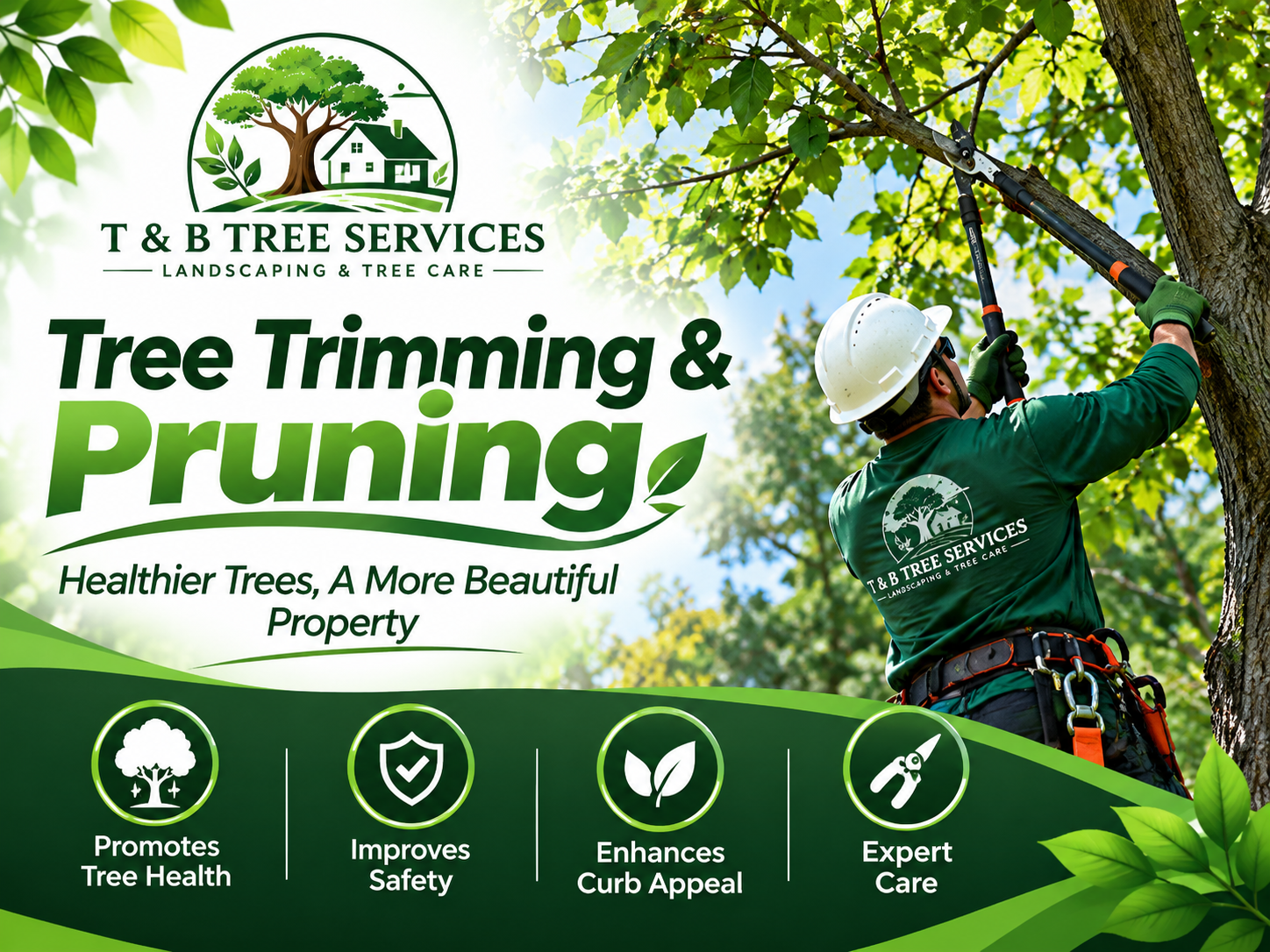
Healthy trees can transform a property’s appearance, provide shade, and contribute to a more comfortable outdoor environment. However, trees need regular care to maintain their structure, manage unwanted growth, and reduce potential hazards. Understanding tree trimming and pruning helps homeowners make informed decisions about maintaining trees throughout the year.
Although these terms are often used interchangeably, trimming generally focuses on controlling growth and appearance, while pruning targets tree health, structure, and the removal of dead, damaged, or diseased branches. Both practices can be valuable when performed correctly.
Property owners may also need stump removal and grinding after a tree has been cut down. Removing the remaining stump can improve the usability of a yard, reduce certain tripping hazards, and prepare an area for future landscaping.
This guide explains the benefits of tree maintenance, the best times to schedule professional services, essential safety considerations, and how stump grinding fits into a complete tree care plan.
Why Tree Trimming and Pruning Matter
Trees naturally grow in different directions as they compete for sunlight, respond to weather, and develop new branches. Without appropriate maintenance, some trees can develop crowded canopies, damaged limbs, or growth patterns that interfere with nearby structures.
Regular maintenance helps address these concerns before they become more difficult to manage.
Improving tree health
Pruning can remove dead, diseased, or damaged branches that might otherwise compromise a tree’s structure. Selective cuts can also improve airflow through dense canopies and help sunlight reach interior branches.
However, excessive cutting can weaken a tree. Removing too much foliage reduces its ability to produce energy, while improper cuts can damage bark and create entry points for decay. The objective should always be to preserve the tree’s natural structure while addressing specific maintenance needs.
Reducing potential safety hazards
Branches growing over roofs, driveways, walkways, and outdoor seating areas may create safety concerns, especially when they are dead, cracked, or poorly attached.
Professional assessment can identify branches that require removal and determine whether a tree has structural problems that need further attention.
Important warning signs include
- Large dead branches or hanging limbs.
- Cracks in major branches or the trunk.
- Branches rubbing against a roof or utility infrastructure.
- Significant leaning that has developed recently.
- Broken limbs following a storm.
These signs do not always mean a tree must be removed. A qualified tree care professional can evaluate its condition and recommend an appropriate response.
Enhancing curb appeal
Well-maintained trees contribute to a property’s overall appearance. Removing selected branches can improve the shape of a tree, clear pathways, and create a more balanced landscape.
For example, a tree with low branches obstructing the front entrance may benefit from carefully planned clearance pruning. The goal is to improve access and appearance without removing excessive foliage or compromising the tree’s health.
Understanding the Difference Between Trimming and Pruning
Although both practices involve cutting branches, the purpose of the work determines which approach is most appropriate.
What is tree trimming?
Tree trimming commonly focuses on managing growth, maintaining clearance, and improving appearance. It may be useful for trees with branches extending into walkways, driveways, or landscaped areas.
Typical objectives include:
- Maintaining clearance around buildings.
- Managing overgrown branches.
- Improving the appearance of ornamental trees.
- Keeping pathways and outdoor spaces accessible.
The appropriate technique depends on the tree species, its age, and the surrounding environment.
When Is the Best Time to Trim or Prune Trees?
The ideal timing depends on the tree species, its condition, local climate, and the purpose of the work. There is no single schedule that suits every tree.
Seasonal considerations
Late winter or early spring can be suitable for pruning many deciduous trees because their branch structure is easier to inspect before leaves emerge. However, flowering trees, fruit trees, and species susceptible to particular diseases may require different timing.
During the growing season, limited corrective pruning may still be necessary to address broken branches, hazardous growth, or specific species-related needs.
Homeowners should also consider local pest and disease risks. Certain pruning activities performed at the wrong time may increase vulnerability to infection or interfere with flowering.
When immediate attention is needed
Some maintenance should not wait for a preferred season.
Schedule an assessment if you notice:
- Storm-damaged branches.
- A limb hanging above a frequently used area.
- A split branch that could fall.
- Sudden structural changes.
- Branches interfering with electrical lines.
Stay clear of damaged limbs and avoid working near power lines. Contact the appropriate utility provider or a qualified professional when electrical hazards are involved.
How Professional Tree Maintenance Works
A reliable tree care service should evaluate the tree before making cuts. This helps ensure that the work addresses genuine concerns rather than removing branches unnecessarily.
Inspect the tree and surrounding property
The inspection should consider the tree’s species, size, health, branch attachments, and proximity to buildings or other obstacles.
The professional should also identify potential hazards and discuss the property’s maintenance goals with the owner.
Establish a maintenance plan.
After the assessment, the tree care professional can recommend specific work. This may involve removing dead branches, correcting selected structural problems, managing clearance, or monitoring the tree instead of performing extensive cutting.
A clear plan helps property owners understand the proposed work and its intended results.
Perform selective cuts
Correct pruning generally preserves the branch collar, the area where a branch joins its parent limb or trunk. Cuts should be made carefully to minimize unnecessary damage.
Topping a tree by indiscriminately cutting back its upper branches is generally discouraged. It can create weak regrowth, increase maintenance needs, and harm the tree’s long-term structure.
Inspect and clean the work area
After pruning, the crew should review the remaining tree structure and remove the agreed-upon branches and debris.
Property owners should clarify whether hauling, chipping, or disposal is included in the service estimate.
Why Professional Tree Services Can Be Worthwhile
Tree maintenance can involve significant physical risks, especially when working at height or handling large branches. Professional services may provide specialized equipment, technical knowledge, and an organized approach to managing these risks.
Access to suitable equipment
Depending on the job, professionals may use pole pruners, chainsaws, climbing equipment, aerial lifts, and protective gear.
Equipment selection should reflect the tree’s size, site access, and the complexity of the work. Using unsuitable tools can damage branches or expose workers and property owners to unnecessary hazards.
Knowledge of tree structure
A trained professional can identify problematic branch attachments, signs of decay, and structural concerns that may not be obvious from the ground.
This knowledge is particularly useful for mature trees, large branches, and trees located near buildings or frequently used outdoor spaces.
Protection for nearby property
Before work begins, the crew should assess the risks to roofs, fences, vehicles, landscaping, and other nearby features.
Homeowners should ask about the company’s insurance coverage, relevant qualifications, cleanup procedures, and approach to protecting the property.
Stump Removal and Grinding: What Homeowners Should Know
When a tree is removed, its stump can remain as an obstacle in the yard. Depending on its size and location, the stump may interfere with mowing, landscaping, construction, or future planting.
Stump removal and grinding are two related approaches, but they do not produce exactly the same result.
What is stump grinding?
Stump grinding uses specialized machinery to reduce a stump into wood chips below the surrounding ground level. The depth depends on the equipment, site conditions, and intended use of the area.
Grinding is often appropriate when a property owner wants to improve the appearance of the lawn, remove a tripping obstacle, or prepare the area for landscaping.
However, grinding usually leaves the deeper roots in the ground. Those roots generally decay over time.
What is complete stump removal?
Stump removal involves extracting the stump and, depending on the method, some of its root system. This can require more excavation and disturbance to the surrounding soil.
It may be preferable when the area needs substantial excavation or when construction plans require removal of the remaining stump and certain roots.
The right method depends on the tree species, stump dimensions, site access, and the property’s future use.
Benefits of removing a tree stump
Removing or grinding a stump can provide several practical benefits:
- Improved appearance: Creates a cleaner, more organized landscape.
- Safer movement: Eliminates a common obstacle in lawns and walkways.
- Easier maintenance: Makes mowing and landscaping more convenient.
- More usable space: Helps prepare an area for lawn restoration or selected landscaping projects.
- Reduced maintenance concerns: Limits the need to work around an exposed stump.
A stump does not automatically attract termites to a home, but decaying wood can provide habitat for certain insects. Removing a stump may be worthwhile when it is close to structures or creates a specific pest-management concern.
How Tree Pruning and Stump Grinding Work Together
Tree maintenance and stump services can form part of a coordinated property care plan.
For example, a homeowner may need selective pruning on a mature tree near the driveway while also removing an old stump elsewhere in the yard. Combining the work into one project may simplify scheduling and debris management.
A practical plan may include:
- Inspecting existing trees for health and structural concerns.
- Identifying branches that need corrective or clearance pruning.
- Determining whether a damaged or unwanted tree requires removal.
- Assessing any remaining stumps and deciding between grinding and extraction.
- Planning soil restoration, reseeding, or landscaping after the work.
Not every property needs all these services. Recommendations should be based on the condition of the trees and the homeowner’s priorities.
Common Tree Care Mistakes to Avoid
Well-intentioned maintenance can cause lasting damage when the wrong techniques are used.
Removing too many branches
Excessive pruning reduces the tree’s leaf area and may leave it vulnerable to stress. Avoid removing large amounts of the canopy at once unless a qualified professional determines that the work is appropriate.
Using improper cutting techniques
Cuts that damage the branch collar or leave poorly positioned stubs can interfere with the tree’s natural wound response.
For significant branches, particularly those overhead, professional assistance is safer than attempting the work without the appropriate training and equipment.
Ignoring damaged trees
Cracked limbs, major deadwood, and sudden changes in a tree’s lean deserve prompt assessment. Waiting may allow a manageable concern to become more serious.
Choosing stump grinding without considering future plans
Grinding is often effective for lawn restoration, but it may not satisfy the requirements of every construction or landscaping project. Discuss the intended use of the area before selecting a method.
How to Choose a Reliable Tree Care Company
Before hiring a provider, compare more than the quoted price. A suitable company should explain the proposed work, communicate clearly, and address safety and cleanup.
Ask these questions:
- Does the company have appropriate insurance coverage?
- Can it explain why specific branches need pruning?
- Does the estimate identify the work and cleanup included?
- Is stump grinding or stump extraction available if needed?
- Will the company protect nearby structures and landscaping?
- Are there local permits or utility requirements to consider?
Written estimates and clear project expectations help homeowners compare providers and avoid misunderstandings.
Conclusion
Healthy trees require thoughtful maintenance, not simply frequent cutting. Understanding tree trimming and pruning helps homeowners preserve tree structure, improve appearance, address potential hazards, and maintain attractive outdoor spaces.
When a tree has been removed, stump removal and grinding can help reclaim usable yard space and prepare the area for future landscaping. The best approach depends on the tree’s condition, the property’s layout, and the homeowner’s plans.
For the best results, arrange a professional assessment, discuss your priorities, and choose a maintenance plan suited to your property. With appropriate care, trees and outdoor spaces can remain attractive, functional, and easier to maintain for years to come.
Ready to improve your property’s landscape? Contact a qualified local tree care professional to discuss pruning, tree maintenance, and stump grinding options for your needs.
(FAQs)
1. What is the difference between tree trimming and pruning?
Trimming commonly focuses on controlling growth and maintaining clearance or appearance. Pruning focuses on tree health, structure, and removing selected dead, damaged, or problematic branches.
2. How often should trees be trimmed or pruned?
There is no universal schedule. The frequency depends on species, age, health, growth rate, and location. Some trees need periodic structural pruning, while others require attention only when specific issues arise.
3. When is the best time to prune trees?
Late winter or early spring is suitable for many deciduous trees, but the ideal timing varies by species and purpose. Diseased or damaged branches may require attention outside the usual pruning season.
4. Is stump grinding better than stump removal?
Stump grinding is often suitable for improving a lawn or removing an obstacle with less excavation. Complete stump removal may be preferable when construction or other work requires extraction of the stump and some roots.
5. Can I prune large branches myself?
Large branches, overhead limbs, and trees near power lines can be dangerous to work on. Hiring a qualified professional with appropriate equipment is generally the safer choice.

 English
 Arabic
 French
 Portuguese
 Deutsch
 Turkish
 Dutch
 Italiano
 Russian
 Romaian
 Portuguese (Brazil)
 Greek
