


BIS Certification in India: Complete Guide for Manufacturers and Importers
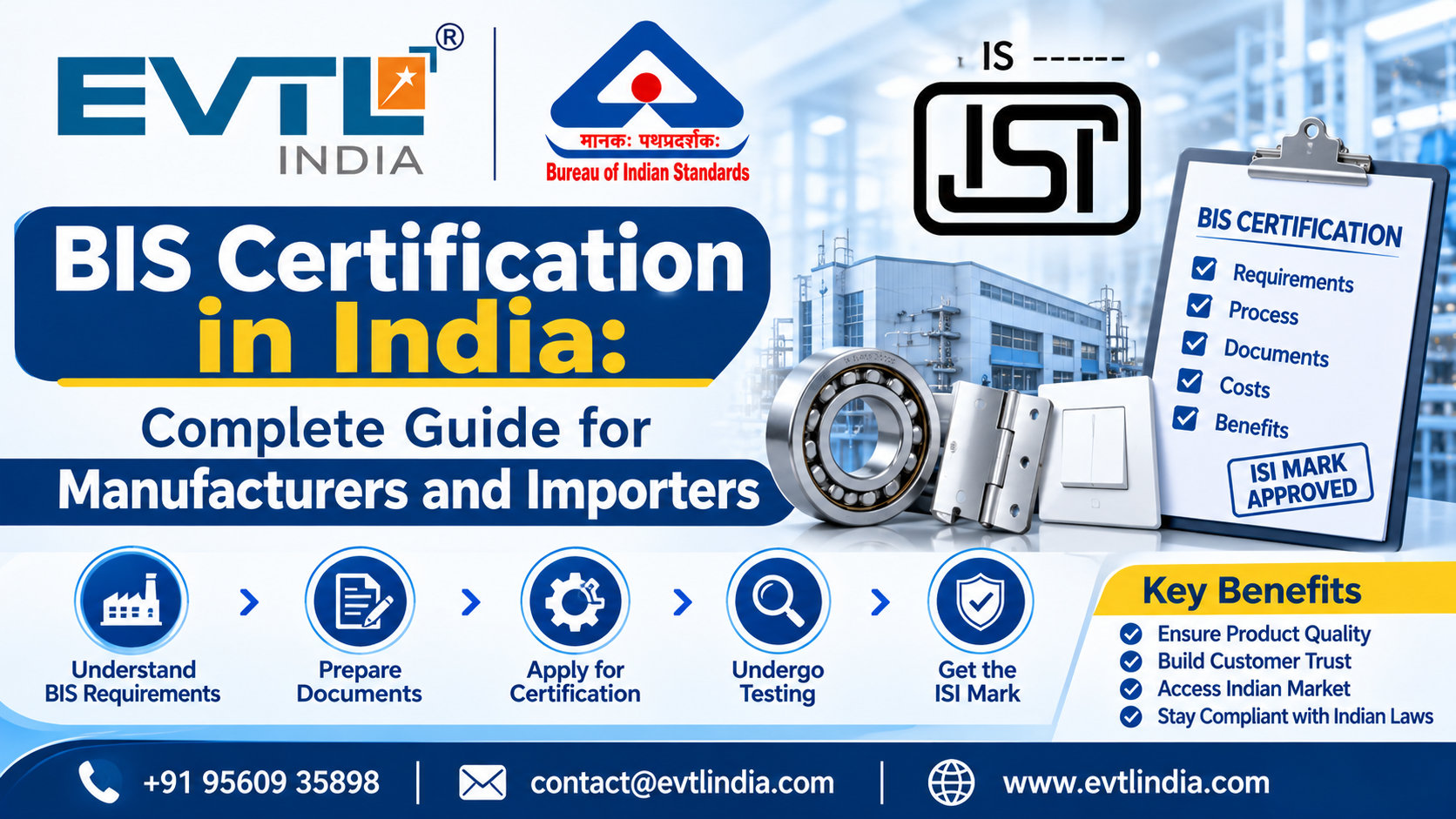
Many products on Indian shelves carry a small mark, such as ISI. Behind that mark is a process that every maker and importer should understand. This guide walks you through it in simple words, from the first question to the final license.
What Is It All About?
BIS Certification is proof that a product follows Indian quality and safety rules. The Bureau of Indian Standards (BIS) is the national standards body, set up under the BIS Act, 2016. It writes standards, tests products and gives marks to those that pass. A BIS mark tells buyers that the product has been checked by an official body.
Who Needs It?
BIS Certification in India is compulsory for products that the government has listed under Quality Control Orders (QCOs). For other products it is voluntary, but it still builds trust. The rule can apply to:
- Indian factories that make listed products
- Importers who bring listed products into India
- Foreign factories that sell listed products to India
- Brand owners who sell goods made by others
Lists change from time to time. Always check the BIS website to see whether your product is covered before you plan a launch.
The Main Schemes
BIS has more than one mark. Which one you need depends on your product.
- ISI Mark (Scheme I): For factory-made products like steel items, cement, hinges and bearing parts. It includes lab tests and a factory visit by BIS.
- CRS (Compulsory Registration Scheme): For electronics and IT products. It is based on lab testing and registration, and usually has no factory visit.
- FMCS (Foreign Manufacturers Certification Scheme): For foreign factories. It follows the ISI route, with an Indian representative and an audit.
- Hallmark: For gold and silver jewellery. It involves purity testing and hallmarking.
- ECO Mark: A voluntary scheme for eco-friendly products.
What Manufacturers Should Do
If you make products in India, the ISI route is the one most makers follow. The usual steps are:
- Find the Indian Standard that applies to your product.
- Compare your machines, tools and test set-up with the standard.
- Fix any gaps.
- Create a login and apply on the BIS portal.
- A BIS officer visits your factory and picks samples.
- Samples are tested in a BIS-recognized lab.
- BIS reviews the reports and grants your license.
- You start marking your products and follow the license rules.
What Importers Should Know
Importers also have to be careful. If the product you bring in is listed, it must follow the Indian Standard and carry the right mark. Here is what usually matters:
- Check early whether your product is on the compulsory list
- Ask your overseas supplier if the factory already has a BIS license
- If it does not, the foreign factory must apply through FMCS
- Do not ship before the approval is in place
- Keep the license details and product details matching on all import papers
Selling listed products without the required mark can lead to fines and legal action, and imported goods can be stopped at customs.
Foreign Factories
A foreign factory cannot deal with BIS alone. It needs an Authorized Indian Representative (AIR) who handles the file in India. The factory also faces an audit, and samples are tested as per the standard. It is a good idea to start early, because overseas audits and sample shipping take extra time.
Documents to Keep Ready
- Proof of your business (legal entity)
- ID and address proof of the authorized person
- Proof that you own or rent the factory
- Factory layout and list of machines
- Product drawings
- Manufacturing process chart
- Trademark certificate, if you have one
- List of test equipment and calibration papers
- Quality control plan and test records
- For foreign makers: details of the Indian representative
Use the same name and address on every paper. Small spelling differences often cause queries from BIS.
How Long Does It Take?
Under the normal procedure, the ISI process usually takes about 60 to 65 days after your application is complete. CRS and FMCS can take different times, often longer. The real time depends on how ready your papers are, how fast you reply to BIS and how busy the lab is.
After You Get the License
- Print the mark and your license number on products as allowed
- Test every batch and keep records
- Renew the license before it ends
- Report changes in product or process to BIS
- Be ready for surprise visits and market sampling
Common Mistakes
- Applying before test tools are ready
- Different names or addresses on different papers
- No daily test records
- Using the mark before the license is in hand
- Missing the renewal date
- Believing one mark covers every product
Should You Take Help?
Many makers manage alone, but many lose weeks on paperwork. A BIS Certification Consultant prepares the file, coordinates the lab, helps you get ready for the factory visit and replies to BIS questions for you. EVTL India helps makers of many products, from steel hinges to bearing rollers, and the team explains every step in simple words. Whoever you choose, ask about their experience with your product and avoid anyone who promises a guaranteed date.
Conclusion
EVTL India is one of the leading BIS Consultant in India, helping manufacturers obtain their BIS licenses hassle-free. The team helps you find the right scheme, check your factory, prepare documents, apply online and face the BIS visit with confidence.
If you make or import products that may need a BIS mark, start your preparation today. A clear plan now saves weeks later.
📞 +91 95609 35898
📧 contact@evtlindia.com
🌐 www.evtlindia.com

 English
 Arabic
 French
 Spanish
 Portuguese
 Deutsch
 Turkish
 Dutch
 Italiano
 Russian
 Romaian
 Portuguese (Brazil)
