


Aluminum Welding Wire ER5183 by Kunliwelding
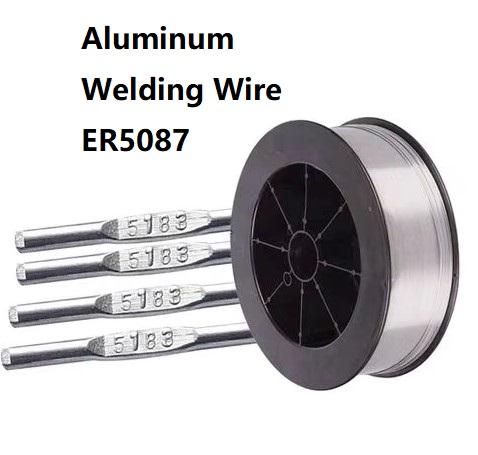
Aluminum components are increasingly used in equipment manufacturing, marine engineering, transportation systems, and large industrial assemblies. As product designs become more specialized, choosing suitable welding consumables becomes an important part of production preparation. Aluminum Welding Wire ER5183 is a useful filler material to consider when joining compatible aluminum-magnesium alloys that require particular mechanical properties. For manufacturers comparing different consumables, Aluminum Welding Wire ER5183 offers an opportunity to match filler composition with structural requirements, welding methods, and the intended working environment.
Understanding the Relationship Between Filler Material and Base Metal
Successful aluminum welding begins with understanding the materials being joined. Different aluminum alloys have different chemical compositions and mechanical characteristics, so a filler wire should be selected according to the base metal and the requirements of the finished component.
ER5183 is an aluminum-magnesium filler alloy containing magnesium and other alloying elements. It is commonly considered for welding compatible 5xxx series aluminum alloys. Its composition supports applications where the deposited weld metal needs suitable strength and resistance to environmental exposure.
However, filler selection should not rely on alloy classification alone. Engineers also need to consider joint geometry, service temperature, loading conditions, and applicable welding standards. These factors help determine whether ER5183 is appropriate for a particular manufacturing project.
A careful material assessment before production can reduce unnecessary adjustments and help establish a more predictable welding procedure.
Supporting Complex Aluminum Component Manufacturing
Modern manufacturing frequently involves aluminum parts with different dimensions, shapes, and assembly requirements. Some components require long continuous welds, while others involve multiple joints in restricted spaces.
ER5183 can be considered for suitable fabrication projects involving marine equipment, transportation structures, and industrial assemblies. Its application depends on the compatibility of the base alloy and the mechanical requirements specified by the project.
In marine engineering, aluminum components may be exposed to moisture and salt-containing environments. Selecting an appropriate filler material is one part of managing the performance requirements of welded structures.
Transportation manufacturers may also use aluminum welding consumables when producing lightweight structural assemblies. In these applications, the relationship between component weight, joint strength, and fabrication efficiency deserves attention.
For customized manufacturing, discussing the intended component design before selecting wire specifications can help engineers and purchasing teams make more informed decisions.
Kunliwelding and Aluminum Welding Supply Considerations
Selecting a suitable welding consumable also involves evaluating product specifications and supply arrangements. Kunliwelding provides aluminum welding material options for businesses involved in industrial fabrication and metal processing.
When sourcing ER5183, buyers should confirm the required wire diameter, spool configuration, packaging specifications, and available product documentation. These details influence how the consumable fits into existing workshop equipment and production arrangements.
For companies handling multiple aluminum materials, supplier communication can help clarify product requirements. Information about the base alloy, welding method, material thickness, and intended application provides useful context during the purchasing process.
Distributors may also need clear technical descriptions when presenting products to their customers. Accurate information about filler characteristics and application considerations supports better communication between suppliers, distributors, and end users.
Maintaining consistent purchasing specifications can further simplify inventory planning, especially for manufacturers with recurring welding requirements.
Improving Joint Preparation and Welding Accuracy
The condition of the aluminum surface has a direct influence on welding preparation. Aluminum develops a natural oxide layer, and contamination from oil, dust, or moisture may interfere with the welding operation.
Before welding, operators should clean the joint area using suitable preparation methods. Appropriate tools and procedures help remove unwanted surface materials and create better conditions for the welding process.
Equipment settings should also be selected according to the joint configuration and material thickness. Wire feeding speed, current, voltage, shielding gas, and travel speed need to work together within the qualified welding procedure.
Operator training is another important factor. Consistent torch movement and proper control of the weld pool can help maintain uniform weld formation. Regular inspection of welding equipment and consumables also supports stable production conditions.
For manufacturers working with different component designs, documenting suitable procedures can make repeated production tasks easier to manage.
Quality Inspection and Long-Term Production Planning
Quality management should be considered throughout the manufacturing process rather than only after welding is completed. Establishing inspection requirements before production helps teams understand the expected condition of finished joints.
Visual inspection can identify irregular weld profiles, surface discontinuities, and other visible concerns. Depending on the engineering requirements, additional testing may be necessary to assess internal weld conditions or mechanical performance.
Production documentation can also provide valuable information. Recording filler material specifications, welding parameters, inspection results, and material batches helps manufacturers review production consistency and trace potential problems.
Long-term planning should include consumable availability, purchasing schedules, and communication with suppliers. These considerations are particularly relevant for companies managing multiple projects or producing aluminum assemblies in recurring batches.
For businesses exploring aluminum welding consumables, https://www.kunliwelding.com/ provides further product information and material options. By evaluating base metal compatibility, welding conditions, and inspection requirements together, manufacturers can make more informed decisions when incorporating ER5183 into their aluminum fabrication processes.

 English
 Arabic
 French
 Spanish
 Portuguese
 Deutsch
 Turkish
 Italiano
 Russian
 Romaian
 Portuguese (Brazil)
 Greek
