


Custom Made Indian Wedding Lehenga: How to Describe Your Dream Outfit to a Designer
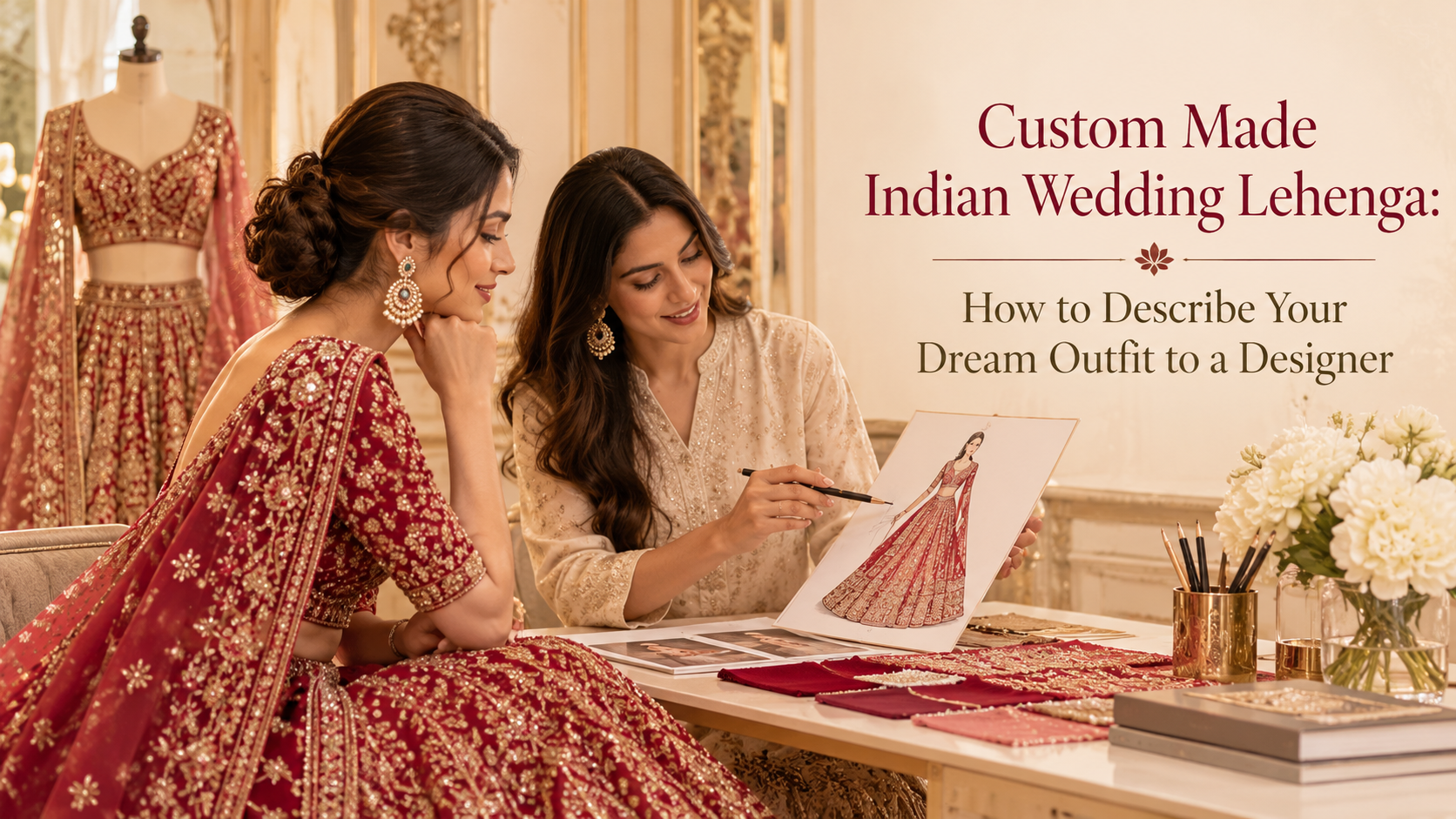
Your wedding lehenga is more than an outfit. It carries years of dreams, family traditions, and personal style, and it's the piece you'll remember every time you look at your wedding photos. Off-the-rack options rarely capture that vision, since they're built for an average fit and limited stock. A custom lehenga is built around you, and the more clearly you describe what you want, the closer the final result will match your imagination.
To get the perfect custom made Indian wedding lehenga, define your style, color palette, and silhouette before your first consultation. Bring reference images, discuss fabric and embroidery preferences openly, and prioritize comfort alongside beauty. Clear communication about fit, budget, and timeline turns your vision into a lehenga you'll treasure for years.
Understanding Your Style Preferences
Before you even step into a designer's studio, spend time understanding what you actually want in your Custom Made Indian Wedding Lehenga
Identify your personal aesthetic and wedding theme. Are you drawn to regal, heavily embellished pieces, or do you prefer minimal, contemporary silhouettes? Your lehenga should reflect both your personality and the overall theme of your wedding, whether that's a traditional ceremony or a modern destination celebration.
Explore color psychology. Reds and maroons symbolize passion and tradition, golds represent prosperity, and pastels like blush pink or lilac offer a softer, romantic feel. Think about what each shade communicates and how it complements your wedding venue and season.
Consider your body type. Not every silhouette flatters every figure. A-line lehengas suit most body types, while fishtail or mermaid cuts work beautifully for those wanting a more dramatic, fitted look. Discuss this openly with your designer—they can recommend cuts that enhance your natural shape.
Key Elements to Discuss with Your Designer
Once you have a general direction, it's time to get into specifics.
-
Fabric selection: Silk offers richness and structure, cotton provides lightweight comfort for daytime functions, and velvet adds dramatic texture for winter weddings. Discuss which fabric suits your wedding's climate and formality.
-
Embroidery styles: Traditional zari work brings timeless shine, modern thread work offers subtle texture, and stone embellishments add sparkle and glamour. Each style changes the weight, cost, and overall feel of the outfit.
-
Fit and comfort: Your lehenga needs to allow movement for dancing, walking, and sitting through long ceremonies. Mention any functions where you'll need extra mobility, like sangeet performances.
-
Budget and timeline: Be upfront about your budget range and wedding date early in the conversation. This helps your designer suggest realistic fabric and embellishment choices while leaving enough time for fittings and adjustments.
Communicating Your Vision Effectively
A designer can only work with what you give them, so clear communication is essential in the making process of a Custom Made Indian Wedding Lehenga
Create a mood board. Collect inspiration images from Pinterest, Instagram, or past weddings you've attended. Visual references communicate details that are hard to put into words, like the exact shade of pink or the density of embroidery you want.
Use descriptive language. Instead of saying "something elegant," describe specifics: "a fitted bodice with cap sleeves" or "a flared skirt with scattered floral embroidery." The more descriptive you are, the less room there is for misinterpretation.
Discuss customization details. Sleeve styles, neckline designs, and dupatta draping all shape the final silhouette. Decide whether you want a boat neck or sweetheart neckline, long sleeves or sleeveless, and how you'd like your dupatta draped—over one shoulder, pleated at the waist, or covering your head for ceremonial moments.
Common Mistakes to Avoid
Even with the best intentions, brides sometimes make avoidable mistakes during the design process.
-
Being too vague about design preferences, leaving the designer to guess your intent.
-
Ignoring practical considerations like how heavy the lehenga will feel after hours of wear.
-
Not scheduling enough fittings, which can result in a lehenga that doesn't sit correctly on the big day.
-
Underestimating fabric quality, which affects drape, durability, and how the outfit photographs.
Avoiding these pitfalls early saves time, money, and stress closer to your wedding date.
Final Checklist Before Your Fitting
Before your final fitting, run through this checklist:
-
Confirm all design details—color, fabric, embroidery—match what was discussed.
-
Verify embroidery placement and density align with your vision.
-
Check the fit across the waist, hips, and length, especially if your weight has changed since your first measurement.
-
Leave room in your timeline for last-minute adjustments, since even small alterations take time to execute properly.
Your Lehenga, Your Story
A custom made Indian wedding lehenga is a collaboration between you and your designer. The time you invest in communicating your vision clearly—through mood boards, specific language, and honest conversations about fit and budget—pays off in an outfit that feels unmistakably yours.
If you're exploring designers who specialize in handcrafted bridal wear, House of Fakir Chand's lehenga collection is worth a look for its embroidered silk designs and custom tailoring options, offering a helpful reference point as you shape your own vision.
Frequently Asked Questions
How far in advance should I start planning my custom lehenga?
Most designers recommend starting four to six months before the wedding to allow time for fabric sourcing, embroidery work, and multiple fittings.
What's the price difference between custom and off-the-rack lehengas?
Custom pieces typically cost more due to personalized tailoring and unique embroidery, but the exact difference depends on fabric choice and embellishment complexity.
How many fittings will I need?
Expect at least two to three fittings—an initial measurement session, a mid-process check, and a final fitting closer to the wedding date.
Can I reuse elements from a family heirloom lehenga?
Yes, many designers can incorporate heirloom fabric, embroidery, or jewelry into a new design, blending sentimental value with a fresh silhouette.
What if I'm unsure about my exact style preferences?
Bring a mix of inspiration images even if they feel contradictory. A good designer can help narrow down your preferences through guided questions during your first consultation.

 English
 Arabic
 French
 Spanish
 Portuguese
 Deutsch
 Turkish
 Italiano
 Russian
 Romaian
 Portuguese (Brazil)
 Greek
