


Key Benefits of Automating Payroll and Attendance Management
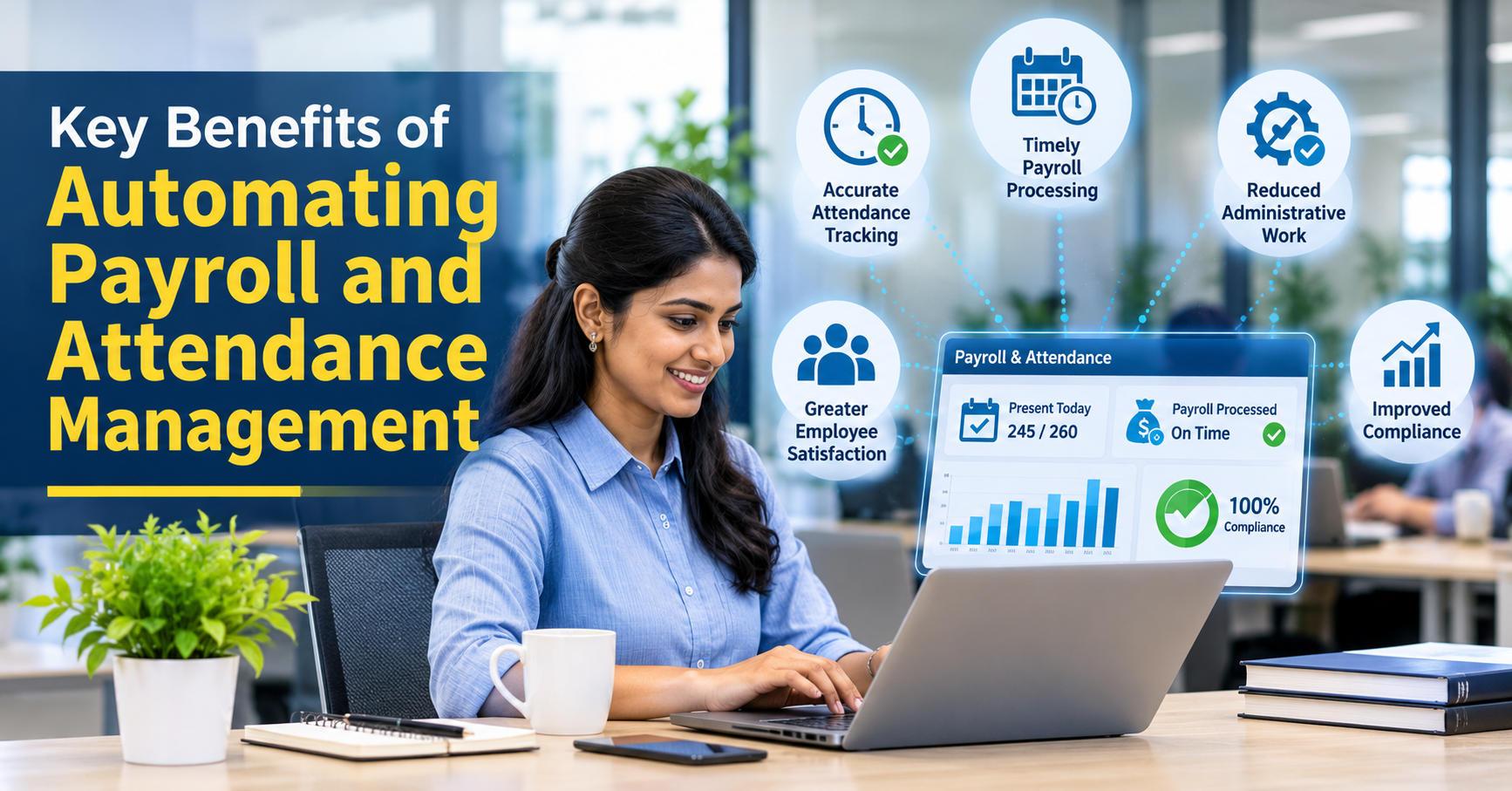
Managing employee payroll and attendance manually can create unnecessary administrative work for businesses. From tracking working hours to calculating salaries and managing leave records, HR teams handle several repetitive tasks every month. Automation makes these processes faster, more accurate, and easier to manage. Businesses adopting Attendance software in India can simplify employee time tracking while connecting attendance information with payroll operations. This integration helps organizations reduce manual errors, improve transparency, and maintain organized workforce records.
Reduces Manual Errors in Salary Calculations
Manual payroll processing involves several calculations, including basic salary, allowances, overtime, deductions, and paid leave. Even small calculation mistakes can lead to incorrect salary payments and employee dissatisfaction. Automated payroll systems use employee records and attendance data to calculate salaries more consistently. They help reduce human errors, minimize repeated corrections, and improve the accuracy of monthly payroll processing.
Saves Time and Improves HR Productivity
Payroll and attendance management require regular attention from HR professionals. Manually collecting attendance records, verifying working hours, calculating salaries, and preparing payslips can consume considerable time. Automation simplifies these activities by processing employee information through a centralized system. HR teams can generate reports, review attendance records, and complete payroll activities more efficiently. This allows HR professionals to spend more time on recruitment, employee engagement, performance management, and workforce planning.
Improves Attendance Tracking Accuracy
Accurate attendance records are important for calculating employee working hours, overtime, and leave deductions. Automated attendance systems can record employee check-in and check-out times through supported methods such as biometric devices, mobile applications, and web-based attendance portals. These systems help managers monitor attendance patterns, identify irregularities, and maintain reliable employee time records. They also reduce the dependency on manual registers and spreadsheets.
Simplifies Leave and Shift Management
Managing employee leave requests and shift schedules manually can become complicated, particularly for organizations with large workforces. Automated systems allow employees to submit leave requests digitally and enable managers to review and approve them through defined workflows. HR teams can also manage shift schedules, weekly offs, holidays, and employee availability from a centralized platform. This improves coordination between departments and helps prevent scheduling conflicts.
Supports Better Payroll Compliance
Businesses must maintain appropriate payroll records and follow applicable statutory requirements. These may include Provident Fund (PF), Employees' State Insurance (ESI), Tax Deducted at Source (TDS), and professional tax, depending on employee eligibility and applicable regulations. Payroll automation can help organizations organize relevant employee information, calculate applicable deductions, and generate payroll reports. However, businesses should ensure that their payroll systems are regularly updated to reflect changes in statutory requirements.
Provides Real-Time Workforce Insights
Automated payroll and attendance platforms provide reports that help managers understand workforce activity. Businesses can review important information such as employee attendance, absenteeism, monthly salary expenses, overtime, working hours, leave balances, and department-wise workforce costs. These insights help management identify workforce patterns, monitor operational expenses, and make informed business decisions.
Improves Employee Transparency and Experience
Employees want clear information about their attendance, salary, leave balances, and payslips. Integrated systems often provide employee self-service portals where individuals can access relevant employment information without repeatedly contacting the HR department. Employees can check attendance records, download payslips, submit leave requests, and track approval status. This improves transparency and reduces routine administrative queries.
Supports Business Growth and Scalability
As businesses expand, managing payroll and attendance manually becomes increasingly difficult. More employees mean additional attendance records, salary calculations, leave requests, and reporting requirements. Automated solutions help organizations handle growing employee databases without significantly increasing administrative workloads. They also make it easier to manage multiple departments, office locations, and different employee categories through centralized workforce management processes.
Conclusion
Automating payroll and attendance management helps businesses improve accuracy, reduce administrative workload, simplify compliance-related activities, and maintain better workforce records. Integrating these functions also creates a more organized approach to employee management. Companies evaluating Payroll software Bangalore can consider solutions that offer payroll automation, attendance integration, employee self-service, reporting capabilities, and reliable data security. Choosing a suitable system can help organizations streamline HR operations, improve employee satisfaction, and manage their workforce more effectively as business requirements grow.

 English
 Arabic
 French
 Portuguese
 Deutsch
 Turkish
 Dutch
 Italiano
 Russian
 Romaian
 Portuguese (Brazil)
 Greek
