


How Capsule Coffee Machines Are Transforming Convenient Coffee Preparation
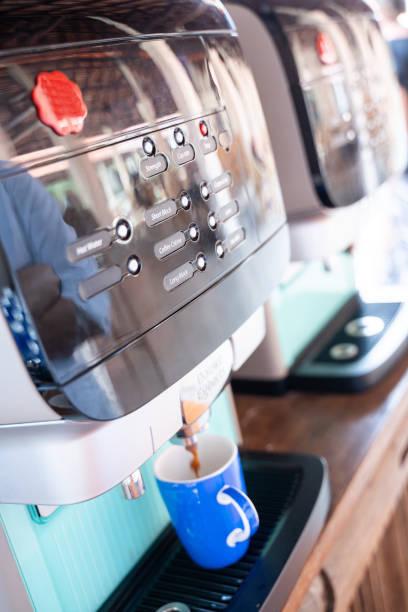
Coffee Machine Market to Reach USD 224.5 Billion by 2033
Overview
The global coffee machine market is evolving as consumer preferences shift toward convenient, high-quality, and customised coffee experiences. Growing coffee consumption, expanding café culture, and increasing demand for automated beverage preparation are encouraging manufacturers to introduce advanced coffee-making equipment for residential and commercial applications.
Coffee machines have become an important part of modern households, offices, hotels, restaurants, and speciality coffee shops. Consumers are increasingly exploring espresso machines, automatic coffee makers, capsule-based systems, and bean-to-cup machines to enjoy consistent beverages with minimal preparation time.
Technological developments are also transforming the industry. Smart connectivity, automated brewing functions, integrated grinders, touch-screen controls, and customisable beverage settings are improving convenience and product functionality.
According to the market estimates provided for this analysis, the global coffee machine market was valued at USD 138.4 billion in 2025 and is projected to reach USD 224.5 billion by 2033, registering a CAGR of 6.4% during the forecast period.
Coffee Machine Market Snapshot
-
Market Size (2025): USD 138.4 Billion
-
Projected Market Size (2033): USD 224.5 Billion
-
CAGR: 6.4%
-
Key Products: Espresso machines, drip coffee makers, capsule machines, and automatic coffee machines
-
Major Applications: Residential, commercial, offices, hotels, and cafés
-
Key Growth Factors: Coffee consumption, café expansion, automation, and premium beverage preferences
Request a Sample PDF: https://m2squareconsultancy.com/request-sample/coffee-machine-market/392
Key Growth Drivers of the Coffee Machine Market
1. Increasing Global Coffee Consumption
Coffee continues to be a popular beverage across several regions. Changing lifestyles, urbanisation, and growing interest in speciality coffee are influencing purchasing decisions among consumers.
More households are investing in coffee machines to prepare café-style beverages at home. This trend is encouraging manufacturers to develop compact, user-friendly, and multifunctional products that offer convenience and consistent brewing quality.
2. Expansion of Cafés and Commercial Foodservice Businesses
The growth of cafés, restaurants, hotels, and other foodservice establishments is supporting demand for commercial coffee machines. Businesses require reliable equipment capable of preparing multiple beverages efficiently while maintaining consistent taste and quality.
Commercial espresso machines, bean-to-cup systems, and high-capacity coffee makers are becoming important equipment investments for hospitality operators.
3. Rising Demand for Automated Coffee Machines
Consumers increasingly prefer automated appliances that simplify everyday beverage preparation. Fully automatic coffee machines offer features such as integrated grinding, automatic milk frothing, programmable settings, and one-touch beverage preparation.
These capabilities are attracting consumers seeking convenience without compromising the coffee experience.
4. Growing Popularity of Premium Coffee Experiences
Speciality coffee culture is encouraging consumers to explore different brewing methods, coffee varieties, and preparation techniques. This is supporting demand for premium espresso machines, advanced grinders, and customisable brewing systems.
Manufacturers are responding with products that offer improved temperature control, pressure regulation, and beverage personalisation.
Emerging Trends in the Coffee Machine Market
Smart and Connected Coffee Machines
Smart coffee machines with Wi-Fi connectivity, mobile applications, programmable settings, and remote operation are gaining attention. These features allow users to customise brewing preferences and manage beverage preparation more conveniently.
Bean-to-Cup Technology
Bean-to-cup machines are attracting interest because they combine grinding and brewing in a single appliance. They provide fresh coffee preparation while reducing the need for separate equipment.
Capsule and Pod-Based Systems
Capsule coffee machines offer convenience, consistent portioning, and quick preparation. Their popularity among residential consumers and small offices is supporting continued product innovation.
Sustainable Coffee Machine Designs
Manufacturers are exploring energy-efficient appliances, recyclable materials, reusable coffee capsules, and improved product durability. Sustainability considerations are becoming increasingly relevant to product development and purchasing decisions.
Advanced Milk-Frothing Technology
Integrated milk-frothing systems are improving the preparation of cappuccinos, lattes, and other milk-based beverages. Automated frothing functions are particularly relevant to consumers seeking café-style drinks at home.
Coffee Machine Market Segmentation
The market can be analysed across several major segments:
-
By product type: Espresso machines, drip coffee machines, capsule coffee machines, filter coffee makers, and bean-to-cup machines.
-
By technology: Manual, semi-automatic, automatic, and fully automatic machines.
-
By application: Residential and commercial.
-
By distribution channel: Online retail, speciality stores, supermarkets, and other retail channels.
-
By end user: Households, cafés, restaurants, hotels, offices, and institutional facilities.
The residential segment benefits from home brewing trends and demand for convenience, while commercial applications are supported by hospitality expansion and the need for high-capacity beverage preparation equipment.
Read Full Report:
https://m2squareconsultancy.com/reports/coffee-machine-market
Regional Outlook
North America: Demand is supported by established coffee consumption habits, speciality coffee culture, premium appliance adoption, and a strong café and foodservice industry.
Europe: The region benefits from a mature coffee culture, demand for espresso-based beverages, and established coffee machine manufacturers. Innovation in automatic and premium coffee machines supports market development.
Asia-Pacific: Urbanisation, rising disposable incomes, expanding café chains, and growing interest in speciality beverages are creating opportunities for coffee machine manufacturers.
Latin America: Coffee-producing countries and developing consumer markets offer opportunities through household appliance adoption, commercial coffee equipment, and speciality coffee businesses.
Middle East & Africa: Hospitality investments, premium café expansion, and growing demand for modern beverage preparation equipment are supporting market opportunities.
Competitive Landscape
The global coffee machine industry includes established home appliance manufacturers, specialist coffee equipment producers, and commercial beverage technology providers. Competition is influenced by product quality, brewing performance, design, energy efficiency, pricing, and technological innovation.
Selected companies operating in the broader coffee machine industry include:
-
De'Longhi Group
-
Koninklijke Philips N.V.
-
Nestlé Nespresso
-
Breville Group
-
JURA Elektroapparate AG
-
Groupe SEB
-
Keurig Dr Pepper
-
Electrolux AB
-
Melitta Group
-
Panasonic Corporation
These companies participate in different segments of the coffee machine value chain, including residential appliances, espresso equipment, capsule systems, and commercial coffee solutions. This is a selected industry participant list, not a verified market-share ranking.
Challenges in the Coffee Machine Market
Despite its growth potential, the coffee machine market faces several challenges. Premium and fully automatic machines can involve high initial costs, limiting adoption among price-sensitive consumers.
Other challenges include maintenance requirements, product repair costs, competition from low-cost manufacturers, and the environmental impact of single-use coffee capsules. Commercial operators must also consider equipment reliability, operating expenses, and servicing availability.
Manufacturers are therefore focusing on product durability, affordable automation, energy efficiency, and improved after-sales support.
Future Outlook
The coffee machine market is expected to benefit from evolving consumer lifestyles, expanding café culture, and increasing demand for automated beverage preparation. Smart connectivity, bean-to-cup technology, premium espresso equipment, and sustainable product designs are likely to influence future product development.
As consumers seek convenient and personalised coffee experiences, manufacturers that combine brewing performance, innovative features, and accessible pricing may be well positioned to capture emerging opportunities.
Frequently Asked Questions (FAQs)
1. What is the global coffee machine market size in 2025?
The global coffee machine market was valued at USD 138.4 billion in 2025, according to the estimates provided for this analysis.
2. What will the coffee machine market be worth by 2033?
The market is projected to reach USD 224.5 billion by 2033.
3. What is the expected CAGR of the coffee machine market?
The market is projected to expand at a CAGR of 6.4% during the forecast period.
4. What are the major types of coffee machines?
Major types include espresso machines, drip coffee makers, capsule machines, bean-to-cup machines, and automatic coffee makers.
5. What factors are driving the coffee machine market?
Key factors include increasing coffee consumption, café expansion, demand for premium coffee experiences, and growing adoption of automated appliances.
6. Which companies are key participants in the coffee machine industry?
Selected companies include De'Longhi, Philips, Nespresso, Breville, JURA, Groupe SEB, Keurig Dr Pepper, Electrolux, Melitta, and Panasonic.
Conclusion
The global coffee machine market is evolving as consumers and businesses increasingly prioritise convenience, automation, and premium coffee experiences. Developments in smart connectivity, automatic brewing, capsule systems, and energy-efficient appliances are creating new opportunities for manufacturers.
With the market projected to reach USD 224.5 billion by 2033 at a CAGR of 6.4%, product innovation and changing beverage consumption patterns are expected to remain important factors shaping the industry's future.
About M2 Square Consultancy
M2 Square Consultancy is a purpose-driven market research and consulting firm dedicated to turning data into insight. Established in 2023, the company helps businesses make strategic, informed decisions through robust feasibility studies, competitor intelligence, and trend forecasting
Get in Touch
Ready to elevate your strategy or explore custom market insights? Reach out to the team directly:
Email: sales@m2squareconsultancy.com
Phone (India): +91 80978 74280
Phone (US): +1 929 447 0100
Related More Reports:
Population Health Analytics Market
Telecom Electronic Manufacturing Services Market
Progressive Web Application Market

 English
 Arabic
 French
 Spanish
 Portuguese
 Deutsch
 Turkish
 Dutch
 Russian
 Romaian
 Portuguese (Brazil)
 Greek
