


Data Center Security in Saudi Arabia: A Complete Guide for Businesses in Riyadh and KSA
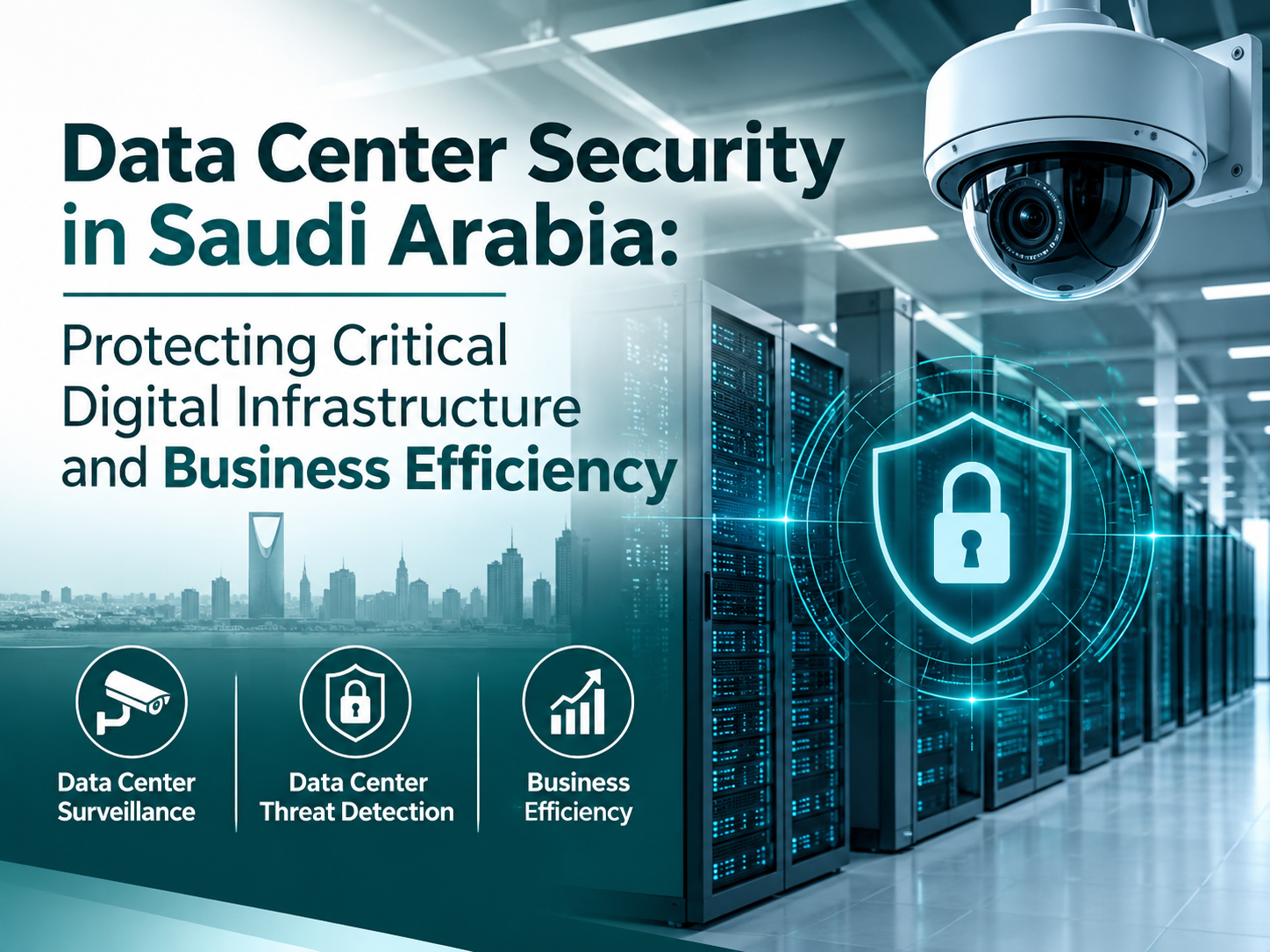
Data is one of the most valuable assets for modern businesses. Banks, hospitals, government organisations, IT companies, and large enterprises depend on data centers to store information, manage applications, and support daily operations. Protecting these facilities is essential because a security incident can result in data loss, service interruptions, financial damage, and a loss of customer trust.
Data Center Security refers to the technologies, systems, and procedures used to protect data centers from physical threats, cyberattacks, unauthorised access, and environmental risks. It combines physical security, cybersecurity, monitoring, and access management to protect servers, networks, applications, and sensitive business information.
As Saudi Arabia continues to develop its digital infrastructure, organisations need stronger security measures to protect their critical systems. Businesses in Riyadh and across the Kingdom are increasingly adopting modern security technologies to improve data protection and business continuity.
In this guide, we explore what Data Center Security is, its main types, benefits, importance for businesses in KSA, essential features to consider, and why choosing a professional provider is important.
What Is Data Center Security?
Data Center Security is a combination of physical and digital security measures designed to protect the infrastructure, equipment, and information stored inside a data center. It ensures that only authorised individuals can access sensitive areas and that digital systems remain protected against potential threats.
Physical security focuses on protecting the building, server rooms, equipment racks, and other restricted areas. It may include CCTV surveillance, biometric readers, electronic door locks, visitor management systems, and Data Center Access Control.
Cybersecurity protects the digital infrastructure, including servers, databases, applications, and networks. It uses technologies such as firewalls, encryption, identity management, threat detection, and network monitoring to prevent unauthorised access and cyberattacks.
Both areas are equally important. Strong cybersecurity cannot prevent someone from physically entering a restricted server room, while physical security alone cannot stop a remote cyberattack. A complete security strategy combines both approaches with regular monitoring, maintenance, and incident response procedures.
Types of Data Center Security Solutions
1. Cybersecurity for Data Center
Cybersecurity for Data Center environments protect the digital systems and information that businesses depend on. It helps prevent cybercriminals, unauthorised users, and malicious software from accessing critical infrastructure.
Modern data centers contain servers, storage systems, databases, virtual machines, and network equipment. These systems need continuous protection because a single security weakness can affect multiple business operations.
Cybersecurity solutions may include multi-factor authentication, endpoint protection, network segmentation, vulnerability management, secure configuration, and continuous security monitoring. These technologies help organisations identify weaknesses and reduce the risk of unauthorised access.
For example, a financial company in Riyadh may use cybersecurity controls to protect customer databases and online services. If unusual login activity is detected, monitoring tools can alert the security team so that the activity can be investigated.
Businesses should also maintain regular software updates, secure backups, access reviews, and employee awareness programmes. These practices help create a stronger cybersecurity environment and reduce the impact of potential incidents.
2. Data Center Encryption
Data Center Encryption protects sensitive information by converting readable data into an encrypted format. Only authorised users or systems with the correct cryptographic keys can access the original information.
Encryption is important because data may be exposed when it is stored, transferred between systems, or accessed through network connections. It can protect information at rest, such as files stored on servers and backup devices, and information in transit as it moves between applications, users, and networks.
For example, a healthcare organisation may use encryption to protect patient records stored in its data center. If storage equipment is lost or accessed without permission, properly implemented encryption can make the information more difficult to read.
However, encryption must be supported by secure key management, access permissions, and regular reviews. Businesses should select suitable encryption methods based on the sensitivity of their information and applicable security requirements.
For organisations in Saudi Arabia, encryption should form part of a wider data protection strategy. The National Cybersecurity Authority's Data Cybersecurity Controls provide requirements and guidance intended to help organisations protect data throughout its lifecycle.
3. Data Center Firewalls
Data Center Firewalls help protect networks by controlling the traffic entering, leaving, and moving within a data center. They apply security rules to network connections and help block traffic that does not meet approved requirements.
Modern firewall solutions may provide application control, intrusion prevention, traffic inspection, and protection against selected network-based threats. They can also work with network segmentation to separate different systems and limit unnecessary communication between them.
For example, a company may separate its public-facing website from its internal business databases. Firewall rules can control which systems are allowed to communicate, helping reduce the risk of unauthorised access to sensitive information.
Firewalls are an important part of cybersecurity, but they need proper configuration, monitoring, and regular updates. A professional security team can review firewall rules, remove unnecessary access, investigate alerts, and adjust policies as business requirements change.
4. Data Center Security KSA
Data Center Security KSA refers to the physical and digital security solutions used to protect data centers operating in Saudi Arabia. These solutions help organisations secure critical infrastructure, prevent unauthorised access, and protect sensitive business information.
Physical protection may include CCTV cameras, biometric access readers, electronic locks, visitor registration, and restricted server rooms. Digital protection may include encryption, firewalls, identity management, network monitoring, and Data Center Threat Detection.
Saudi businesses should also consider the requirements that apply to their industry. For example, the Saudi Central Bank's data center management requirements for regulated member organisations cover controlled access, visitor records, CCTV, fire alarms, smoke detection, temperature monitoring, and humidity control.
The right security solution depends on the organisation's infrastructure, risk level, business activities, and applicable regulatory obligations. Businesses should work with experienced providers to identify suitable technologies and develop a coordinated security plan.
Data Center Access Control: Protecting Physical Infrastructure
Data Center Access Control is an essential part of physical security. It determines who can enter a data center, server room, equipment area, or other restricted location.
Access control systems may use access cards, PIN codes, fingerprint readers, facial recognition, or multi-factor authentication. These technologies help ensure that only approved employees and authorised visitors can enter sensitive areas.
For example, an IT administrator may have permission to enter a server room, while a contractor may only be allowed into a specific maintenance area. Role-based access permissions help businesses control entry according to job responsibilities.
Visitor management is also important. Visitors should be registered, approved, and escorted where required. Access records can help security teams review entry activity and investigate incidents.
When integrated with CCTV and central security management platforms, Data Center Access Control can provide a clearer view of activity across the facility. Businesses should regularly review access permissions and remove credentials when employees or contractors no longer require entry.
Benefits of Data Center Security
Better Protection for Sensitive Information
Data centers may store customer records, financial information, employee details, business documents, and confidential applications. Strong security measures help protect this information from unauthorised access, theft, and exposure.
Encryption, firewalls, identity management, and physical access controls work together to protect business information. This helps organisations maintain customer confidence and reduce the risks associated with data breaches.
Reduced Downtime and Business Disruption
A cyberattack, equipment failure, unauthorised entry, or environmental incident can interrupt important business services. Effective security helps organisations identify risks and take action before incidents cause major disruption.
Data Center Threat Detection can help identify suspicious network activity, unusual access attempts, and other potential security events. When combined with backups, disaster recovery planning, and incident response procedures, it supports business continuity.
Improved Threat Detection and Response
Continuous monitoring helps organisations identify potential security problems more quickly. Depending on the system, alerts may be generated for unusual login activity, suspicious network traffic, access violations, or changes to critical infrastructure.
Data Center Threat Detection allows security teams to investigate relevant events and follow established response procedures. Detection systems are most effective when alerts are reviewed by trained personnel and supported by a clear incident response plan.
Improved Regulatory and Security Management
Businesses may need to follow security requirements based on their industry, contracts, and operations. Appropriate access records, monitoring logs, encryption policies, and documented procedures can help organisations demonstrate how they protect information.
Saudi Arabia's National Cybersecurity Authority publishes Data Cybersecurity Controls to support the protection of data throughout its lifecycle. Organisations should assess which controls and other regulatory requirements apply to their activities
Greater Customer Trust
Customers expect businesses to protect their personal and financial information. A strong security programme demonstrates that an organisation takes data protection seriously.
For data center operators and service providers, reliable security can strengthen business relationships by supporting transparency, accountability, and confidence in the protection of customer information.
Importance of Data Center Security for Businesses in Riyadh and KSA
Supporting Saudi Arabia's Digital Growth
Businesses across Saudi Arabia increasingly depend on cloud services, digital platforms, online transactions, and connected applications. These services require reliable infrastructure and strong security measures.
For organisations in Riyadh, Data Center Security helps protect the systems supporting daily business operations, customer services, and internal communications. As businesses expand, their security systems should also scale to cover additional servers, users, applications, and locations.
Protecting Financial and Healthcare Information
Financial institutions and healthcare providers often handle sensitive personal and business information. Unauthorised access or prolonged service interruptions can affect customers, employees, and essential services.
Layered security helps these organisations protect their information and restrict access to critical systems. Businesses should choose controls based on the sensitivity of their data and the regulatory requirements relevant to their industry.
Managing Physical and Environmental Risks
Data centers need protection from more than cyberattacks. Unauthorised physical access, fire, smoke, temperature changes, and humidity can also affect equipment and business operations.
A complete security plan should consider CCTV, Data Center Access Control, fire detection, environmental sensors, backup power, and suitable emergency procedures. These systems should be properly installed, monitored, and maintained.
Supporting Saudi Cybersecurity Requirements
Saudi organisations should review the cybersecurity requirements that apply to their operations. The National Cybersecurity Authority provides national cybersecurity controls and guidance, while sector regulators may publish additional requirements.
For example, SAMA's data center management requirements address physical and environmental controls, including restricted access, visitor management, CCTV, fire protection, and temperature and humidity monitoring.
Businesses should assess their regulatory scope rather than assume that a particular security product automatically makes them compliant. A professional assessment can help identify gaps and support better security planning.
Features to Look for in a Data Center Security Solution
Integrated Physical and Cybersecurity
Choose a solution that considers both physical and digital risks. CCTV, access control, visitor management, encryption, firewalls, and threat monitoring should support a coordinated security strategy.
Integration can help security teams connect related events, manage alerts, and investigate incidents more efficiently. Compatibility should be checked before selecting equipment or software.
Real-Time Monitoring and Alerts
The system should provide useful alerts when defined security events occur. Authorised personnel should be able to review the source of an alert, access relevant records, and follow established response procedures.
Businesses should evaluate monitoring coverage, alert accuracy, reporting capabilities, and whether the system supports their operating requirements.
Strong Identity and Access Management
Look for role-based permissions, multi-factor authentication, detailed access records, and regular access reviews. Physical access controls should restrict entry to approved areas, while digital policies should limit users to the systems and information they need.
Encryption and Network Protection
The solution should support suitable encryption for stored and transmitted information, secure key management, firewall protection, and network segmentation. Businesses should also review vulnerability management, software updates, and privileged account protection.
Scalability and System Integration
Choose a solution that can grow with your organisation. It should support additional servers, doors, cameras, security zones, and locations without requiring an unnecessary redesign.
Integration with existing IT infrastructure, CCTV, access control, and monitoring platforms should be assessed before deployment.
Technical Support and Maintenance
Security systems need regular testing, software updates, maintenance, and access reviews. A professional provider should explain its support arrangements, maintenance services, response times, training, and upgrade process.
Why Choose a Professional Data Center Security Provider?
Choosing the right technology is only one part of building a secure data center. A professional provider can assess your facility, identify security gaps, and recommend solutions that match your business requirements.
A site assessment helps determine the correct security measures for server rooms, equipment areas, entrances, and restricted locations. The provider should consider the facility layout, existing systems, operational risks, and required security levels before recommending equipment.
Professional installation is important for access control, CCTV, firewalls, and integrated monitoring. Correct configuration helps ensure that authorised users can access the areas they need while restricted areas remain protected. Testing should confirm that alerts, permissions, and system integrations work as expected.
A reliable provider can also help connect physical security technologies with existing IT and cybersecurity systems. This may include biometric readers, visitor management, CCTV, network monitoring, and central security management platforms.
Ongoing support is equally important. Regular reviews can identify outdated permissions, equipment issues, and configuration changes that need attention. Businesses should ask providers about technical expertise, documentation, staff training, maintenance plans, and after-sales support.
When comparing Data Center Security KSA providers, choose a company that understands your facility's requirements and can support the solution throughout its lifecycle.
Conclusion
Data Center Security is essential for protecting the information, equipment, and digital services that modern businesses depend on. Combining Cybersecurity for Data Center environments, Data Center Encryption, Data Center Firewalls, physical protection, and Data Center Access Control helps organisations reduce security risks and maintain reliable operations.
For businesses in Riyadh and across Saudi Arabia, a layered security approach can strengthen protection against cyber threats, unauthorised access, and environmental incidents. Effective Data Center Threat Detection, controlled access, and regular security reviews also help teams identify potential problems and respond more efficiently.
The right solution depends on your facility, industry, existing infrastructure, and applicable requirements. Working with a professional provider helps ensure that your security systems are properly assessed, installed, integrated, and maintained.
Looking for reliable Data Center Security in Saudi Arabia?
Contact a professional security solutions provider to discuss your requirements, assess your existing infrastructure, and explore a solution designed to protect your data center, support business continuity, and meet your organisation's security objectives.
Frequently Asked Questions (FAQs)
1. What is Data Center Security?
Data Center Security includes the physical, digital, and operational measures used to protect data centers, servers, networks, and sensitive information. It may include access control, CCTV, encryption, firewalls, monitoring, and environmental protection.
2. Why is Data Center Security important for businesses in KSA?
It helps businesses in Saudi Arabia protect sensitive information, reduce unauthorised access, improve service reliability, and address relevant regulatory and contractual requirements. The required controls depend on the organisation and its industry.
3. What is Data Center Threat Detection?
Data Center Threat Detection involves monitoring networks, systems, access records, and security events to identify suspicious activity or potential incidents. Alerts help authorised teams investigate threats and take appropriate action.
4. How does Data Center Access Control work?
Data Center Access Control verifies who is allowed to enter a facility or restricted area. It may use access cards, PINs, biometrics, or multi-factor authentication to manage permissions and record entry activity.
5. How can I choose the right Data Center Security provider in Riyadh?
Choose a provider that offers a site assessment, suitable physical and cybersecurity technologies, professional installation, system integration, clear documentation, and ongoing technical support. Make sure the proposed solution matches your business needs and applicable Saudi requirements.

 English
 Arabic
 French
 Spanish
 Portuguese
 Deutsch
 Turkish
 Dutch
 Italiano
 Russian
 Romaian
 Greek
