


Why Do Car Dealerships Need the Best CRM Software?
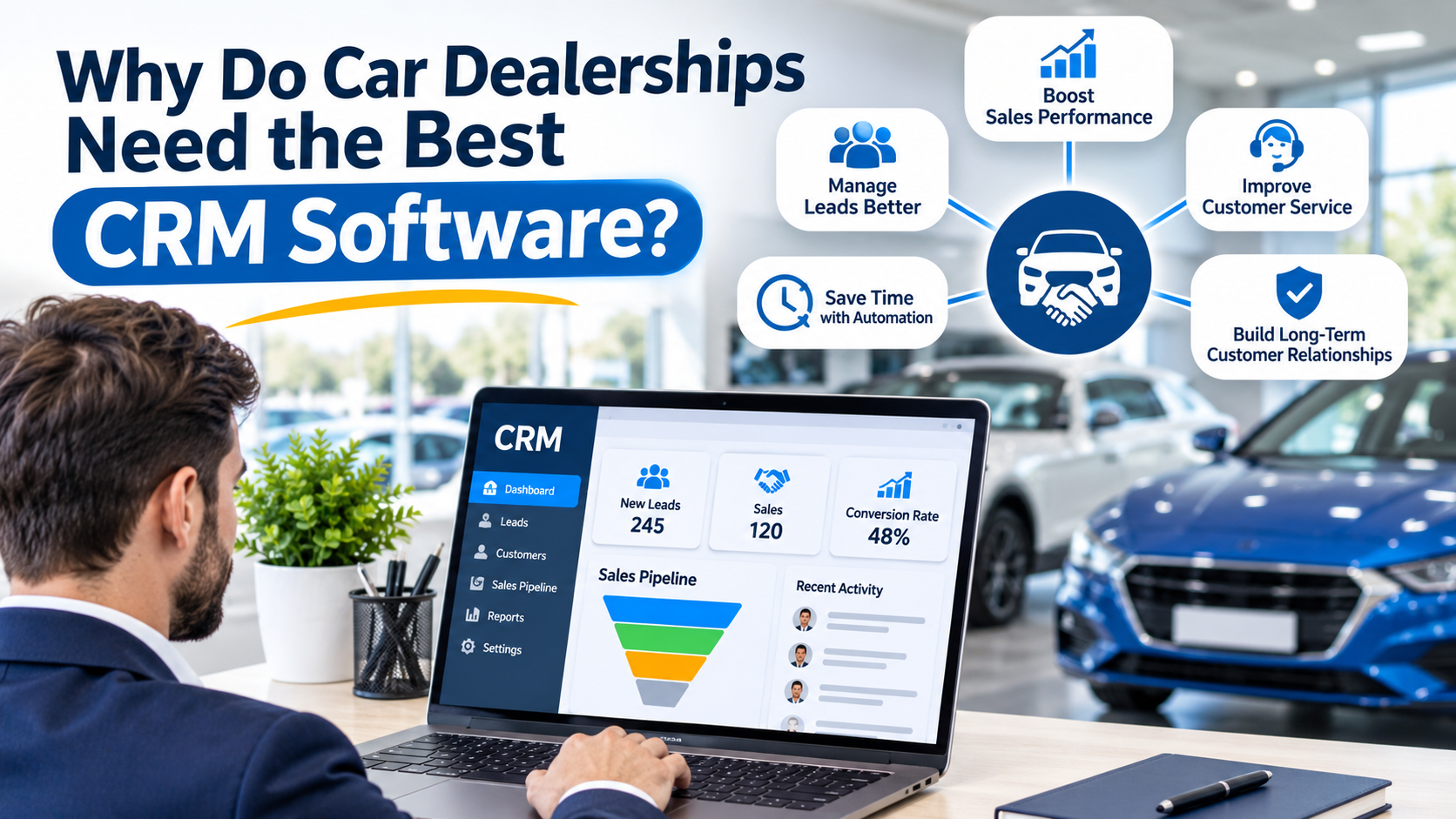
The automotive industry has become increasingly competitive, and customer expectations are changing rapidly. Today's car buyers expect quick responses, personalized communication, transparent information, and a smooth purchasing experience. Managing these expectations can be challenging for dealerships that handle multiple customer inquiries, sales opportunities, follow-ups, and service requests every day. This is where customer relationship management (CRM) software becomes valuable.
The best CRM for car dealerships helps automotive businesses organize customer information, manage sales leads, automate follow-ups, and monitor sales activities from one centralized platform. Instead of relying on spreadsheets, manual records, or disconnected communication channels, dealerships can use CRM technology to improve daily operations and build stronger customer relationships.
Understanding how CRM software works and why it matters can help dealership owners make better decisions about managing their sales processes and improving business performance.
What Is CRM Software for Car Dealerships?
Customer Relationship Management (CRM) software is a digital platform designed to help businesses manage interactions with existing and potential customers. In the automotive industry, CRM systems are developed to support dealership activities such as lead management, vehicle inquiries, customer communication, sales tracking, and follow-up scheduling.
A dealership CRM collects customer information from different sources, including websites, phone calls, online advertisements, social media, and showroom visits. It stores these details in a centralized database, allowing sales representatives to access customer records and track every interaction.
For example, when someone submits an inquiry about a particular vehicle through a dealership website, the CRM can capture the lead, assign it to a salesperson, and help the team schedule a follow-up.
This organized approach makes it easier for dealerships to manage customer journeys from the first inquiry to the final purchase.
Why Do Car Dealerships Need the Best CRM Software?
Car dealerships manage multiple sales activities simultaneously. Without a structured system, important customer details can become difficult to track, follow-ups may be delayed, and sales opportunities can be missed.
Here are some important reasons dealerships benefit from using CRM software.
1. Better Lead Management
Lead management is one of the most important responsibilities of a car dealership. Potential buyers may contact a dealership through multiple channels, and managing every inquiry manually can create confusion.
The best CRM for car dealerships helps collect and organize leads in one place. Sales teams can view customer details, vehicle preferences, inquiry sources, and communication history without switching between different platforms.
Dealerships can also categorize leads based on their buying interests and sales readiness. This allows sales representatives to prioritize promising opportunities and respond to customers more effectively.
2. Faster Customer Follow-Ups
Responding to potential buyers at the right time can influence their purchasing decisions. When dealerships receive several inquiries daily, remembering every follow-up becomes difficult.
CRM software helps sales teams schedule reminders, track pending conversations, and automate certain follow-up activities. Representatives can see which customers need attention and when they should make their next contact.
Timely communication helps dealerships maintain customer interest and reduces the chances of losing potential buyers because of delayed responses.
3. Centralized Customer Information
Customer information is often spread across emails, phone records, spreadsheets, and messaging applications. This makes it challenging for dealership employees to access complete customer histories.
A CRM system brings important information together in a centralized database.
Sales representatives can access details such as:
-
Customer names and contact information.
-
Preferred vehicle models and specifications.
-
Previous inquiries and interactions.
-
Purchase interests and budget preferences.
-
Follow-up schedules and sales progress.
-
Communication and appointment history.
Having this information readily available helps employees understand customer requirements and provide more relevant assistance.
4. Improved Sales Team Productivity
Managing leads, updating records, preparing reports, and scheduling calls can consume a significant amount of time. These repetitive administrative tasks may reduce the time sales representatives spend interacting with potential buyers.
Automotive CRM software helps simplify these activities through organized workflows and automation.
Sales managers can assign leads, monitor employee activities, and review the progress of different opportunities. This improves coordination between team members and helps dealerships maintain a more organized sales process.
5. Better Customer Communication
Modern customers use different communication channels when researching and purchasing vehicles. They may contact dealerships through phone calls, emails, website forms, social media, or messaging applications.
A CRM platform helps dealerships maintain organized communication records and track customer interactions across supported channels.
When sales representatives can review previous conversations, they are better prepared to answer questions and provide consistent information.
This creates a more professional customer experience and helps build long-term relationships.
6. More Effective Sales Performance Tracking
Understanding sales performance is essential for dealership growth. Managers need accurate information about lead generation, conversion rates, employee productivity, and ongoing sales opportunities.
CRM reporting and analytics tools provide useful insights into these activities.
Dealership managers can monitor:
-
Total leads received.
-
Lead sources and campaign performance.
-
Follow-up completion rates.
-
Sales representative performance.
-
Lead-to-sale conversion rates.
-
Current and completed sales opportunities.
These insights help management identify weaknesses, evaluate sales strategies, and make informed business decisions.
7. Improved Customer Retention
A dealership's relationship with a customer should not end after a vehicle purchase. Maintaining communication with existing customers can create opportunities for repeat purchases, referrals, and after-sales services.
CRM systems help dealerships maintain customer records and schedule future interactions.
For example, a dealership can use customer history to send service reminders, share relevant vehicle updates, or follow up with previous buyers when they may be interested in another vehicle.
Consistent communication helps strengthen customer relationships and supports long-term business growth.
What Features Should Dealerships Look for in CRM Software?
Not every CRM platform offers the same capabilities. Dealerships should evaluate their business requirements before selecting a solution.
Some important features to consider include:
Lead Capture and Distribution
The CRM should collect inquiries from different sources and distribute them to the appropriate sales representatives. Automated lead assignment can help ensure that inquiries receive timely attention.
Sales Pipeline Management
A visual sales pipeline helps employees understand where each potential customer stands in the purchasing process. It can include stages such as new inquiry, contacted, interested, test drive scheduled, negotiation, and completed sale.
Follow-Up Automation
Automated reminders and scheduled communication help sales representatives stay connected with potential buyers without manually tracking every interaction.
Customer Database Management
A centralized customer database allows dealerships to store contact details, vehicle preferences, inquiry histories, and previous transactions.
Reporting and Analytics
Reporting tools help managers evaluate lead performance, sales activities, conversion rates, and team productivity.
Integration Capabilities
A useful CRM should support integration with relevant dealership systems and communication platforms. Depending on business requirements, this may include dealer management systems (DMS), websites, email platforms, advertising channels, and messaging applications.
Mobile Accessibility
Mobile-friendly CRM access allows sales representatives and managers to review customer information, update lead statuses, and manage follow-ups while working outside the office.
How Does CRM Software Improve the Car Buying Journey?
The car buying journey usually involves several stages, from initial research to vehicle selection and final purchase. CRM software helps dealerships manage these stages more effectively.
Initial Inquiry: When a potential buyer contacts the dealership, the CRM captures their information and records their vehicle interests.
Lead Assignment: The inquiry is assigned to an appropriate sales representative, helping ensure that the customer receives attention.
Customer Interaction: The salesperson contacts the buyer, understands their requirements, and updates the CRM with relevant details.
Vehicle Selection and Test Drive: The dealership records vehicle preferences, schedules appointments, and tracks customer feedback.
Negotiation and Purchase: Sales representatives monitor the opportunity and update its status as the customer moves toward a purchase decision.
After-Sales Communication: Once the sale is completed, customer information remains available for future communication, service reminders, and relationship management.
This structured process helps dealerships deliver a more consistent and organized buying experience.
How to Choose the Right CRM for Your Car Dealership
Selecting the right CRM requires more than comparing software prices or feature lists. Dealership owners should consider how a platform fits their existing operations and future business goals.
Here are some factors to evaluate:
-
Understand Your Requirements: Identify the challenges your dealership faces in lead management, customer communication, and sales tracking.
-
Compare Essential Features: Look for lead capture, automated follow-ups, sales pipeline management, reporting, and customer database capabilities.
-
Check Integration Options: Make sure the CRM can work with the tools and systems your dealership already uses.
-
Evaluate Ease of Use: A straightforward interface can help employees learn the system and adopt it more easily.
-
Consider Scalability: Choose software that can support additional users, locations, and business activities as your dealership grows.
-
Review Training and Support: Reliable technical support and employee training can make implementation easier.
The right CRM should simplify dealership operations rather than introduce unnecessary complexity.
Conclusion
Managing customer relationships, sales inquiries, and follow-ups effectively is essential for modern automotive businesses. As dealerships handle more digital inquiries and customer interactions, manual processes become increasingly difficult to manage.
The best CRM for car dealerships provides a centralized solution for organizing customer information, tracking leads, automating follow-ups, and monitoring sales performance. It also helps sales teams communicate more effectively and maintain stronger relationships with potential and existing buyers.
By evaluating essential features, integration options, usability, and scalability, dealership owners can select a CRM solution that supports their operational requirements and long-term business objectives.
Frequently Asked Questions (FAQs)
1. Why is CRM software important for car dealerships?
CRM software helps car dealerships manage customer information, organize sales leads, schedule follow-ups, monitor sales activities, and improve communication throughout the buying journey.
2. What is the best CRM for car dealerships?
The best CRM depends on a dealership's requirements, business size, sales processes, and budget. Dealerships should look for features such as lead management, sales tracking, follow-up automation, reporting, and integration capabilities.
3. How does CRM software help car sales teams?
CRM software allows sales representatives to organize customer inquiries, track conversations, schedule follow-ups, and monitor opportunities. This helps teams manage their daily activities more efficiently.
4. Can CRM software automate dealership follow-ups?
Yes. Many CRM platforms offer automated reminders, scheduled tasks, and communication workflows that help sales teams follow up with potential customers at appropriate times.
5. What is the difference between automotive CRM and DMS?
Automotive CRM focuses primarily on customer relationships, lead management, and sales communication. A Dealer Management System (DMS) generally supports broader dealership operations, including inventory, accounting, vehicle transactions, and service management. Some dealership platforms integrate both types of functionality.
6. Is CRM software suitable for small car dealerships?
Yes. Small dealerships can use CRM software to organize customer records, manage inquiries, track sales opportunities, and improve follow-up processes without relying on complicated manual systems.

 Arabic
 French
 Spanish
 Portuguese
 Deutsch
 Turkish
 Dutch
 Italiano
 Russian
 Romaian
 Portuguese (Brazil)
 Greek
