


The Mother of the Bride Gown Guide: Fit, Fabric, Color, and Timing
Introduction
That is why choosing a mother of the bride gown is different from ordinary formal shopping. Silhouette, fit, color, fabric, comfort, and timing all matter, particularly when the gown is being made to order.
Why This Gown Deserves a Different Approach
Most formal-dress advice focuses on making an entrance. The mother of the bride role is more nuanced. You want to look elegant and distinctive while remaining in harmony with the wedding itself. You may also be on your feet far longer than the average guest, through photographs, greetings, dinner, toasts, and dancing.
That makes comfort and movement part of elegance. A gown can be visually extraordinary, but if the neckline needs constant adjustment or the skirt makes walking difficult, it will affect how you experience the day.
Start With Silhouette, Not a Size Number
One of the most useful ways to begin is to think about silhouette before becoming attached to a size number. Designer sizing can differ from familiar retail sizing, and two women who wear the same labeled size may have very different proportions.
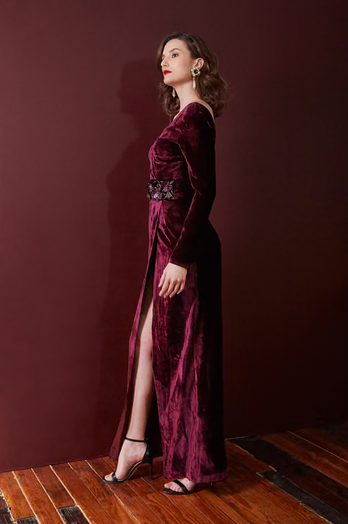
Instead, consider how a shape works with your height and proportions. A softly flared skirt can create graceful movement. A fluid column can produce a long, elegant line. A defined waist and fuller skirt can create a classic silhouette. The important question is not whether your body conforms to a particular gown, but whether the gown works beautifully with you.
A personal fitting can be especially valuable because it shows how the neckline, bodice, waist, hips, and length actually sit on the individual wearer, something a size chart alone cannot fully reveal.
Fit Is Where It All Comes Together
A beautifully designed gown can still feel wrong if the fit is wrong. A useful test is wonderfully practical: can you sit comfortably through dinner, raise your arms for a hug, walk naturally, and dance without repeatedly adjusting the dress?
The bodice should feel secure without unnecessary pulling or gaping. Necklines and straps should sit comfortably. For a floor-length gown, hem length should also be considered with the shoes you plan to wear. Small details can make a significant difference over the course of a long wedding day.
Choosing Color That Coordinates Without Matching
The mother of the bride does not have to match the bridesmaids. The goal is coordination with the wedding palette, venue, season, and degree of formality rather than uniformity.
Rich blues, lavenders, metallics, jewel tones, and other sophisticated shades can work beautifully, but there is no single palette that suits every wedding or every woman. The bride's preferences should always be respected, particularly regarding white, ivory, or shades that might appear bridal. A conversation with the mother of the groom about the overall level of formality can also help the two looks feel harmonious without making them identical.
Let Fabric Support the Silhouette
Fabric affects the way a gown looks, moves, and feels. Tulle and chiffon can add softness and movement. Silk and satin can create fluidity, sheen, or a cleaner line depending on the weave and construction. Embroidery, beadwork, appliqué, crystals, and other embellishments add dimension and can transform a simple silhouette into something memorable.
Decorative details can also make alterations more involved, because moving a seam may affect the placement of embroidery or beadwork. That makes early attention to sizing and fit particularly worthwhile.
What Made-to-Order Really Means
A made-to-order gown is produced after the customer places an order rather than being pulled from finished retail inventory. It is generally created according to the designer's established design, construction, and size range. Made-to-order should not be confused with bespoke, in which a garment is created specifically around an individual client's measurements and requirements.
For a clearer explanation of these differences, read Made-to-Order vs. Custom Evening Gowns.
Himelhoch's® Atelier offers made-to-order evening gowns by New York designer Lavanya Coodly. For clients who can travel to New York City, a complimentary personal fitting with the designer is available by appointment. The fitting allows the gown to be evaluated on the woman herself and provides an opportunity to discuss fit directly with the designer.
Planning Your Timeline
Himelhoch's® Atelier gowns generally require approximately 8 to 10 weeks for made-to-order production. For a wedding with a fixed date, allowing additional time for fitting, any appropriate final alterations, shoes, and accessories can make the process considerably less stressful.
Beginning the search several months before the wedding gives you time to choose thoughtfully rather than simply choosing what happens to be immediately available.
Exploring different Evening Gowns early also gives you time to consider silhouettes, fabrics, and designs before placing your order.
Frequently Asked Questions
Q: How formal should a mother of the bride gown be?
Let the wedding's dress code, venue, time of day, and the bride's preferences guide you. A black-tie evening wedding will generally call for a more formal gown than a daytime or outdoor celebration.
Q: Does the mother of the bride have to match the bridesmaids?
No. Coordination is usually more important than matching. Choose a color and silhouette that suit you while complementing the wedding's overall palette and degree of formality.
Q: How long does a made-to-order gown take?
Himelhoch's® Atelier gowns generally require approximately 8 to 10 weeks for made-to-order production. Allow additional time before the event for a fitting and any appropriate final adjustments.
Q: Does made-to-order mean custom-fit?
No. Made-to-order and bespoke are different. A made-to-order gown is produced after it is ordered according to the designer's established design and sizing. A personal fitting can then help evaluate how the gown sits on your individual body.
Q: What colors should the mother of the bride avoid?
There is no universal rule beyond respecting the bride's wishes. White, ivory, and other shades that could appear bridal are generally best avoided unless the bride specifically requests otherwise.
Final Thoughts
The right mother of the bride gown is one that allows you to feel elegant, comfortable, and fully present for an important day. Start with the silhouette rather than the size label, choose a fabric and color that suit both you and the occasion, and give yourself enough time for the process.
The woman should not have to conform to the gown. The goal is for the gown to work beautifully with the woman.
For more insight into the value of personalized fit and made-to-order design, explore Is a Made-to-Order Evening Gown Worth It?

 English
 Arabic
 French
 Spanish
 Portuguese
 Deutsch
 Turkish
 Dutch
 Italiano
 Russian
 Portuguese (Brazil)
 Greek
