


What an Aura Reader May Explain About Energy Patterns and Emotional States
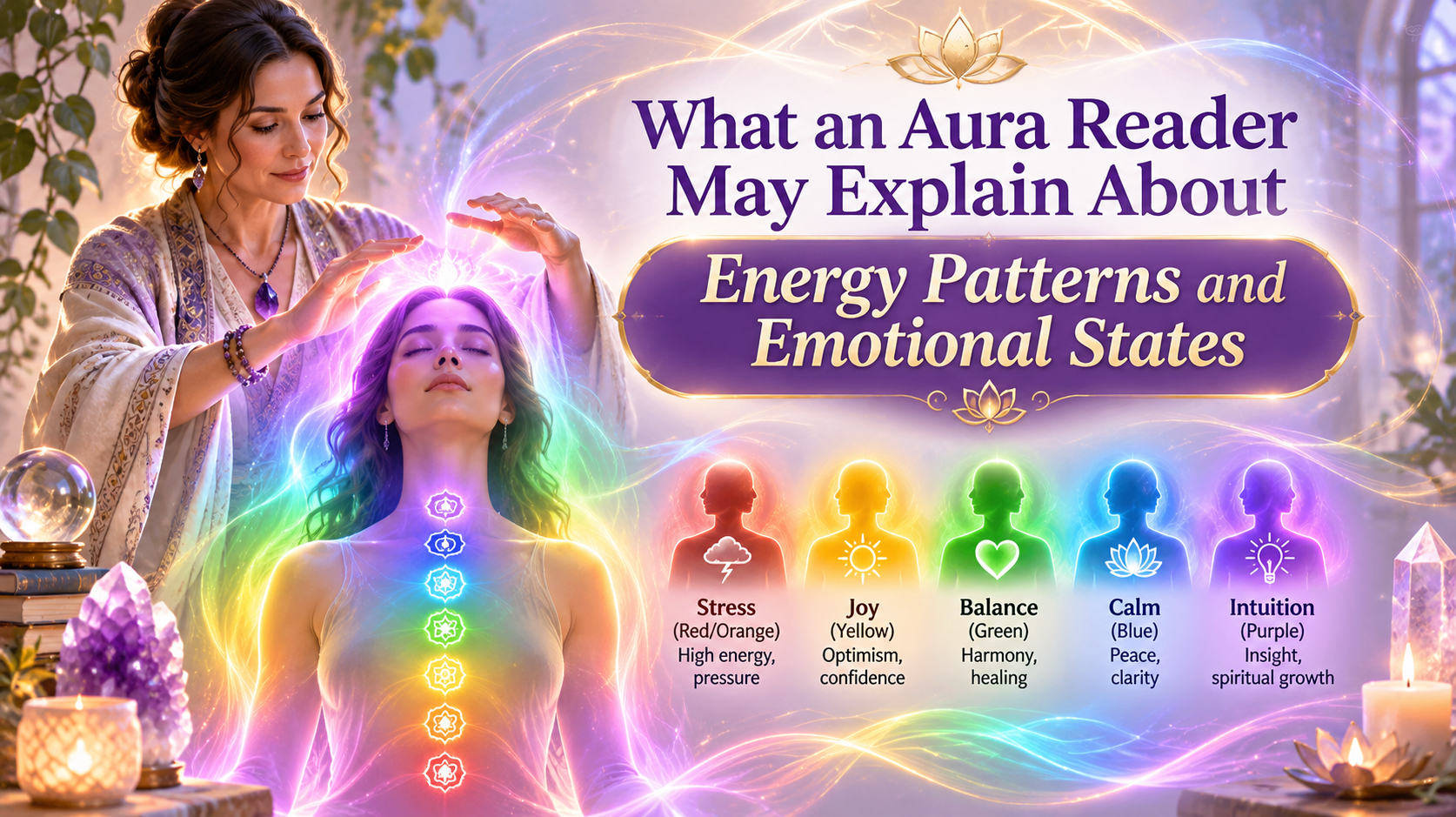
Excerpt:
An aura reader may interpret symbolic energy patterns and colors using traditional spiritual beliefs and intuitive practices.
These interpretations often explore themes related to emotions, communication, personal growth, and everyday experiences.
Understanding how aura reading works can help individuals approach a session with curiosity and realistic expectations.
Introduction
People experience a wide range of emotions throughout their daily lives.
Happiness, uncertainty, enthusiasm, frustration, and calmness can all influence how someone thinks and responds to situations.
Some spiritual traditions describe these experiences through the concept of personal energy.
Within these traditions, an aura reader interprets a subtle energy field believed to surround an individual.
The practitioner may discuss colors, patterns, or intuitive impressions and connect them with symbolic meanings.
However, these interpretations do not scientifically establish a person's emotional condition.
Learning what an aura reader may discuss can help you understand the purpose and limitations of a session.
What Does an Aura Reader Do?
An aura reader is someone who practices the spiritual interpretation of a person's perceived aura.
The methods used can vary considerably.
Some practitioners rely on intuitive impressions, while others incorporate visualization, meditation, or established spiritual color associations.
During an aura reading, the practitioner may discuss perceived colors or patterns and explain what those elements traditionally represent.
The session may also involve conversation about the participant's personal experiences or interests.
These discussions are interpretive rather than diagnostic.
Understanding Energy Patterns in Aura Reading
In aura-related traditions, energy patterns are symbolic descriptions of a person's perceived spiritual state.
Practitioners may use terms such as balanced, active, calm, or unsettled.
These descriptions do not correspond to scientifically measured energy patterns.
Instead, an aura reading expert may use them to explain broader themes such as motivation, emotional awareness, or personal development.
For example, a practitioner might describe a pattern as representing a period of transition or reflection.
The participant can decide whether the interpretation feels relevant to their own experience.
How Aura Colors Are Traditionally Interpreted
Colors are commonly used to explain aura-related concepts.
Different traditions may associate particular colors with certain qualities.
Red and Physical Activity
Red is often associated with vitality, action, and determination.
An aura reader may use red symbolism when discussing motivation or activity.
This does not mean that a red aura scientifically proves a particular personality trait.
Orange and Creativity
Orange is sometimes connected with creativity, enthusiasm, and self-expression.
A practitioner may interpret it as a symbol of exploration or new ideas.
Yellow and Confidence
Yellow is commonly associated with optimism, learning, and confidence.
An aura reading expert may introduce these themes during a discussion.
Green and Relationships
Green is often associated with compassion, personal growth, and relationships.
Its symbolic meaning may encourage reflection on how someone connects with others.
Blue and Communication
Blue is frequently associated with calmness and communication.
An aura reader may discuss expression, listening, or emotional awareness when interpreting this color.
Violet and Spiritual Reflection
Violet is sometimes associated with intuition, contemplation, and spirituality.
The interpretation depends on the practitioner's spiritual framework.
These meanings vary and should not be treated as scientifically verified descriptions of a person.
Can an Aura Reader Identify Your Emotional State?
An aura reader may offer an interpretation that refers to emotional themes.
However, there is no reliable scientific evidence that an aura reading can identify someone's actual emotional state.
Emotions are complex and can change depending on many factors.
A person's feelings are better understood through their own experiences, communication, and appropriate psychological assessment when needed.
An aura reading may introduce ideas for reflection, but it should not replace these methods.
Why Practitioners May Discuss Emotional Patterns
Emotional themes are common in spiritual readings because people often seek experiences that help them reflect on their lives.
A practitioner may discuss uncertainty, confidence, relationships, or personal boundaries.
These topics can encourage conversation.
However, an interpretation should not be presented as a hidden fact that the practitioner has proven about the participant.
A respectful aura reader should allow individuals to disagree with or question an interpretation.
What Is the Difference Between Aura Reading and Emotional Assessment?
Aura reading is a spiritual practice based on subjective interpretation.
Emotional or psychological assessment involves established professional methods, depending on the purpose of the assessment.
The two should not be confused.
An aura practitioner cannot use a reading to diagnose anxiety, depression, or another medical or mental health condition.
Anyone seeking support for persistent emotional difficulties should consult a qualified healthcare or mental health professional.
What Happens During a Session?
A session may begin with a short introduction.
The practitioner might explain the technique being used and ask whether the participant has any specific interests.
The aura reading expert may then share symbolic impressions, colors, or patterns.
Participants can ask for clarification about unfamiliar terms.
The session may finish with a summary of the themes discussed.
The exact format depends on the practitioner.
Can an Aura Reader Online Interpret Energy Patterns?
Some practitioners provide aura-related sessions remotely.
An aura reader online may use video calls, conversation, guided visualization, or intuitive methods.
The practitioner may offer similar symbolic interpretations to those used in person.
However, there is no scientifically validated method for detecting an aura remotely.
It is therefore important to understand that the session is a spiritual experience rather than a verified energy assessment.
Questions You Can Ask an Aura Reader
Asking clear questions can make the experience easier to understand.
You might ask:
-
What method do you use during the reading?
-
How do you interpret different colors?
-
Are color meanings consistent across spiritual traditions?
-
How should I understand an interpretation that does not feel relevant?
-
Can I use the session as a personal reflection exercise?
-
What information do you need before we begin?
These questions encourage transparency and help establish realistic expectations.
How to Evaluate an Aura Reader's Approach
Look for practitioners who communicate clearly and respectfully.
An aura reader should explain that the practice is interpretive and should avoid making guaranteed claims about health, relationships, finances, or future events.
Transparent fees and clearly described session formats are also important.
Clients should never feel pressured to accept interpretations or purchase additional services.
Conclusion
An aura reader may explain symbolic energy patterns, colors, and emotional themes within a spiritual framework.
These interpretations can encourage discussion about personal experiences, but they are not scientifically established methods of identifying emotional states.
Whether you consult an aura reading expert in person or an aura reader online, understanding the practice's limitations is important.
Approaching aura reading as a reflective spiritual experience can help you engage with the discussion without treating subjective interpretations as verified facts.

 English
 Arabic
 French
 Spanish
 Portuguese
 Deutsch
 Turkish
 Italiano
 Russian
 Romaian
 Portuguese (Brazil)
 Greek
