


Cross Border Payments: How Businesses Can Reduce Friction in International Transactions
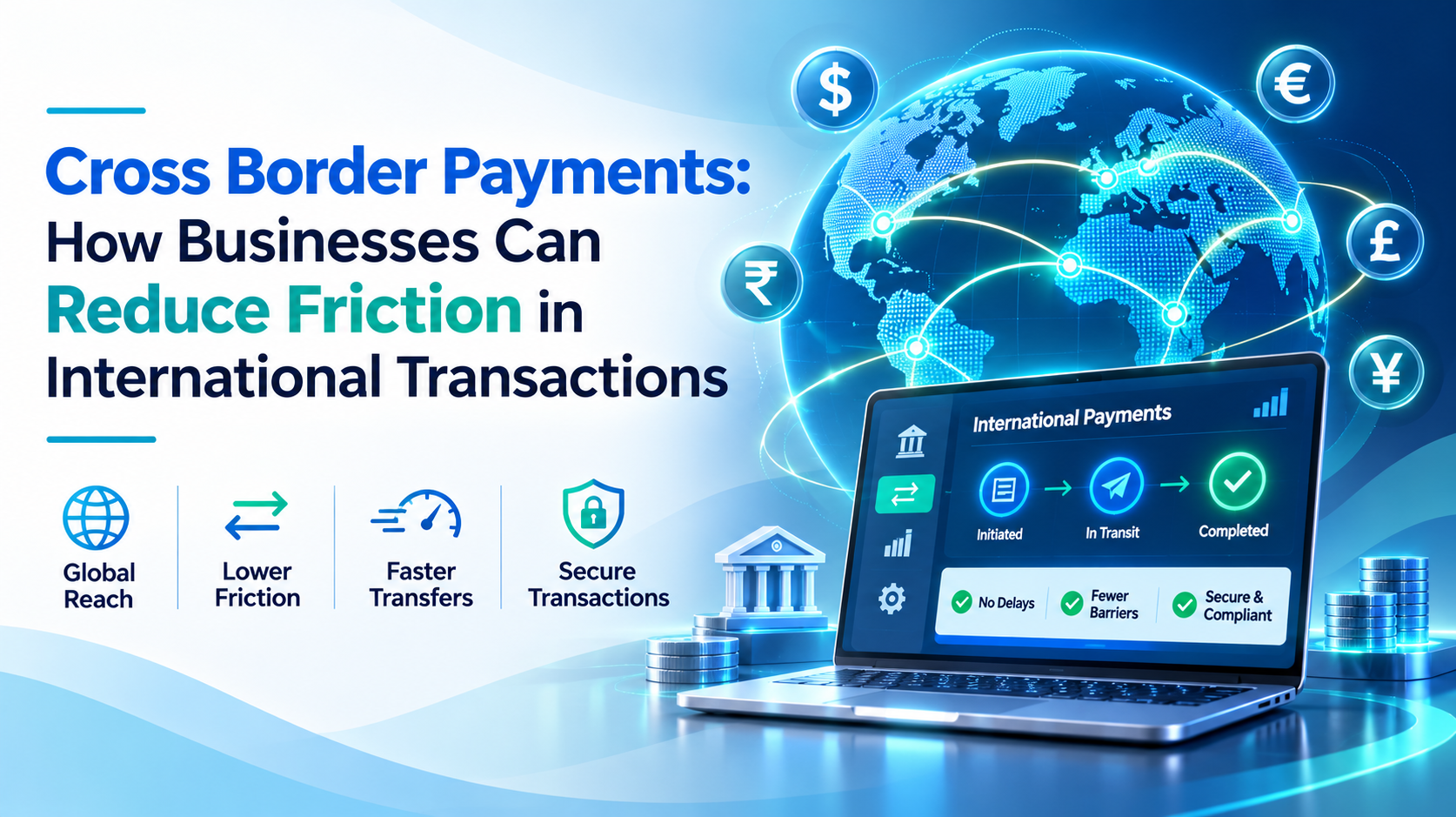
Excerpt
International transactions can become complicated when businesses deal with different currencies, payment processes, settlement periods, and financial systems.
Efficient cross border payments help companies reduce unnecessary friction and create smoother relationships with customers, suppliers, and partners.
The right payment infrastructure can improve transaction visibility, operational efficiency, and financial control across global markets.
Introduction
International business no longer belongs only to large multinational organizations. Companies of different sizes now sell products, purchase services, work with suppliers, and build partnerships across borders.
However, international transactions remain more complicated than many domestic payments.
Businesses may encounter differences in payment methods, currencies, banking systems, settlement expectations, documentation, and operational processes.
These factors can create payment friction.
A transaction may take longer than expected, finance teams may struggle to track its status, or a supplier may need additional information before confirming payment.
Modern payment solutions can help businesses reduce these challenges by creating a more structured process for international transactions.
What Creates Friction in Cross Border Payments?
Payment friction can arise at several stages of an international transaction.
A customer may not find a convenient payment method. A finance team may lack clear settlement information. A supplier may have difficulty identifying an incoming payment. Currency conversion can complicate reconciliation, while disconnected systems can increase manual work.
Each additional step increases operational effort.
As transaction volumes grow, small inefficiencies can become significant business problems.
Companies therefore need to evaluate the complete international payment workflow rather than focusing only on whether money can move from one country to another.
Improving Payment Transparency
Businesses need to know what is happening with their international transactions.
Lack of visibility is a common source of friction in cross border payments.
Finance teams may spend time checking whether a payment has been processed, settled, returned, or delayed.
A structured business payment solution can help organize transaction information so that teams can monitor payment status more effectively.
Better visibility can also reduce repeated communication between customers, suppliers, finance teams, and other departments.
Simplifying Payment Reconciliation
International transactions can create reconciliation challenges because invoice values, settlement values, currencies, or transaction references may differ.
If reconciliation depends heavily on manual work, errors become more likely as payment volumes increase.
Businesses can reduce friction by creating standardized processes for identifying and matching transactions.
Modern payment infrastructure can support more consistent transaction data, making it easier for finance teams to connect payments with invoices and customer records.
Efficient reconciliation improves financial accuracy and reduces the time required to resolve transaction discrepancies.
Managing B2B Cross Border Payments
International B2B transactions require careful management because they may involve higher values, supplier relationships, contractual terms, and recurring payment schedules.
Efficient b2b cross border payments can strengthen relationships between businesses by making payment processes more predictable.
Suppliers want to know when they will receive funds. Buyers need accurate transaction records. Finance teams need visibility for accounting and cash flow planning.
A structured payment process helps all parties work with clearer expectations.
For businesses with multiple international suppliers, consistent payment workflows can significantly reduce administrative complexity.
Offering Suitable Payment Options
Companies selling internationally should consider the payment preferences of customers in each market.
A payment method that is common in one region may not be the preferred option elsewhere.
Flexible online payment solutions can help businesses provide digital payment experiences that align more closely with market requirements.
Giving customers convenient ways to complete transactions reduces unnecessary barriers during the payment process.
This becomes particularly important for companies entering a new country where customers may have different expectations regarding digital payments.
Improving Pay-in Processes
International businesses do not only need to send money. They also need efficient methods for receiving it.
Pay-in services can support incoming payment collection through organized channels.
A structured Pay-in process can make it easier for businesses to track customer transactions, monitor collections, and reconcile incoming funds.
This is especially valuable when a company serves customers across several markets.
Better collection processes reduce the risk of payment information becoming fragmented across different platforms.
Connecting Payments With Internal Systems
Payment friction often comes from disconnected technology.
Finance teams may need to transfer information manually between payment platforms, accounting software, enterprise systems, and internal spreadsheets.
This increases workload and creates more opportunities for data errors.
Businesses should evaluate whether their payment infrastructure can integrate effectively with the systems already used across the organization.
A connected payment workflow can reduce repetitive tasks and make transaction information available to the teams that need it.
Standardizing International Payment Processes
As companies expand internationally, different regional teams may develop their own payment processes.
This can make financial management inconsistent.
Standardizing key parts of the payment workflow can reduce complexity.
For example, businesses can create consistent procedures for transaction approval, invoice references, reconciliation, settlement monitoring, and exception handling.
Standardization also makes it easier to train new employees and maintain accurate financial controls as operations expand.
Improving Security Without Adding Unnecessary Complexity
Security remains essential when managing international payments.
However, payment processes should also remain practical for legitimate users.
Businesses need security controls that protect transactions while maintaining efficient workflows.
The right balance depends on the transaction type, payment value, market, and business risk.
Companies should therefore evaluate security as part of the complete payment experience rather than treating it as a separate operational issue.
Reducing Administrative Work
International payment friction often increases administrative work.
Employees may spend time manually checking transactions, requesting payment confirmations, updating records, or resolving mismatched payment information.
Modern payment solutions can help businesses automate suitable parts of these processes.
Reducing repetitive work allows finance teams to concentrate on exceptions and higher-value financial activities.
Automation also becomes increasingly valuable when transaction volumes rise.
Improving the Experience for Suppliers and Partners
Payment processes affect business relationships.
Suppliers and international partners value predictability.
Repeated payment delays, unclear references, or inconsistent processes can create unnecessary tension.
Reliable business payments can improve these relationships by creating more transparent and organized transaction workflows.
When payment processes work efficiently, suppliers can manage their own cash flow more confidently.
This can support stronger long-term commercial relationships.
Preparing for Higher International Transaction Volumes
Businesses should consider future transaction requirements when selecting payment infrastructure.
A system may work effectively when international volumes are small but become difficult to manage as the organization expands.
A scalable payment environment should support additional markets, customers, suppliers, and transactions without creating excessive administrative workload.
Planning for scalability early can help companies avoid major payment process changes later.
Uniteller and International Payment Considerations
Companies evaluating international payment providers may include Uniteller among the options they review.
The appropriate choice depends on factors such as target markets, transaction requirements, integration needs, payment flows, and business structure.
Organizations should compare providers based on how effectively they can support the complete international payment process.
The objective is not simply to move funds but to create an efficient financial workflow around international transactions.
Conclusion
International payment friction can affect cash flow, supplier relationships, customer experience, and finance team productivity.
Businesses can reduce these challenges by creating clearer and more consistent processes for cross border payments.
A suitable business payment solution can improve transaction visibility, while flexible online payment solutions and efficient Pay-in services can make payments easier to manage across markets.
Companies handling regular b2b cross border payments should also focus on reconciliation, standardization, internal integration, and payment transparency.
By developing a structured approach to business payments, organizations can reduce operational friction and build payment infrastructure that supports sustainable international growth.

 English
 Arabic
 French
 Spanish
 Portuguese
 Deutsch
 Turkish
 Dutch
 Italiano
 Russian
 Romaian
 Portuguese (Brazil)
