


BIS Certification in India: Process, Documents and Benefits
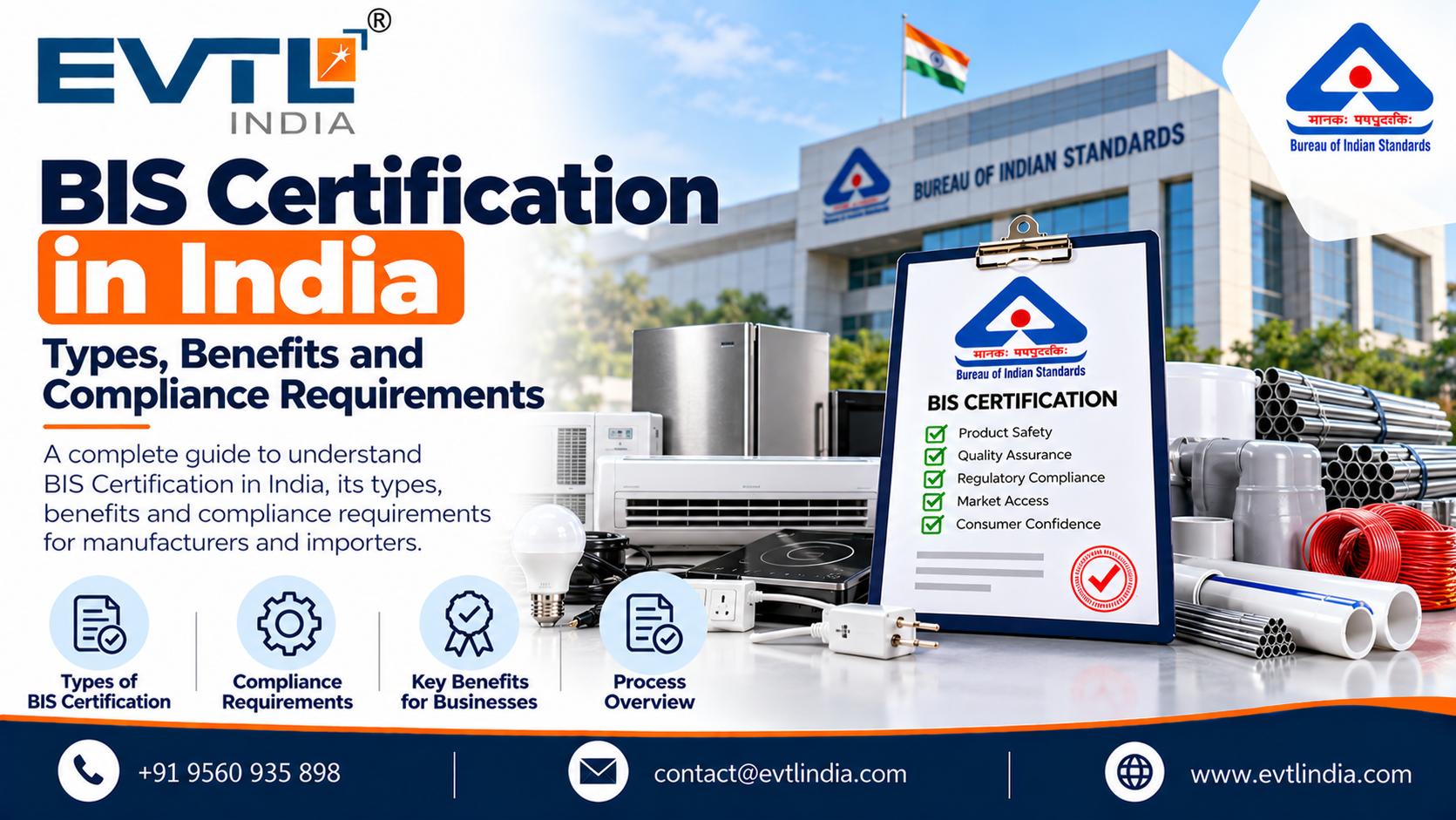
BIS Certification plays an important role in ensuring the quality, safety and reliability of products sold in the Indian market. The Bureau of Indian Standards (BIS) is India's national standards body, responsible for developing Indian Standards and implementing product certification schemes. For manufacturers and importers, obtaining the required BIS Certification is essential when their products fall under mandatory government regulations.
In India, BIS Certification helps businesses demonstrate that their products meet the applicable quality, safety and performance requirements. It also helps consumers make informed purchasing decisions by providing confidence in product quality.
What Is BIS Certification?
BIS Certification is a product conformity assessment process administered by the Bureau of Indian Standards. It verifies whether a product meets the requirements of the relevant Indian Standard (IS).
Depending on the product category, certification may be voluntary or mandatory. Products covered under applicable Quality Control Orders (QCOs) and government notifications must obtain the prescribed BIS approval before being manufactured, imported or sold in India.
The certification process may involve product testing, document verification and factory inspection, depending on the applicable scheme.
Types of BIS Certification in India
BIS operates different certification schemes to address the requirements of various industries and product categories.
1. ISI Mark Certification: This certification is mainly applicable to products covered under Scheme I. It allows eligible manufacturers to use the ISI Standard Mark after fulfilling the prescribed testing and assessment requirements.
2. Compulsory Registration Scheme (CRS): BIS CRS Registration applies to notified electronic and IT products. Manufacturers must obtain registration based on the applicable Indian Standard and prescribed product testing requirements.
3. Foreign Manufacturers Certification Scheme (FMCS): FMCS enables eligible manufacturers located outside India to obtain BIS certification for regulated products. The process may involve factory inspection, product testing and appointment of an Authorized Indian Representative (AIR).
4. Scheme X Certification: This scheme covers specified machinery and electrical equipment under the applicable BIS requirements.
5. Certificate of Conformity (CoC): BIS issues a Certificate of Conformity under the relevant conformity assessment provisions for products covered by applicable requirements.
Products Requiring BIS Certification
BIS Certification covers a wide range of products across different industries. The requirement depends on the applicable Indian Standard and government notification.
Some major product categories include:
-
Electrical and electronic products
-
Cement and steel products
-
Household appliances
-
Batteries and solar products
-
Toys and furniture
-
Footwear and construction materials
-
Machinery and industrial equipment
-
Cables and engineering components
Manufacturers and importers should verify the latest BIS mandatory product list and applicable QCO before starting the certification process.
BIS Certification Process in India
The BIS Certification process depends on the product and the applicable certification scheme. Generally, businesses need to follow these steps:
-
Identify the Applicable Indian Standard: Determine which Indian Standard applies to the product.
-
Prepare Required Documents: Collect business registration, manufacturing details, product specifications and other necessary documents.
-
Submit the Application: Apply through the prescribed BIS online portal under the relevant certification scheme.
-
Product Testing: Submit product samples for testing at the applicable BIS-recognised laboratory.
-
Factory Inspection: Complete factory assessment wherever required under the certification scheme.
-
Application Evaluation: BIS reviews the application, test reports and supporting documents.
-
Grant of Certification: Once all applicable requirements are fulfilled, BIS may grant the licence or registration.
Documents Required for BIS Certification
The documents required for BIS Certification vary according to the product and certification scheme. Commonly required documents include:
-
Certificate of Incorporation or business registration
-
GST registration certificate, where applicable
-
Manufacturing address and factory details
-
Product technical specifications
-
Trademark certificate or brand authorisation, where applicable
-
Manufacturing process flow chart
-
Machinery and testing equipment details
-
Product photographs and user manuals
-
Quality control and testing arrangements
-
Authorisation letter and AIR details, where required
Benefits of BIS Certification
Obtaining BIS Certification offers several advantages to manufacturers and businesses. It helps establish product credibility and demonstrates compliance with applicable Indian Standards.
Some important benefits include improved consumer confidence, better product quality assurance, regulatory compliance, enhanced brand reputation and access to markets where BIS approval is mandatory.
It also helps businesses identify product quality issues through the prescribed testing and assessment procedures.
How EVTL India Helps with BIS Certification
Understanding BIS regulations, documentation and testing requirements can be challenging, particularly for businesses dealing with multiple product categories. EVTL India provides BIS Certification consultancy services to Indian and foreign manufacturers.
From identifying the applicable Indian Standard to preparing documentation, coordinating product testing and assisting with application procedures, EVTL India supports businesses throughout their certification journey.
Whether you require ISI Mark Certification, BIS CRS Registration, FMCS Certification or Scheme X approval, getting the right guidance can make the compliance process more organised.
Conclusion
BIS Certification is an important requirement for businesses manufacturing, importing or selling regulated products in India. Understanding the applicable certification scheme, Indian Standard, documentation and testing requirements helps avoid compliance-related delays. With professional guidance from EVTL India, manufacturers can better understand the BIS Certification process and work towards meeting the necessary regulatory requirements.

 Arabic
 French
 Spanish
 Portuguese
 Deutsch
 Turkish
 Dutch
 Italiano
 Russian
 Romaian
 Portuguese (Brazil)
 Greek
