


Nearest NCV Test Centre in Bangalore: What to Expect
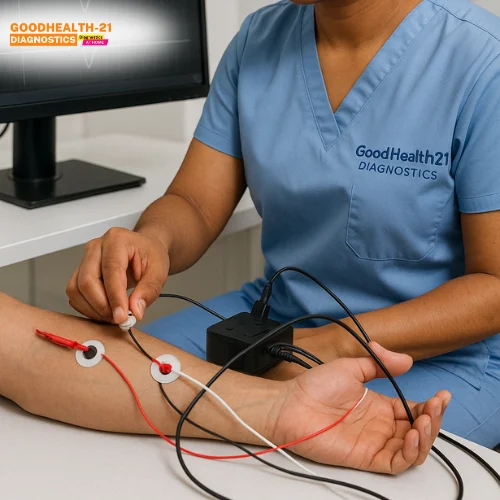
Tingling fingers, persistent numbness, burning sensations, or unexplained muscle weakness can sometimes indicate an issue with nerve function. When these symptoms continue, a doctor may recommend a nerve conduction velocity (NCV) test to understand how electrical signals travel through the nerves. Finding the Nearest NCV Test Centre in Bangalore can make scheduling this investigation more convenient, especially when follow-up testing is required. Before booking an appointment, it helps to understand how the examination works, when it is recommended, and what to look for in a diagnostic facility. Being informed can make the experience less stressful.
What Is an NCV Test and Why Is It Recommended?
A nerve conduction velocity test is a diagnostic investigation used to assess how quickly and effectively electrical signals travel through peripheral nerves. These nerves connect the brain and spinal cord to different parts of the body.
During the examination, small electrodes are placed on the skin over specific nerves. Mild electrical impulses stimulate the nerves, and the equipment records the resulting responses. These measurements help doctors evaluate nerve function and identify possible abnormalities.
An NCV test is commonly recommended when a healthcare professional suspects nerve damage, compression, or certain peripheral nerve disorders.
It is important to understand that an NCV test is different from an electromyography (EMG) examination. Although both may be performed together, NCV evaluates nerve signal transmission, while EMG assesses electrical activity in muscles.
When Should You Consider an NCV Test?
Nerve-related symptoms can develop gradually or appear suddenly. A doctor may recommend testing when symptoms persist, worsen, or interfere with everyday activities.
Common reasons include:
-
Persistent numbness: Reduced sensation in the hands, feet, fingers, or toes.
-
Tingling sensations: Repeated pins-and-needles feelings without an obvious cause.
-
Muscle weakness: Difficulty gripping objects, walking comfortably, or performing routine tasks.
-
Burning or shooting pain: Discomfort that follows the pathway of a nerve.
-
Suspected nerve compression: Conditions such as carpal tunnel syndrome may require nerve function assessment.
-
Possible peripheral neuropathy: Certain medical conditions can affect nerves and require further investigation.
If you are searching for the Nearest NCV Test Centre in Bangalore, consult your doctor first to confirm whether this investigation is appropriate for your symptoms.
How to Choose the Nearest NCV Test Centre in Bangalore
Bangalore has diagnostic facilities in several residential and commercial neighbourhoods. However, choosing a centre should involve more than selecting the closest location.
Consider these important factors before booking:
1. Qualified Medical Professionals
Check whether the examination is performed under appropriate medical supervision by trained professionals familiar with nerve conduction studies.
2. Suitable Diagnostic Equipment
Reliable testing requires equipment designed to record nerve responses accurately. Ask whether the centre offers the specific NCV examination recommended by your doctor.
3. Clear Reporting Process
The test results should be interpreted by an appropriately qualified medical professional. Ask about report availability and whether the findings can be shared with your referring doctor.
4. Convenient Accessibility
Consider travel time, parking availability, public transport connections, and appointment timings. These factors can be particularly important if you experience discomfort while travelling.
5. Transparent Pricing
Confirm the examination charges before booking. Costs may vary depending on the number of nerves examined and whether an additional EMG assessment is required.
Comparing these details can help you identify a suitable facility rather than making a decision based on distance alone.
What Happens During an NCV Examination?
Understanding the procedure beforehand can help reduce anxiety, particularly if you have never undergone nerve testing.
The examination generally follows these steps:
-
Initial assessment: The healthcare professional may ask about your symptoms, medical history, and the reason for testing.
-
Electrode placement: Small recording electrodes are attached to the skin over selected nerves and muscles.
-
Nerve stimulation: A mild electrical impulse is delivered through a stimulating electrode.
-
Signal recording: The equipment measures the response and calculates relevant parameters, including conduction velocity.
-
Result interpretation: The recorded measurements are reviewed to identify possible abnormalities.
You may experience brief tingling or mild discomfort when the electrical impulses are delivered. Most people tolerate the procedure without significant difficulty.
The duration depends on the number of nerves being examined and the complexity of the investigation.
How to Prepare for Your NCV Test
NCV testing usually requires minimal preparation. However, a few simple precautions can help ensure that the examination proceeds smoothly.
Before your appointment:
-
Wear comfortable clothing that allows easy access to the arms or legs.
-
Keep the skin clean and avoid applying lotions, oils, or creams on the examination day.
-
Inform the medical team about any implanted electrical devices or relevant medical conditions.
-
Share details of your current medications and previous nerve-related investigations.
-
Bring your doctor's prescription and earlier reports, if available.
You generally do not need to fast for a routine NCV examination. However, always follow the specific instructions provided by your diagnostic facility.
What Can NCV Test Results Reveal?
NCV results provide information about how effectively electrical signals travel through the examined nerves. Depending on the findings, doctors may identify patterns associated with nerve compression, peripheral neuropathy, or certain nerve injuries.
Results are generally assessed using measurements such as:
-
Conduction velocity: How quickly electrical signals travel along a nerve.
-
Amplitude: The strength of the recorded electrical response.
-
Latency: The time taken for a nerve to respond after stimulation.
Abnormal findings do not automatically confirm a particular disease. Doctors interpret the results alongside physical examinations, symptoms, medical history, and other investigations.
If you are considering the Nearest NCV Test Centre in Bangalore, choose a facility that provides a clear reporting process so your doctor can use the findings effectively.
Conclusion
Nerve-related symptoms should not be ignored, particularly when they persist or begin affecting daily activities. An NCV examination can provide useful information about nerve function and help doctors plan further evaluation when necessary. When looking for the Nearest NCV Test Centre in Bangalore, consider professional expertise, diagnostic equipment, reporting standards, accessibility, and transparent pricing. Most importantly, follow your doctor's recommendation and discuss your results with a qualified healthcare professional to understand the next steps.
Frequently Asked Questions
1. Is an NCV test painful?
The examination may cause brief tingling or mild discomfort when electrical impulses stimulate the nerves. Most people tolerate it well.
2. How long does a nerve conduction study take?
The procedure commonly takes around 30–60 minutes, although the duration depends on the number of nerves being examined.
3. Do I need to fast before the examination?
Fasting is generally not required. However, follow any preparation instructions provided by the diagnostic facility.
4. Can an NCV test identify carpal tunnel syndrome?
Yes. Nerve conduction studies can help assess median nerve function and support the evaluation of suspected carpal tunnel syndrome.
5. When will I receive my test report?
Reporting time varies depending on the facility and examination. Confirm the expected turnaround time when scheduling your appointment.

 Arabic
 French
 Spanish
 Portuguese
 Deutsch
 Turkish
 Dutch
 Italiano
 Russian
 Romaian
 Portuguese (Brazil)
 Greek
