


Custom DBB Ball Valve Design for Industrial Applications
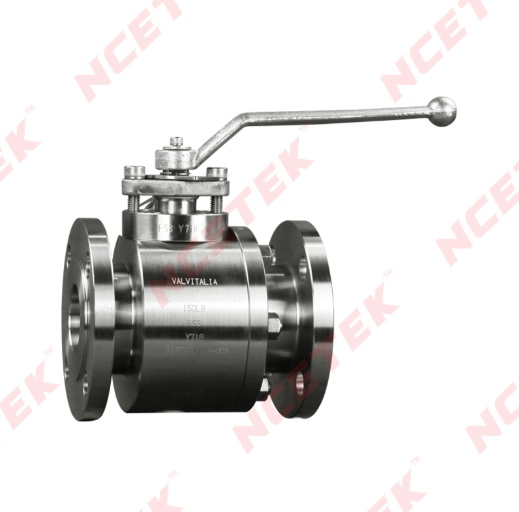
Industrial pipeline systems often require reliable isolation arrangements to support maintenance, inspection, and process safety. Double block and bleed valves are designed to provide isolation through two sealing barriers with a bleed point between them, subject to the specific valve configuration. For buyers developing customized equipment or sourcing project-specific products, Double Block and Bleed Ball Valves OEM/ODM services can help align valve design with pipeline layouts, operating conditions, and installation requirements.
The term double block and bleed, commonly abbreviated as DBB, describes an isolation function rather than one universal valve structure. In some systems, the arrangement uses two separate isolation valves with a bleed valve installed between them. In other designs, an integrated DBB valve combines the required functions within one assembly. Buyers should distinguish between these arrangements when preparing technical specifications because their dimensions, internal flow paths, installation methods, and maintenance procedures can differ.
An integrated DBB ball valve may combine multiple ball valve functions in a compact body. This configuration can reduce the number of separate components and pipeline connections required in certain installations. It may also simplify equipment layout where space is limited. However, the suitability of an integrated design depends on the process conditions, required isolation performance, maintenance access, and project standards. A manufacturer should review the intended application before recommending a particular structure.
The isolation mechanism is central to DBB performance. The primary and secondary sealing elements must be configured to provide the intended barriers, while the bleed passage allows the intermediate cavity to be vented or monitored according to the design. The arrangement may be used to verify isolation before maintenance or other controlled operations. Buyers should confirm the required operating sequence, pressure conditions, and acceptable leakage criteria during the engineering stage.
Material selection should reflect the medium and service environment. Carbon steel may be suitable for many general industrial applications, while stainless steel can be considered for services where corrosion resistance is important. Alloy materials may be evaluated for specific temperature or process requirements. Internal components, including the ball, stem, seats, and sealing elements, should also be compatible with the medium. A complete material review is preferable to selecting the body material alone.
Seat design has a direct influence on the valve's isolation characteristics. Soft-seated configurations may be used in applications where their material and temperature limits are appropriate. Metal-seated structures may be considered for certain demanding services involving higher temperatures or abrasive media. The correct arrangement depends on the required shut-off performance, operating pressure, temperature, and process fluid. Manufacturers should explain the available options and any limitations associated with each configuration.
OEM cooperation usually begins with the buyer providing an existing drawing, product specification, or reference design. The manufacturer reviews the information and evaluates whether the proposed structure can be produced within its manufacturing capabilities. Customization may involve body dimensions, connection types, material combinations, operating mechanisms, marking, and documentation. For projects with special installation requirements, the engineering team may also need to review actuator space, access to the bleed connection, and maintenance clearance.
ODM cooperation can involve a broader design process. Instead of manufacturing entirely from an existing drawing, the supplier may work with the buyer to develop a product configuration based on application requirements. This process can include reviewing pipeline conditions, discussing structural options, preparing drawings, and confirming manufacturing feasibility. Design responsibility and approval procedures should be clearly agreed upon before production starts, especially when the valve will be used in a critical process system.
Quality control must cover both manufacturing accuracy and functional performance. Relevant procedures may include raw material verification, dimensional inspection, machining checks, assembly examination, pressure testing, and functional testing. For DBB products, the inspection plan should address the relevant isolation and bleed functions in accordance with the approved design and applicable standards. Buyers should specify required test procedures, acceptance criteria, and documentation before placing an order.
The application environment also affects the final configuration. Oil and gas facilities may use DBB arrangements in pipeline isolation and process equipment. Petrochemical plants may require careful material selection for different chemical media. Storage terminals and industrial gas facilities can have specific requirements related to operating pressure, temperature, and maintenance access. A design that works in one service should not automatically be assumed suitable for another.
Communication is particularly important in customized manufacturing. Technical drawings, connection dimensions, pressure ratings, material requirements, operating methods, and inspection expectations should be confirmed before production. Changes made after machining or assembly may affect delivery schedules and manufacturing costs. A structured review process helps both parties identify design issues early and maintain consistency between approved documents and finished products.
Choosing a partner for Double Block and Bleed Ball Valves OEM/ODM projects requires evaluating engineering communication, manufacturing capability, quality management, and experience with the intended application. Buyers should request clear design documentation and confirm how the proposed DBB arrangement meets their isolation requirements. With properly defined specifications and coordinated production, customized valve solutions can be integrated more effectively into industrial pipeline systems. For available valve products and manufacturing information, visit https://www.ncevalve.com/product/

 English
 Arabic
 French
 Spanish
 Portuguese
 Deutsch
 Dutch
 Italiano
 Russian
 Romaian
 Portuguese (Brazil)
 Greek
