


Healthcare Business Licensing Opportunities – Discovering Practical Ways to Build a Thriving Healthcare Enterprise
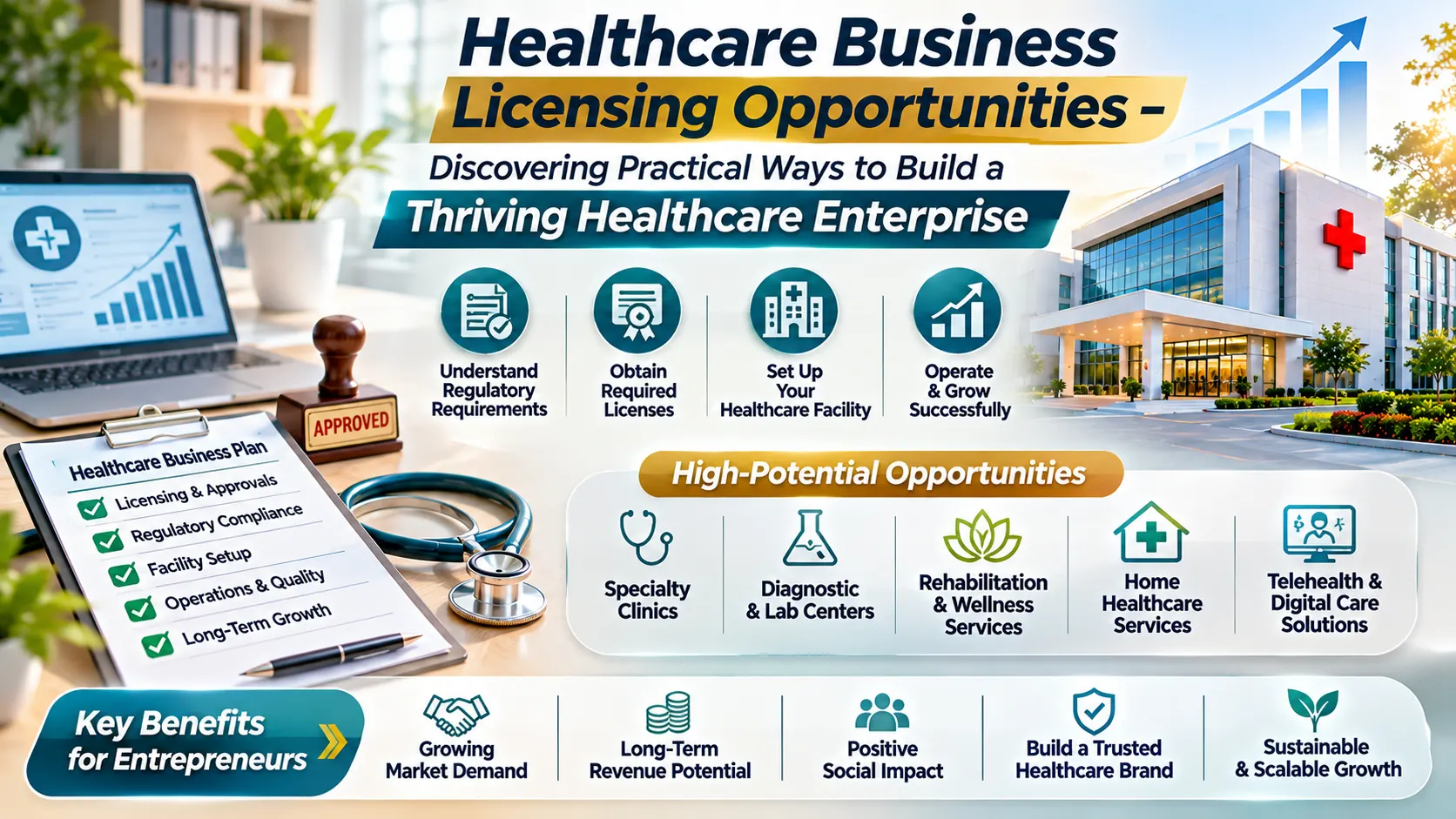
Healthcare business licensing opportunities are giving entrepreneurs fresh reasons to explore a sector where professional services, community needs, and thoughtful business development come together. As people seek easier access to healthcare support, there is growing interest in services that offer convenience without compromising safety or professional standards.
For someone considering a new healthcare venture, the possibilities can seem attractive. Yet choosing a service is only one part of the journey. Licensing requirements, financial commitments, staffing, and operational readiness can all influence whether an idea becomes a sustainable business.
The most effective approach is to understand the market first, develop a focused service model, and prepare for the responsibilities that come with healthcare entrepreneurship.
Healthcare Business Licensing Opportunities in an Evolving Service Market
Healthcare businesses are increasingly expected to provide more than professional expertise. Customers also appreciate straightforward booking procedures, reliable communication, convenient service access, and organized follow-up support.
Healthcare business licensing opportunities These expectations create possibilities for entrepreneurs who want to improve how services are arranged and managed.
For example, an appointment-based rehabilitation practice might offer convenient scheduling for individuals with demanding work routines. A separate business could provide administrative assistance to qualified healthcare professionals through secure scheduling and documentation systems.
Both ideas may address practical needs, but their regulatory responsibilities differ.
The rehabilitation service involves direct professional care, while an administrative technology business may operate under a different legal framework.
Recognizing these differences allows entrepreneurs to select opportunities that match their expertise, resources, and business objectives.
Looking Beyond Popular Healthcare Business Ideas
A healthcare business does not become successful simply because its services are popular elsewhere.
Entrepreneurs should investigate the needs of their intended customers before investing.
Consider a community where several providers offer similar services, but customers frequently experience difficulty arranging appointments or receiving clear information.
Introducing another identical business may not solve the underlying problem. Improving accessibility, communication, or service coordination could provide greater value.
Customer interviews and competitor observations can reveal these opportunities.
Business owners should also investigate whether people are willing to use the proposed service at a price that covers operating costs.
Meaningful market research helps entrepreneurs avoid investing in ideas that appear attractive but lack sufficient demand.
Understanding the Licensing Requirements for Different Services
Healthcare licensing establishes the legal conditions under which regulated services may be provided.
The requirements depend on the activities being offered, the applicable jurisdiction, and the qualifications of the professionals involved.
Some businesses may need establishment registration, operating licenses, professional authorization, or technical approvals.
For example, a diagnostic service may require specific equipment arrangements and trained personnel. A rehabilitation practice may have different requirements relating to professional credentials and treatment facilities.
Entrepreneurs should review the relevant regulatory conditions before selecting premises or purchasing equipment.
Licensing applications may involve facility information, service descriptions, ownership records, and documented operating procedures.
General business registration does not necessarily authorize clinical activities.
Confirming these requirements early helps investors prepare suitable operations and avoid unnecessary expenses.
Starting Small Without Limiting Future Potential
One practical approach to healthcare entrepreneurship is establishing a focused business before introducing additional services.
A new venture may begin with a clearly defined rehabilitation offering rather than attempting to provide several unrelated healthcare activities.
This allows management to concentrate on professional staffing, equipment, customer experience, and operational procedures.
However, starting small does not mean reducing essential service standards.
Every regulated activity must still meet the applicable licensing and professional requirements.
A focused model can make financial planning more manageable and help entrepreneurs understand customer demand.
Once the business demonstrates reliable performance, management can consider expanding its services.
Any proposed expansion should be evaluated against staffing capacity, financial resources, and additional authorization requirements.
Creating a Better Customer Experience from the Beginning
Customer experience is an important part of healthcare business development.
People often form an impression of a service before receiving professional assistance.
Imagine a person requesting an appointment and receiving unclear information about available times, expected charges, or preparation requirements.
Even a well-equipped service can create frustration when communication is poorly organized.
Entrepreneurs can improve these interactions through clear appointment confirmations, transparent pricing, and accessible support channels.
Employees should also understand when a question requires attention from a qualified healthcare professional.
Customer feedback can reveal recurring difficulties in scheduling, communication, or accessibility.
Addressing these concerns helps businesses develop services around actual customer experiences rather than assumptions.
Planning Investments Around Essential Business Needs
Financial planning should begin with identifying the resources necessary to deliver the intended services responsibly.
Expenses may include premises preparation, equipment, qualified staff, licensing fees, administrative technology, and essential supplies.
Entrepreneurs should distinguish between required investments and improvements that can be introduced later.
For example, a small service business may benefit from reliable appointment software before purchasing advanced administrative systems.
A realistic budget should also consider ongoing expenses, including salaries, maintenance, utilities, and professional services.
Revenue projections should reflect expected service capacity and reasonable customer demand.
Maintaining adequate working capital can help the business continue operating when revenue develops more slowly than anticipated.
Financial sustainability depends on careful spending and consistent cost monitoring.
Practical Example: Assessing a New Healthcare Service
Consider an entrepreneur planning a professional rehabilitation service with a limited number of daily appointments.
Before launching, the business owner estimates staffing expenses, premises costs, equipment needs, and expected appointment capacity.
Suppose monthly operating expenses are estimated at $4,500, and each completed appointment contributes $45 after direct service costs.
Under these simplified assumptions, the business would need approximately 100 completed appointments per month to cover the estimated expenses.
This example is illustrative and excludes additional costs that may apply.
The calculation helps the entrepreneur understand whether the proposed schedule can support the business financially.
It also highlights the importance of confirming demand before making major commitments.
A promising service should be operationally practical as well as commercially attractive.
Digital Healthcare Solutions and Responsible Innovation
Technology is creating opportunities for healthcare entrepreneurs to improve administrative efficiency and customer convenience.
Online booking systems, electronic billing, secure records, and automated notifications can simplify routine processes.
Recent developments also emphasize responsible artificial intelligence, cybersecurity, and the value of connected digital services.
AI-assisted tools may help organize documents, manage scheduling workflows, or reduce repetitive administrative tasks.
However, entrepreneurs should evaluate these systems carefully.
Sensitive customer information requires suitable protection, while automated outputs that may influence clinical care need appropriate professional oversight.
Businesses should also provide staff training when introducing unfamiliar technology.
A useful digital solution should improve service delivery without creating unnecessary complexity or weakening professional accountability.
Managing Everyday Operations with Clear Responsibilities
A well-organized healthcare business depends on employees understanding their individual responsibilities.
Clinical services must be delivered by suitably qualified and authorized professionals.
Administrative staff can support appointment management, customer inquiries, documentation, and routine coordination.
Clear workplace procedures help employees understand how to respond to common situations.
Management should also establish arrangements for equipment maintenance, recordkeeping, relevant safety measures, and service interruptions.
For example, if an appointment system becomes unavailable, staff should know how to manage bookings securely until normal operations resume.
Practical procedures can reduce confusion and support consistent service delivery.
Regular internal reviews help identify areas that require improvement.
Maintaining Compliance as the Business Develops
Licensing responsibilities may continue after a healthcare business begins operating.
Depending on the applicable framework, entrepreneurs may need to maintain professional registrations, renew operating permissions, and keep essential documentation updated.
Introducing new services, modifying premises, or changing professional arrangements may require additional regulatory review.
A compliance calendar can help management monitor important dates and responsibilities.
Business owners should also maintain accurate records of relevant inspections, equipment servicing, and corrective actions.
Compliance should be treated as part of daily business management rather than an activity completed only when an inspection approaches.
This approach supports accountability and helps the organization adapt to changing regulatory expectations.
Building Long-Term Growth Through Measurable Improvements
Business expansion should follow evidence that existing operations can support additional demand.
Entrepreneurs can monitor appointment capacity, operating expenses, customer feedback, and employee workload.
For example, a service experiencing consistent booking delays may benefit from improved scheduling before introducing additional premises.
Management should investigate the cause of the problem and compare possible solutions.
Growth decisions should also consider whether additional professional resources or regulatory permissions are necessary.
Sometimes improving communication, technology, and employee coordination can create meaningful business benefits without significant expansion.
A sustainable growth strategy focuses on maintaining service quality while responding to genuine customer needs.
Conclusion
Healthcare business licensing opportunities provide entrepreneurs with practical ways to establish services that combine professional accountability with commercial development.
A successful venture begins with understanding market needs, selecting a manageable service model, and preparing for relevant licensing requirements.
Financial discipline, qualified professionals, and organized operational procedures can strengthen the foundation of a new healthcare business.
Digital technology and customer-focused improvements offer additional possibilities when introduced responsibly.
Ultimately, entrepreneurs who prioritize service quality, regulatory compliance, and thoughtful investment decisions can build healthcare enterprises prepared for lasting growth and dependable service delivery.

 English
 Arabic
 French
 Spanish
 Portuguese
 Deutsch
 Dutch
 Italiano
 Russian
 Romaian
 Portuguese (Brazil)
 Greek
