


Which Baby Girl Winter Dresses and Layers Keep Little Ones Warm?
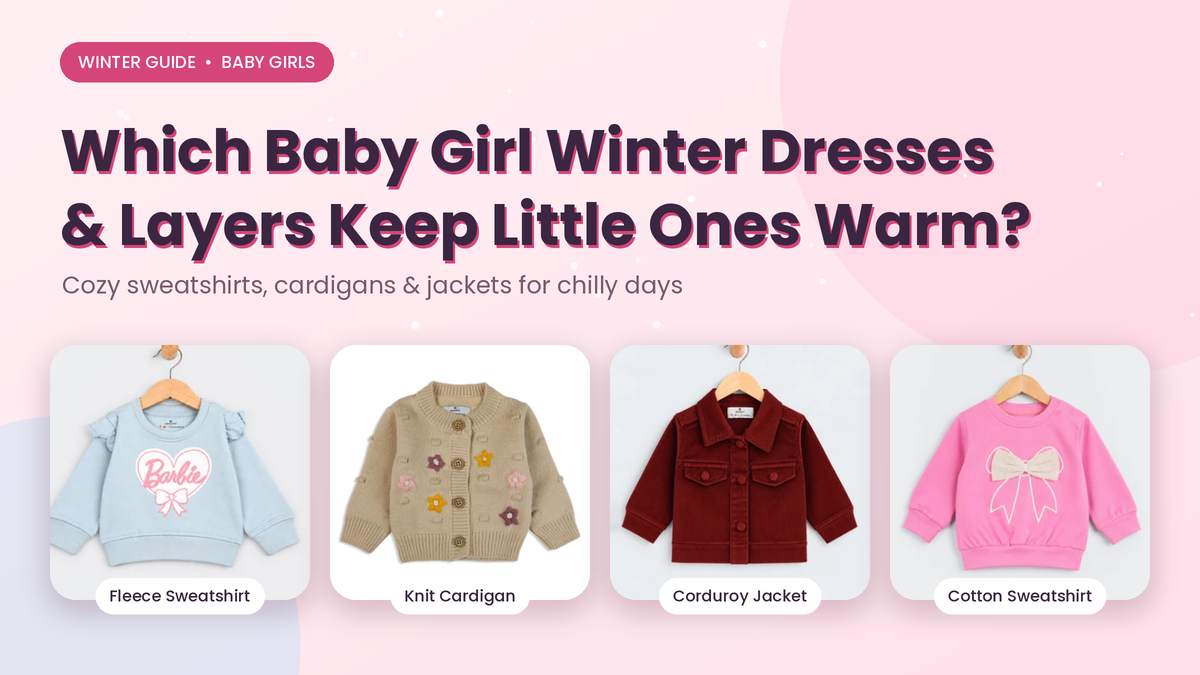
A baby girl’s winter wardrobe works best as a set of soft, mix-and-match layers: cotton bodysuits, a few warm dresses worn over leggings or tights, cardigans, sleepsuits, and accessories like caps, mittens and socks. Choose breathable fabrics, easy fastenings and a comfortable fit, and add or remove layers based on how her chest or neck feels, not her hands or feet.
Dressing a baby girl for winter is one of the sweeter parts of early parenthood, and one of the most confusing. The shelves are full of tiny frocks, knit sets and plush jackets, and every one of them looks irresistible. But a baby’s day is mostly feeding, sleeping and being carried, so the best winter wardrobe is built for comfort first and cuteness second.
This guide shows how to plan a simple, practical winter wardrobe, from the first few weeks to the first birthday and beyond, so parents can buy what they need and skip what they do not.
Why Does Winter Dressing Work Differently for Babies?
Babies cannot regulate body temperature as well as older children. They lose heat quickly in cold air, and they can overheat just as fast in warm rooms or cars. They also cannot tell anyone when they are uncomfortable, so clothing has to do the thinking for them.
The solution is layering with soft, breathable fabrics. Several thin layers give far more control than one thick garment, and they make it easy to adjust as the day changes from a chilly morning to a warm living room.
What Does a Baby Girl Actually Need for Winter?
This table shows a practical starting wardrobe for most families.
|
Item |
Suggested number |
Why it matters |
|
Long-sleeve cotton bodysuits |
5 to 7 |
Soft base layer next to the skin |
|
Sleepsuits or footed rompers |
4 to 6 |
Warm, easy for day and night changes |
|
Winter dresses |
2 to 4 |
For outings, visits and photos |
|
Leggings or tights |
4 to 5 pairs |
Keeps legs warm under dresses |
|
Cardigans or sweaters |
2 to 3 |
Easy to add or remove |
|
Caps |
2 to 3 |
Protects the head outdoors |
|
Mittens and socks or booties |
3 to 4 sets |
Hands and feet cool down fast |
|
Light jacket or padded suit |
1 |
For colder outings |
|
Swaddles or soft blankets |
2 to 3 |
Versatile, breathable cover |
Parents expecting a winter baby often keep a few items with tags on, since babies sometimes skip a size.
How Should a Baby Girl Dress by Age?
Newborn to 3 Months
Comfort and ease matter most. Footed sleepsuits, envelope-neck bodysuits and soft cardigans are the daily basics, and a dress is best treated as an occasional outfit worn over a bodysuit and leggings. Fastenings should open fully, so changes are quick.
3 to 6 Months
Babies at this age start to move, roll and reach. Stretchy fabrics, leggings and soft dress-and-legging sets give more freedom. Hats and mittens may start to be pulled off, so sets that stay on are useful.
6 to 12 Months
Crawling and pulling up call for durable knees and flexible fabric. Short or knee-length dresses with warm leggings work better than long gowns, which can trip a crawling baby.
12 to 24 Months
Toddlers need clothes that survive floors, playgrounds and constant movement. Warm tights, comfortable dresses and soft jackets that can handle mud and spills are the best fit.
How Do You Build Outfits That Work Together?
A few simple combinations cover most situations.
-
Everyday: bodysuit, soft dress, leggings, cardigan.
-
Home: sleepsuit or footed romper with a light cardigan.
-
Outing: bodysuit, dress, thick tights, cardigan, cap, mittens and a light jacket.
-
Family gathering: lined frock with warm tights, cardigan or shawl, and a spare plain outfit for spills.
-
Photo day: soft frock, simple headband and a warm blanket for between shots.
Sticking to two or three colors makes mixing and matching easy and keeps the cupboard tidy.
Which Fabrics Are Gentlest for Baby Skin?
-
Cotton: the best all-round choice for base layers and dresses.
-
Interlock and jersey cotton: smooth, stretchy and comfortable.
-
Brushed or fleece-lined cotton: extra warmth without bulk.
-
Light wool blends: very warm, best over a cotton layer.
-
Velour: cozy and soft for cooler days.
It helps to avoid stiff lace, scratchy netting, heavy sequins and beaded trims, since these can irritate skin or come loose. A quick check of the inside of a garment against the wrist is a good test.
How Can Parents Tell if a Baby Is Too Warm or Too Cold?
Hands and feet often feel cool even when a baby is perfectly comfortable, so they are not a reliable guide. Parents are usually advised to check the chest, tummy or back of the neck.
-
Warm and dry: just right.
-
Hot, flushed or sweaty: remove a layer.
-
Cool around the chest: add a layer.
If a baby seems unusually sleepy, unwell or has a fever, a pediatrician should be contacted instead of guessing.
How Should Babies Dress for Sleep and Car Seats?
Sleep: dresses are best kept for daytime. A snug sleepsuit or wearable sleeping bag is safer for sleep, since loose fabric and accessories should be kept away from the face. Pediatric safe-sleep guidance generally recommends a clear cot, no loose blankets or pillows, and placing the baby on her back.
Car seats: thick, puffy layers can leave harness straps looser than they look. Many parents dress the baby in thin layers, fasten the harness snugly, and then place a blanket over the top.
Caps, headbands and bows should be removed before sleep.
How Warm Should Winter Wear Be in Different Parts of Pakistan?
|
Region |
Winter feel |
Suggested approach |
|
Karachi and coastal areas |
Mild, cool evenings |
Cotton layers, light cardigan, thin leggings |
|
Lahore, Faisalabad, Multan |
Cool, foggy mornings |
Fleece-lined dress, tights, cap and socks |
|
Islamabad, Rawalpindi, Peshawar |
Cold, windy |
Thicker dresses, padded outer layer, mittens |
|
Quetta, Murree, northern areas |
Very cold |
Footed rompers, heavy layers, warm outer suit |
Families traveling to colder areas for weddings or holidays usually pack an extra warm layer and a spare outfit.
How Can Parents Shop Smartly?
Parents who want something pretty and practical can browse baby girl winter dresses and compare styles, fabrics and sizes from home. A few habits help avoid returns.
-
Compare the size chart with real measurements, not just age labels.
-
Read the fabric and lining details.
-
Check close-up photos of seams, necklines and fastenings.
-
Look at return and exchange options.
-
Buy a mix of sizes, since babies grow quickly.
-
Order early, since popular items sell out once the weather turns.
How Should Parents Care for Winter Baby Clothes?
-
Wash new clothes before the first wear with a gentle, fragrance-free detergent.
-
Wash wool and embroidered items by hand or on a gentle cycle.
-
Avoid fabric softeners if skin is sensitive.
-
Dry completely before storing.
-
Fold knits instead of hanging them, so they keep their shape.
What Mistakes Should Parents Avoid?
-
Choosing looks over comfort. An itchy outfit makes for a fussy baby.
-
Overdressing. More layers do not always mean more warmth.
-
Using bulky coats in car seats. Padding can loosen the harness fit.
-
Skipping the wash. New fabric can irritate delicate skin.
-
Buying too much in one size. Babies outgrow clothes quickly.
Quick FAQs
What should a baby girl wear in winter?
Soft cotton layers, warm leggings or tights, a dress or romper, a cardigan, a cap, mittens and socks, adjusted to the temperature.
Can a baby girl wear a dress in winter?
Yes, as long as it is soft and worn over a bodysuit and warm leggings or tights.
How many winter outfits does a baby need?
About five to seven everyday outfits and two to four dresses is enough for most families.
What is the warmest fabric for a baby?
Fleece-lined cotton and soft wool blends are warm, ideally worn over a cotton layer.
Should a baby wear a hat indoors?
Usually not. Caps are for outdoors, and they should be removed in warm rooms and before sleep.
Final Thoughts
Dressing a baby girl for winter is easier than it looks. A small collection of soft layers, a few well-chosen dresses and the right accessories will cover almost every situation. By focusing on fabric, fit and flexibility, parents can build a wardrobe that keeps her warm, comfortable and ready for family photos. Whether the choice is a cozy knit frock or one of the many baby girl winter dresses available in soft cotton and fleece, comfort and safety come first, and style follows naturally.

 English
 Arabic
 French
 Spanish
 Portuguese
 Deutsch
 Turkish
 Dutch
 Italiano
 Russian
 Portuguese (Brazil)
 Greek
