


Different Methods of Copper Tube Expansion
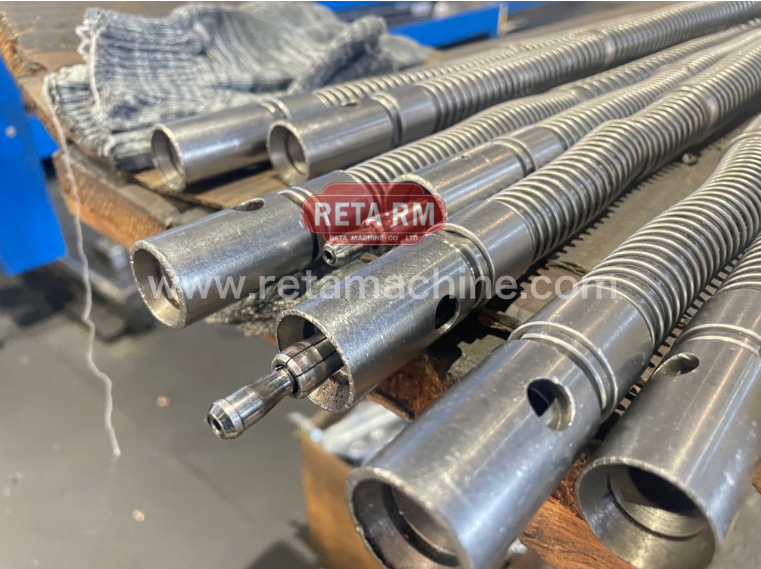
Copper tube expansion is a critical forming process widely used in heat exchangers, air conditioners, refrigeration equipment and other thermal energy systems. Its core purpose is to enlarge the outer diameter of copper tubes so that the tubes can tightly attach to fin sheets or matching components, ensuring stable heat transfer performance and reliable connection strength. Different expansion methods are selected according to tube size, wall thickness, production batch and accuracy requirements, and each method has its own advantages and applicable scenarios. Choosing the right method directly affects production efficiency, product qualification rate and the long-term reliability of the finished heat exchanger.
Mechanical Expansion
Mechanical expansion is the most mainstream technology in the industry. An expanding ball or expanding head, driven by mechanical force, passes through the inner cavity of the copper tube and plastically deforms the tube wall radially. This method can be divided into manual expansion and servo automatic expansion. Servo mechanical expansion equipment features a controllable stroke and stable expansion force, so the expansion size can be precisely controlled and dimensional errors stay small. A well-set expansion ratio also guarantees a tight and stable contact between the tube and the aluminium fins, which is essential for heat conduction. It fits mass production of standard heat exchanger tubes, such as hairpin tubes for air conditioning condensers. However, mechanical expansion has limits on ultra-long tubes and thin-walled soft copper tubes; improper parameter settings may cause tube cracking or excessive thinning of the tube wall.
Hydraulic Expansion
Hydraulic expansion is another common solution. High-pressure liquid is injected into a sealed copper tube, and the uniform internal pressure pushes the tube wall outward to complete expansion. Compared with mechanical expansion, hydraulic expansion delivers an even stress distribution on the tube surface without scratches caused by contact friction. It performs well for tubes with complex shapes and tubes requiring high surface quality. The bonding between copper tubes and fins after hydraulic expansion is more uniform, which helps improve heat exchange efficiency. The main drawback is the higher requirement on tube sealing: leakage will directly affect forming quality. The sealing structure and pressure curve therefore require careful design, and the method is more suitable for small-batch high-precision products than for fast-paced large-scale production lines.
Pneumatic Expansion
Pneumatic expansion is adopted for some simple and low-cost processing demands. Compressed air provides the expansion pressure, so the equipment structure is simple and the investment cost is low. But its pressure control accuracy is poor and the expansion consistency cannot match hydraulic or servo mechanical expansion, so it is mostly used for low-standard auxiliary processing and for trial runs rather than for critical heat transfer components.
Conclusion
To sum up, there is no universal best copper tube expansion method. Manufacturers need to balance precision, production speed, cost and material characteristics. With the upgrading of heat exchange equipment, servo-controlled mechanical expansion and digital hydraulic expansion are gradually becoming the preferred choices in modern heat exchanger workshops.

 English
 Arabic
 French
 Spanish
 Portuguese
 Deutsch
 Dutch
 Italiano
 Russian
 Romaian
 Portuguese (Brazil)
 Greek
